News · Politics & Governance
Senior IPS officers must learn Axiom, wellness and more for pay hikes
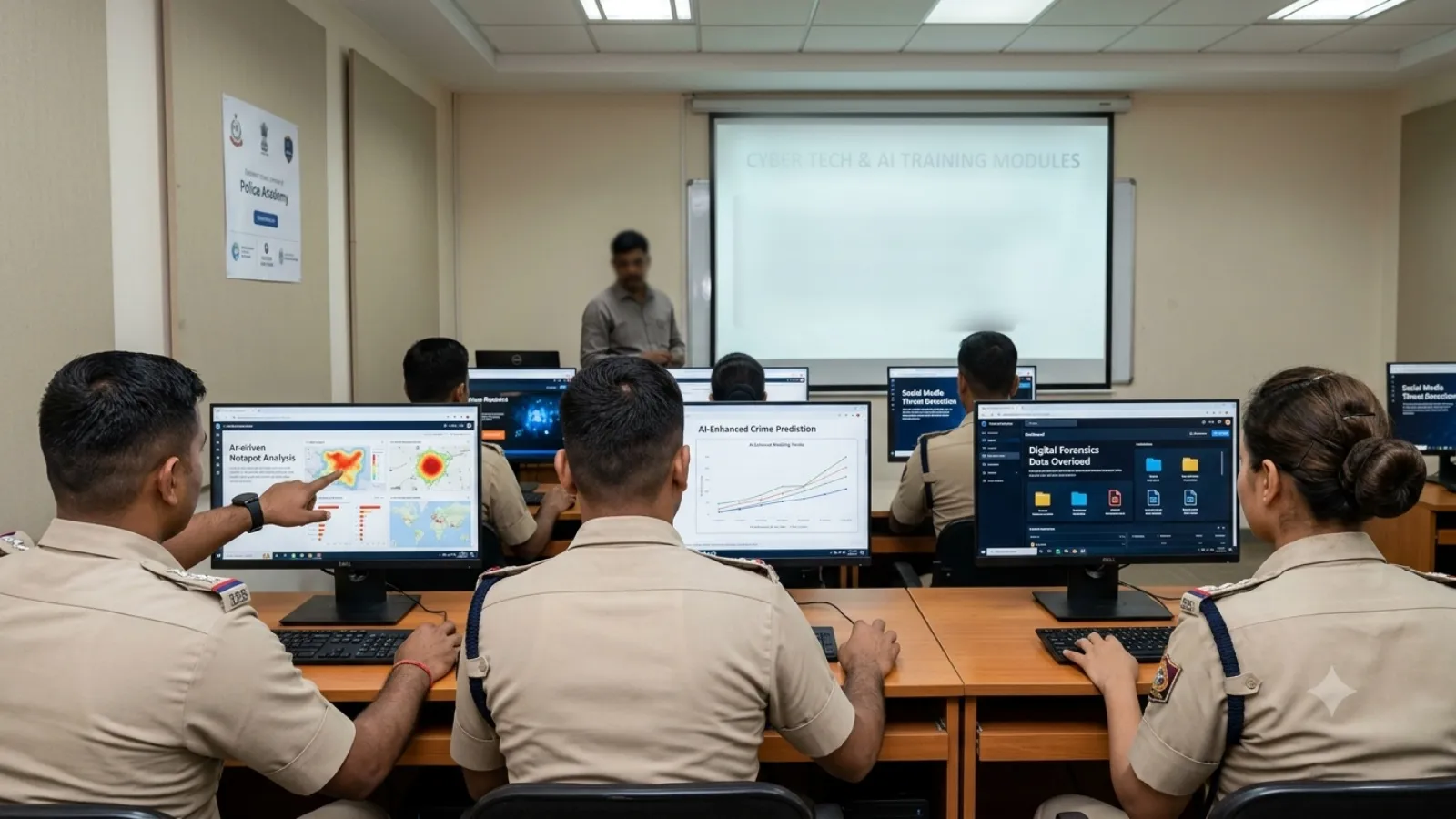
IPS officers now face compulsory annual learning on the iGOT Karmayogi platform. The subjects include emerging technologies, evidence-based policymaking, cybersecurity fundamentals, storytelling, and Axiom and generative AI tools. Legal and operational topics also appear, such as NDPS search procedures and the Bharatiya Nagarik Suraksha Sanhita. The aim is continuous, role-specific capacity building. The Ministry of Home Affairs selected 24 courses across four service brackets. Each bracket has six courses. The first three are mandatory. For example, officers with up to nine years of service must study emerging technologies, NDPS search and seizure procedures, and cybersecurity fundamentals for leaders. The other three courses are optional within the prescribed set. These requirements apply for the financial year 2026-27 and continue annually under the stated policy. Officers must finish all mandatory courses before taking the comprehensive assessment. Their performance will be reflected in annual performance appraisal reports, making professional learning part of formal career evaluation.
Based on reporting by Indian Express
What new learning requirements have been introduced for IPS officers?
IPS officers now face compulsory annual learning on the iGOT Karmayogi platform. The subjects include emerging technologies, evidence-based policymaking, cybersecurity fundamentals, storytelling, and Axiom and generative AI tools. Legal and operational topics also appear, such as NDPS search procedures and the Bharatiya Nagarik Suraksha Sanhita. The aim is continuous, role-specific capacity building.
The Ministry of Home Affairs selected 24 courses across four service brackets. Each bracket has six courses. The first three are mandatory. For example, officers with up to nine years of service must study emerging technologies, NDPS search and seizure procedures, and cybersecurity fundamentals for leaders. The other three courses are optional within the prescribed set.
These requirements apply for the financial year 2026-27 and continue annually under the stated policy. Officers must finish all mandatory courses before taking the comprehensive assessment. Their performance will be reflected in annual performance appraisal reports, making professional learning part of formal career evaluation.
What is the iGOT Karmayogi platform, and how will officers use it?
The iGOT Karmayogi platform is a digital learning and capacity-building portal designed for civil servants and government employees. It gives officers a common place to build skills through prescribed online courses. The new requirement matters because learning is no longer treated only as an occasional training activity. It becomes a continuing part of service.
IPS officers are grouped by years of service and assigned six courses within their category. The first three are mandatory. An officer in the first bracket, for example, must study emerging technologies, NDPS search and seizure procedures, and cybersecurity fundamentals for leaders. After completing all mandatory courses, the officer can take a comprehensive assessment for 2026-27.
The platform therefore connects training with appraisal. Course performance will be reflected in the officer’s APAR. The article says officers must complete prescribed iGOT courses every year, while the first comprehensive assessment opens only after mandatory courses are finished. This creates a digital record of ongoing professional development.
How many courses have been selected, and how are they divided among officers at different stages of service?
The Ministry of Home Affairs selected 24 courses for IPS officers. They are divided evenly into four groups, with six courses in each group. The groups are based on years of service, so officers at different career stages receive different learning packages. In every group, the first three courses are mandatory.
The first bracket covers officers with up to nine years of service, including the 2018 batch onward. The second covers more than nine and up to 16 years, including batches from 2011 to 2017. The third covers more than 16 and up to 25 years, including the 2001 to 2010 batches. The senior-most group covers 25 years or more, including the 2000 batch and earlier.
The courses combine common and stage-specific subjects. Emerging technologies appear across several groups. Senior groups also cover policymaking, storytelling, generative AI, digital change, and wellness. The first three courses in each six-course set connect directly to assessment and APARs.
What happens if an officer does not complete the mandatory courses, and how will course performance affect the APAR?
The article specifies a clear completion condition. The comprehensive assessment for the financial year 2026-27 opens only after an officer has completed all mandatory courses in the assigned bracket. It does not state a separate disciplinary penalty for failing to finish them. The immediate consequence described is that the officer cannot access that assessment.
Each service bracket contains six courses, but only the first three are mandatory. For example, the youngest bracket requires courses on emerging technologies, NDPS search and seizure procedures, and cybersecurity fundamentals for leaders. The other three courses complete the prescribed learning package but are not identified as mandatory in the article.
Course performance will also be reflected in the officer’s APAR. The mandatory courses will form the basis of a comprehensive assessment once they are completed. This makes training results part of formal annual appraisal for 2026-27. The arrangement links online learning, testing, and career documentation more closely than before.
Why do the courses differ according to an officer's years of service?
The courses differ because officers’ service stages shape their learning needs. The DoPT directive cited by the Home Ministry seeks continuous, role-specific capacity building for All India Services officers. A newer officer may need operational foundations, while a more experienced officer may encounter policy, leadership, or institutional change challenges. The article organizes learning around service length.
The first bracket illustrates this approach. Officers with up to nine years of service study NDPS search and seizure procedures, cybersecurity fundamentals for leaders, and emerging technologies. Officers with more than 16 years and up to 25 years study evidence-based policymaking, the art of storytelling, cybersecurity, generative AI tools, and digital transformation change management.
The structure also preserves some common priorities. Emerging technologies appear in several brackets, while senior groups share many courses. At the same time, the senior-most category adds integrative wellness. This balance gives officers a shared foundation while matching training to experience, responsibility, and career stage.
Which government bodies designed or provide the courses, and what expertise does each contribute?
The Ministry of Home Affairs acts as the IPS cadre-controlling authority and selected the 24-course package. The Department of Personnel and Training supplied the wider directive calling for continuous, role-specific capacity building across the All India Services. Together, they provide policy direction and administrative oversight for the programme.
The article identifies specific providers for the first bracket. The Wadhwani Foundation offers the introduction to emerging technologies. The Sardar Vallabhbhai Patel National Police Academy offers search and seizure procedures under the NDPS Act. The National E-Governance Division of the Ministry of Electronics and Information Technology offers cybersecurity fundamentals for leaders. These pair technology, police training, and digital governance expertise.
Other listed contributions include Rashtriya Raksha University’s integrative wellness module for the senior-most category. The article does not assign a provider to every course. It does show a multi-institution model, combining police education, technology, governance, and officer well-being within one learning platform.
What is continuous capacity building in public administration, and why can improving civil servants' skills affect how government works?
Continuous capacity building is the regular development of public servants’ knowledge, judgment, and practical skills. It goes beyond one-time induction training. Officers keep learning as laws, technology, public problems, and administrative responsibilities change. The article connects this approach to role-specific courses for All India Services officers, delivered through iGOT Karmayogi.
The IPS programme gives a concrete example. Officers study emerging technologies, cybersecurity, legal procedures, policymaking, leadership, and generative AI according to their service stage. A course on cybersecurity fundamentals can strengthen awareness of digital risks. A course on evidence-based policymaking can encourage decisions grounded in reliable information. These skills can support better professional choices.
The broader effect is a more adaptable public administration. The article makes course completion and performance part of the APAR process, giving learning an official place in appraisal. For 2026-27, officers must complete mandatory courses before the comprehensive assessment opens. This creates an ongoing cycle of learning, assessment, and documented performance.
Key Facts:
📌 IPS officers must complete prescribed iGOT courses every year.
📌 Topics include cybersecurity, storytelling, generative AI, and emerging technologies.
📌 Mandatory-course performance will appear in APARs.
📌 iGOT Karmayogi is a digital learning portal for government employees.
📌 Officers complete assigned courses and assessments on the platform.
📌 Mandatory courses must be completed before the comprehensive assessment.
📌 The MHA selected 24 courses for IPS officers.