News · Defence & Security
Houthis strike Yemen government and Saudi targets as violence intensifies
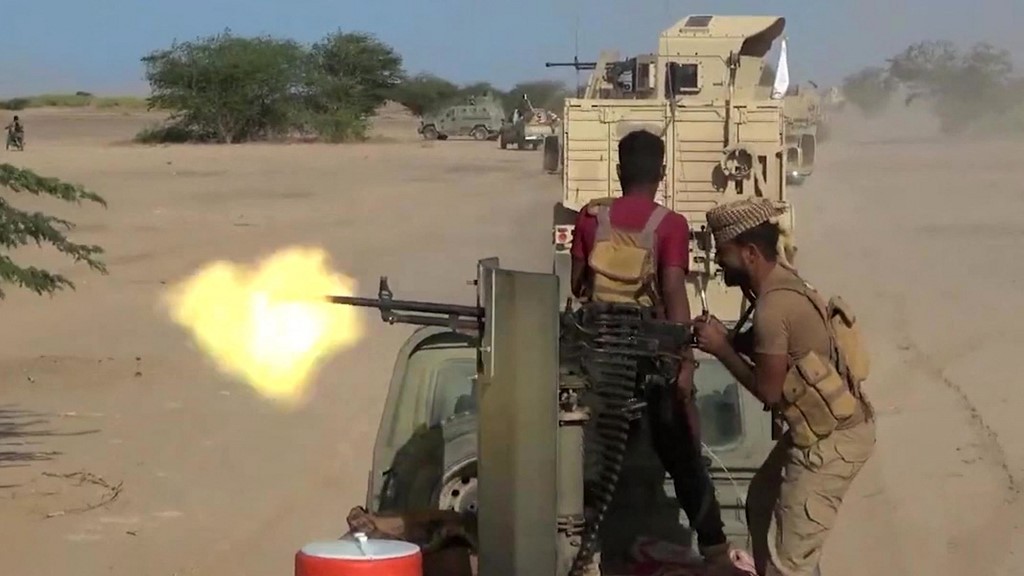
The escalation involved attacks on military, transport, and strategic locations. The Houthis aimed at sites linked to Saudi forces and Yemen’s internationally recognized government. Saudi Arabia and its Yemeni allies focused on retaking territory captured by the Houthis along the Red Sea coast. Ansar Allah said it fired ballistic missiles at a Saudi military supply convoy at Camp Badr, near Aden airport. Yemen’s state news agency said missiles and explosive-laden drones targeted the airport itself. The Houthis also reported attacks on airports in Riyadh and Abha, plus an airbase in Khamis Mushait. Saudi-backed forces claimed advances near Bab al-Mandab and Mocha. The battlefield picture remained contested. Houthi media denied losing Mocha and showed fighters inside the city. Reports suggested fighting there involved long-range missile exchanges. The government’s broader goal was to recover all territory lost during the conflict, signaling a potentially wider and more destructive campaign.
Based on reporting by Middle East Eye
What targets did the Houthis and the Saudi-backed Yemeni government claim to strike or recapture in this latest escalation?
The escalation involved attacks on military, transport, and strategic locations. The Houthis aimed at sites linked to Saudi forces and Yemen’s internationally recognized government. Saudi Arabia and its Yemeni allies focused on retaking territory captured by the Houthis along the Red Sea coast.
Ansar Allah said it fired ballistic missiles at a Saudi military supply convoy at Camp Badr, near Aden airport. Yemen’s state news agency said missiles and explosive-laden drones targeted the airport itself. The Houthis also reported attacks on airports in Riyadh and Abha, plus an airbase in Khamis Mushait. Saudi-backed forces claimed advances near Bab al-Mandab and Mocha.
The battlefield picture remained contested. Houthi media denied losing Mocha and showed fighters inside the city. Reports suggested fighting there involved long-range missile exchanges. The government’s broader goal was to recover all territory lost during the conflict, signaling a potentially wider and more destructive campaign.
Who are the Houthis, and what role do they play in Yemen’s civil war?
The Houthis are a Yemeni political and armed movement officially known as Ansar Allah. They emerged from northern Yemen and oppose the government and foreign influence, especially Saudi intervention. The article describes them as Iran-aligned and says their political and military center is Sanaa.
In the war, the Houthis hold Yemen’s capital and other territory. They use missiles, drones, and ground forces against government positions and Saudi targets. Their control of important coastal areas also gives them influence over routes and cities near the Red Sea. They said their Aden strike targeted a military base inside the airport complex.
Their role makes Yemen’s conflict both a civil war and a regional confrontation. The internationally recognized government receives Saudi backing, while the Houthis receive support from Iran. As fighting intensifies, control of territory shifts, civilians are displaced, and attacks reach strategic sites far from front lines.
Why are Aden, Mocha, and the Bab al-Mandab Strait strategically important to the opposing sides?
Aden matters because it is the seat of Yemen’s internationally recognized government. An attack there threatens the government’s political center and its military infrastructure. Mocha is a strategic Red Sea port, so control can support coastal operations and affect movement of supplies. Bab al-Mandab is the narrow gateway between the Red Sea and the Gulf of Aden.
The article says the Houthis captured Mocha and nearby coastal territory, while Saudi Arabia and its Yemeni allies launched an effort to retake them. They claimed control of the Arabian Gulf side of Bab al-Mandab and Mocha. The Houthis rejected the claim and showed fighters inside the city.
These places matter because geography turns local fighting into a wider security concern. A force near Bab al-Mandab can threaten or monitor shipping routes and military movements. Continued contesting of the coast could prolong the war, disrupt aid and supplies, and increase pressure on civilians in nearby areas.
How many people have been killed, wounded, displaced, or forced to flee Yemen during this recent escalation?
The latest fighting produced a severe human toll in a short period. The World Health Organization reported 959 deaths and 4,207 injuries across Yemen between 6 August and 2 October. These figures show that the escalation affected civilians as well as combatants, although the article does not provide a civilian-military breakdown.
Displacement was also widespread. The UN refugee agency said more than 130,000 people had been forced from their homes inside Yemen since the beginning of August. Nearly 3,700 others crossed the sea and fled to Djibouti after 10 September. People often leave with limited food, shelter, healthcare, or protection.
These numbers are not simply battlefield statistics. They indicate pressure on towns, aid agencies, and neighboring countries. Continued offensives around Aden, the Red Sea coast, and other contested areas could create more displacement. They may also make it harder to deliver assistance and contain disease outbreaks.
What happens to civilians and public health when fighting intensifies in areas already crowded with displaced people?
When fighting intensifies, civilians face two connected emergencies: displacement and disease. People forced from their homes often crowd into places with limited water, sanitation, shelter, and healthcare. Hospitals and clinics may also be damaged, cut off, or overwhelmed by new casualties.
The article gives a stark example. The WHO said cholera cases tripled in three weeks. It reported that 94 percent of recent cases occurred in five governorates hosting large displaced populations, including Taiz, Aden, and Abyan. These conditions allow contaminated water and poor sanitation to spread infection quickly.
The crisis can worsen even after a battle moves elsewhere. More displacement increases demand for food, clean water, medicine, and safe shelter. Disease control becomes harder when people move repeatedly or cannot reach clinics. Unless fighting decreases and aid access improves, injuries, outbreaks, and preventable deaths are likely to continue growing.
How did Yemen’s conflict develop into a war involving the internationally recognized government, the Houthis, Saudi Arabia, and Iran?
Yemen’s war began as a struggle over political power, state control, and regional grievances. The Houthi movement expanded from northern Yemen and seized Sanaa and other territory. The internationally recognized government lost ground and eventually relied heavily on outside military support. The article describes the conflict as having lasted 12 years.
Saudi Arabia backed the government and its Yemeni allies, seeking to prevent Houthi dominance near its border and along important waterways. Iran aligned with and supported the Houthis, turning Yemen into part of a broader Saudi-Iranian rivalry. The article reflects this divide by calling the government Saudi-backed and the Houthis Iran-aligned.
This combination made negotiations harder and expanded the battlefield. Local forces continued competing for cities, ports, and supply routes, while regional powers supplied political or military backing. The current counter-offensive shows that the conflict remains unresolved, with each side pursuing territorial gains rather than a settled power-sharing arrangement.
What are ballistic missiles and explosive-laden drones, and why can they threaten airports, military bases, and supply convoys?
A ballistic missile is a rocket-powered weapon that rises into the atmosphere and then follows a fast, arcing path toward its target. An explosive-laden drone is an unmanned aircraft carrying a warhead that may fly into a target or release explosives. Both can attack from a distance, reducing the attacker’s need to approach directly.
In the article, Yemen’s state news agency said two ballistic missiles and explosive-laden drones targeted Aden airport. The Houthis said their intended target was a military base inside the airport complex and a Saudi supply convoy at Camp Badr. Similar reported attacks targeted airports in Riyadh and Abha and an airbase in Khamis Mushait.
These weapons threaten more than military positions. A missile or drone near an airport can damage runways, aircraft, fuel stores, or terminals. A convoy strike can destroy vehicles and supplies. Even when defenses intercept an attack, fear, disruption, casualties, and costly repairs can follow.
Key Facts:
📌 Houthis claimed attacks near Aden airport and on Saudi airports.
📌 Saudi-backed forces claimed advances near Bab al-Mandab and Mocha.
📌 Mocha’s capture remained disputed despite competing battlefield claims.
📌 The Houthis are officially known as Ansar Allah.
📌 They control Sanaa and substantial parts of Yemen.
📌 The movement is aligned with Iran and fights Saudi-backed forces.
📌 Aden is the seat of Yemen’s internationally recognized government.