News · Defence & Security
Mali: Junta forces retake strategic town of Kidal from separatists
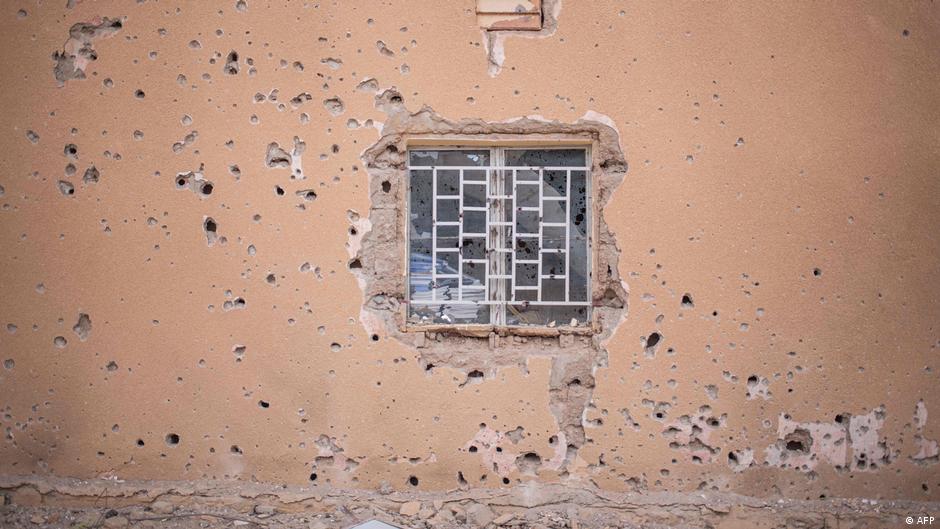
Mali's army has re-entered Kidal, a strategic town in the country's north. It was supported by Russian paramilitary forces from the Africa Corps. The move gave Mali's military government a highly symbolic territorial gain. It also showed that control of Kidal remains contested rather than permanently settled. The Azawad Liberation Front, or FLA, said it had withdrawn in a strategic and controlled way. The group said there was no direct fighting during its departure. An FLA spokesperson blamed the withdrawal on what it called the disproportionate use of Russian-backed aerial assets. The FLA had previously held the town alongside JNIM after attacks earlier in the year. For now, Mali's forces and their Russian allies are back inside Kidal. That strengthens the junta's public claim to authority, but it does not end the wider conflict. Separatist and jihadist groups remain active, and all sides have faced accusations of war crimes.
Based on reporting by DW News
What happened in Kidal, and which forces entered the town while which forces withdrew?
Mali's army has re-entered Kidal, a strategic town in the country's north. It was supported by Russian paramilitary forces from the Africa Corps. The move gave Mali's military government a highly symbolic territorial gain. It also showed that control of Kidal remains contested rather than permanently settled.
The Azawad Liberation Front, or FLA, said it had withdrawn in a strategic and controlled way. The group said there was no direct fighting during its departure. An FLA spokesperson blamed the withdrawal on what it called the disproportionate use of Russian-backed aerial assets. The FLA had previously held the town alongside JNIM after attacks earlier in the year.
For now, Mali's forces and their Russian allies are back inside Kidal. That strengthens the junta's public claim to authority, but it does not end the wider conflict. Separatist and jihadist groups remain active, and all sides have faced accusations of war crimes.
What is Kidal, and why is this northern Malian town strategically important?
Kidal is a town in northern Mali that has become a major center of the Tuareg separatist struggle. The article describes it as strategic because control of the town has significance far beyond its streets. Holding Kidal can signal whether Mali's central government or separatist forces have authority in the north.
The town was seized earlier in the year by the FLA and JNIM during a series of attacks. Mali's army has now returned with Russian paramilitary support. This illustrates the key mechanism: whoever controls Kidal can present the takeover as evidence of military reach, while losing it can weaken confidence in that side's power.
Kidal's recapture therefore matters most as a political and morale boost for the junta. Analysts quoted in the article call it largely symbolic, not decisive. Continued fighting elsewhere means control of one northern town cannot by itself settle Mali's broader conflict.
How many coups brought Mali’s current junta to power, and over what period?
Mali's current military government emerged through two coups rather than one. The first occurred in 2020, and a second followed in 2021. Together, these back-to-back takeovers brought the junta to power and reshaped Mali's approach to security and foreign partnerships.
The article links the junta's rule to its growing reliance on Russian paramilitary support. Mali's leaders have turned to Russian forces while fighting groups connected to al-Qaeda and the Islamic State. This partnership is part of the military government's effort to strengthen operations after taking power through the coups.
The timeline matters because the junta's authority is tied to both military control and battlefield performance. Retaking Kidal gives it a symbolic success and may improve army morale. However, the article also notes recent setbacks and continuing accusations of civilian killings and war crimes, showing that military rule has not resolved Mali's security crisis.
Who are the Tuareg, and why do some Tuareg groups want to create an independent state called Azawad?
The Tuareg are a distinct Indigenous people spread across parts of the Sahara and Sahel, including northern Mali. In Mali, some Tuareg political and armed groups seek to establish Azawad, an independent state in the north. The article identifies this independence goal as the central reason for their long-running conflict with Mali's government.
The FLA is the main Tuareg separatist actor named in the article. It has fought for years to create an independent Azawad. In the latest episode, it controlled Kidal before withdrawing after Russian-backed aerial operations and the advance of Mali's army. The group's objective differs from the junta's goal of preserving one Malian state.
The article does not detail every grievance behind the separatist movement. It does show that the dispute concerns political control of northern territory, not only temporary battlefield positions. As a result, retaking Kidal may change who occupies the town without removing the demand for Tuareg self-determination.
Which armed groups are fighting in northern Mali, and what are their different goals?
Several armed actors are involved in northern Mali, but they do not share the same goals. The FLA is a Tuareg separatist movement that wants an independent Azawad in northern Mali. JNIM, or Jama'at Nusrat al-Islam wal-Muslimin, is linked to al-Qaeda and pursues a jihadist project. Mali's army, backed by the junta and Russian paramilitary forces, seeks to preserve government control over the territory.
The groups' temporary cooperation around Kidal shows how battlefield interests can overlap. The FLA and JNIM seized the town during attacks earlier in the year. Their shared opposition to Mali's army did not erase their different political visions. The FLA wants separatist independence, while JNIM is an Islamist militant organization.
The article also mentions fighters linked to the Islamic State. This means Mali's forces face more than one armed challenge. Retaking Kidal weakens the separatists' visible hold, but it does not automatically defeat jihadist networks or resolve the conflict's competing aims.
What does the use of Russian-backed air power and paramilitary support reveal about how the balance of power changed around Kidal?
The use of Russian-backed air power shows that Mali's junta can now bring stronger external military support to the Kidal battlefront. The FLA said it withdrew after what it called disproportionate aerial use by Russian mercenaries from the Africa Corps. This indicates a shift from the separatists' earlier control toward greater state-backed military pressure.
The key mechanism was not a reported infantry assault. The FLA said its forces left without direct fighting, while Mali's army, supported by Russian paramilitaries, re-entered the town. Air operations may therefore have helped make continued occupation too costly or risky for the separatists, though the article does not provide detailed operational results.
The change is important, but it should not be overstated. Russian support helped Mali retake a symbolic stronghold, yet it does not prove that the government has defeated its opponents across the north. Separatist and jihadist groups remain part of the wider conflict.
What does retaking Kidal change for Mali’s military government, and why may it still not decisively defeat jihadist or separatist movements?
Retaking Kidal strengthens Mali's military government politically. It lets the junta claim that state forces have restored control over a strategic northern town. Analyst Beverly Ochieng said the advance affirms the government's authority and boosts army morale, especially after recent setbacks in northern and central Mali.
The concrete gain is control of Kidal after the FLA withdrew. Russian paramilitary support and aerial operations helped create the conditions for that return. This matters because battlefield success can improve confidence in the army and in the junta's decision to rely on Russian partners. It also weakens the separatists' visible territorial position.
Still, analysts describe the result as symbolic rather than decisive. The wider campaign includes JNIM, fighters linked to the Islamic State, and Tuareg separatists operating beyond one town. Continued attacks, recent setbacks, and allegations of civilian killings show the conflict remains unresolved. Kidal may boost morale without delivering lasting security or political agreement.
Key Facts:
📌 Mali's army re-entered Kidal with support from Russian paramilitary forces.
📌 The FLA withdrew without direct fighting, according to its statement.
📌 The FLA blamed Russian-backed aerial power for its withdrawal.
📌 Kidal is a strategic town in northern Mali.
📌 The town is central to the Tuareg separatist conflict.
📌 Its recapture signals authority but does not end the war.
📌 Mali's junta came to power through coups in 2020 and 2021.