News · Politics & Governance
Where is Spain headed after the snap election announcement?
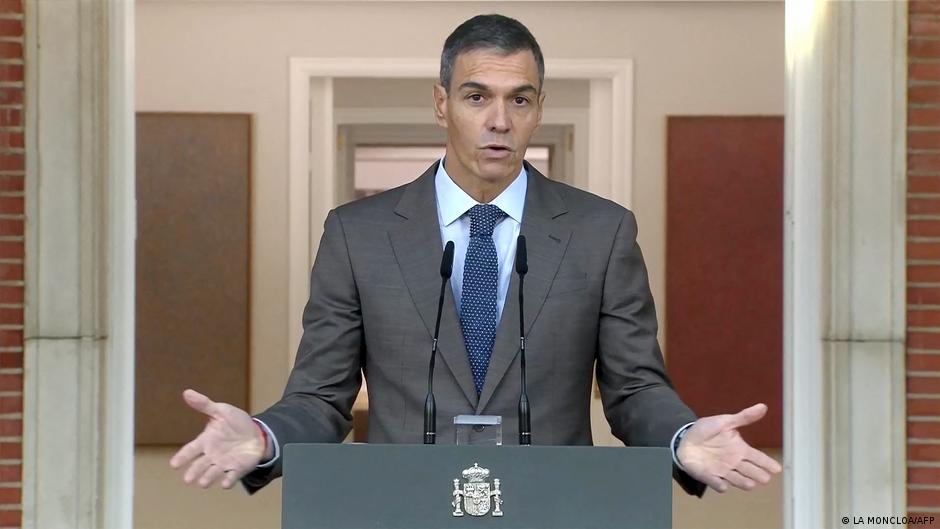
A snap election is a national vote held earlier than the usual electoral timetable. It lets a government seek a fresh mandate when parliament becomes difficult to manage. The election matters because Sanchez has governed without a majority since 2023. On October 2, parliament rejected his emergency plan for the housing crisis. Seven lawmakers from Junts voted against it. Their support had repeatedly helped the government pass legislation, so their refusal exposed Sanchez's lack of reliable backing. Spain has also operated without a new regular budget since 2023. Sanchez announced the election for November 29, saying he wants a “much broader progressive majority.” Housing protests, migration tensions, and corruption allegations have added pressure. The vote will test whether voters reward his tenant-focused position or shift support toward the opposition, especially the conservative PP and right-wing Vox.
Based on reporting by DW News
What is a snap election, and why has Pedro Sanchez called one for November 29?
A snap election is a national vote held earlier than the usual electoral timetable. It lets a government seek a fresh mandate when parliament becomes difficult to manage. The election matters because Sanchez has governed without a majority since 2023.
On October 2, parliament rejected his emergency plan for the housing crisis. Seven lawmakers from Junts voted against it. Their support had repeatedly helped the government pass legislation, so their refusal exposed Sanchez's lack of reliable backing. Spain has also operated without a new regular budget since 2023.
Sanchez announced the election for November 29, saying he wants a “much broader progressive majority.” Housing protests, migration tensions, and corruption allegations have added pressure. The vote will test whether voters reward his tenant-focused position or shift support toward the opposition, especially the conservative PP and right-wing Vox.
What happened when parliament rejected Sanchez's emergency housing measures, and why did Junts's seven lawmakers matter?
Parliament rejected Sanchez's emergency measures on October 2. The defeat was more than a setback on housing. It demonstrated that the government could not reliably pass legislation, even on the issue dominating public concern. Sanchez then used the failure to present himself as a defender of tenants.
Junts has only seven lawmakers, but its support has been crucial since 2023. Because Sanchez's PSOE and Sumar coalition lacks a majority, the government depends on smaller parties. Junts's votes can therefore supply or remove the final support needed for a bill. Its refusal brought the housing plan down.
The episode confirmed that Sanchez's governing arrangement had become highly unstable. In the first half of 2026, the government lost almost one in four parliamentary votes. Calling an election is his attempt to replace this fragile dependence with a stronger mandate.
How severe is Spain's housing shortage, and how many people are affected by rising rents and home prices?
Spain's housing shortage is large and worsening. Bank of Spain estimates put the current shortfall at around 750,000 homes. Without major change, it could exceed one million by 2028. This shortage limits supply while demand remains strong, pushing housing further beyond many people's means.
The pressure is especially clear among young adults. More than half of Spaniards aged 18 to 34 live with their parents or depend on them financially. Property prices have recently risen three times as fast as wages. Spain also has only about 1.7 percent social housing, near the low end among EU countries.
The article does not give a total number of people affected. It does show broad social consequences: delayed independence, dependence on family support, and rising political anger. These pressures helped make housing Spain's leading concern and a central issue in the November election.
What has the government's inability to pass a regular budget since 2023 meant for its ability to govern?
A regular budget gives a government authority to set spending priorities and fund policies. Spain's failure to pass one since 2023 shows that Sanchez has been unable to build a dependable parliamentary majority. It is a clear measure of the wider political deadlock.
The government must keep operating with the 2023 budget. That limits its ability to respond flexibly to newer pressures, including the housing shortage and migration crisis. The same problem affects ordinary legislation: since Sanchez lacks a majority, smaller parties can block measures or demand concessions before supporting them.
This paralysis has weakened the government's credibility and contributed to the snap election. The article says Sanchez lost almost one in four votes during the first half of 2026. A new election could produce a stronger mandate, but it could also return another fragmented parliament and repeat the budget problem.
Why have housing protests and the proposed general strike become important political forces in the election?
Housing protests turn a policy problem into an electoral force. Spaniards have ranked the shortage among their biggest concerns for about three years. Rising prices, weak wage growth, and scarce social housing affect daily life, making the issue powerful enough to move voters and challenge governments.
The forced eviction of 87-year-old Maria del Carmen Abascal became a national symbol. Protest camps appeared in Madrid and elsewhere, and tens of thousands marched across Spain. After parliament rejected the government's measures, unions CCOO and UGT announced a 24-hour general strike. These actions increase pressure for immediate change.
The protests do not divide politics simply between government and opposition. Tenants' groups say Sanchez's proposals are too weak. The PP and business groups warn that stronger rent controls could reduce supply or worsen the shortage. The election will therefore test competing solutions, not just public anger.
How did the migration crisis in Ceuta change Sanchez's migration policy and increase pressure on his government?
Ceuta's migration crisis intensified pressure on Sanchez because the territory had to absorb a sudden, very large arrival. More than 70,000 people crossed from Morocco at the end of July. Although officials declared the crisis over, at least 10,000 migrants remained two months later in an exclave with about 80,000 residents.
The scale created visible strain. Around 3,000 people lived in an improvised camp until police cleared it last Sunday. The government then moved toward a tougher response. A draft proposal seen by Reuters included accelerated asylum procedures, deportations, and tighter migration rules. Human rights organizations sharply criticized the proposed changes.
The crisis damaged the government's political room for maneuver. Sanchez had previously followed a relatively liberal migration policy, but events made control and enforcement more urgent. Migration now adds to housing tensions, corruption allegations, and parliamentary instability, giving opposition parties another way to challenge his leadership.
What is proportional representation, and why can it lead to coalition or minority governments in which small regional parties hold major power?
Proportional representation is an electoral system designed to translate votes into parliamentary seats broadly in proportion to each party's support. Unlike winner-takes-all systems, it often allows several parties to enter parliament. This can represent more political views, but it can also make single-party majorities less common.
When no party wins over half the seats, governing requires cooperation. Parties may form a coalition, as PSOE did with the left-wing Sumar alliance, or govern as a minority while seeking support issue by issue. A small regional party can then become the “kingmaker” if its votes are needed to pass laws.
That pattern explains Junts's influence in the article. Its seven lawmakers repeatedly determined whether Sanchez's proposals passed. Proportional representation did not itself cause every Spanish crisis, but fragmented results helped create a government dependent on regional parties. Elections can therefore change which small party holds decisive power.
Key Facts:
📌 A snap election is held earlier than the normal electoral timetable.
📌 Sanchez called the election after his housing measures failed in parliament.
📌 He is seeking a broader progressive majority on November 29.
📌 Parliament rejected Sanchez's emergency housing measures on October 2.
📌 Junts's seven lawmakers could determine whether legislation passed.
📌 The defeat exposed the government's unstable parliamentary support.
📌 Spain currently lacks around 750,000 homes.