News · Defence & Security
Zelensky on Russian attack: Infrastructure in Kyiv and 12 regions hit, energy sector key target
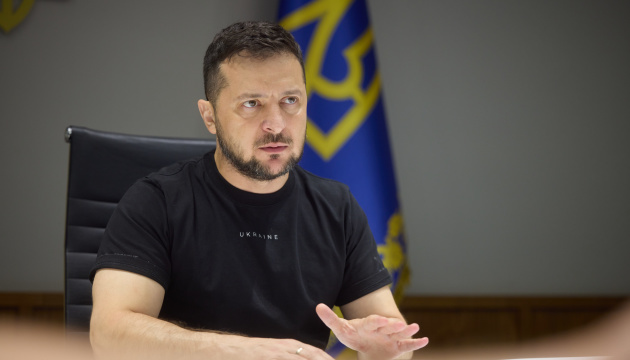
Russia launched a large combined attack against Ukraine, striking energy infrastructure and other targets. President Volodymyr Zelensky said infrastructure in Kyiv and 12 regions came under attack. The energy sector was a key target because damage can disrupt essential services for civilians and cities. The attack caused destruction in several locations. A five-story apartment building in Pryluky, Chernihiv region, was destroyed. Buildings were also damaged in Dnipro, Kremenchuk, and Zaporizhzhia. The reported weapons included ballistic and cruise missiles, as well as Shahed drones. The article shows that the attack affected both infrastructure and residential areas. At least five people died and 26 were injured in Pryluky, while additional deaths and injuries were reported elsewhere. Air defenses intercepted some weapons, but Zelensky said Russian ballistic missiles remain a major challenge. Rescue work continued, with people possibly still under rubble.
Based on reporting by Ukrinform English
What happened in the Russian attack, and which parts of Ukraine were hit?
Russia launched a large combined attack against Ukraine, striking energy infrastructure and other targets. President Volodymyr Zelensky said infrastructure in Kyiv and 12 regions came under attack. The energy sector was a key target because damage can disrupt essential services for civilians and cities.
The attack caused destruction in several locations. A five-story apartment building in Pryluky, Chernihiv region, was destroyed. Buildings were also damaged in Dnipro, Kremenchuk, and Zaporizhzhia. The reported weapons included ballistic and cruise missiles, as well as Shahed drones.
The article shows that the attack affected both infrastructure and residential areas. At least five people died and 26 were injured in Pryluky, while additional deaths and injuries were reported elsewhere. Air defenses intercepted some weapons, but Zelensky said Russian ballistic missiles remain a major challenge. Rescue work continued, with people possibly still under rubble.
How large was the attack, in terms of missiles, drones, regions, deaths, and injuries?
The attack was large in both weapon numbers and geographic reach. Zelensky described 70 missiles, many ballistic, plus Shahed drones. Ukraine’s air defense later reported neutralizing five ballistic missiles, 39 cruise missiles, and 117 drones launched since the evening of October 6. The article says infrastructure in Kyiv and 12 regions was hit.
The human cost was severe. In Pryluky, five people were reported killed and 26 injured, including five children. Kremenchuk reported two deaths and eight injuries. Two people were killed in Kyiv, and two more in Oleksandriia, in Kirovohrad region. Adding the listed reports gives at least 11 deaths and 34 injuries.
Those figures were not necessarily final. Rescue workers were still searching the Pryluky rubble, and more people might have been trapped. The numbers also show why large attacks are measured in several ways: weapons launched, weapons intercepted, places hit, and human casualties. Even extensive interception cannot prevent every impact.
What is energy infrastructure, and why does it include facilities that civilians depend on?
Energy infrastructure means the equipment and networks that generate, transmit, distribute, and sometimes store energy. It includes power plants, substations, transformers, transmission lines, distribution cables, and control systems. These facilities are not separate from civilian life. They make ordinary services possible.
For example, a power plant may generate electricity, while high-voltage lines carry it toward a substation. The substation changes voltage and routes power into local networks. Those networks supply apartment buildings, hospitals, shops, factories, water pumps, and communications equipment. Damage at one point can therefore affect many users.
The article identifies energy infrastructure as a key target in the attack. It does not list every facility damaged, but the stated target matters because energy disruption can spread beyond the original strike site. It may interrupt heating, lighting, refrigeration, medical equipment, water supply, and business operations. Protecting the network is therefore directly connected to protecting civilian safety.
What makes ballistic missiles especially difficult for Ukraine’s air defenses to stop?
A ballistic missile is launched with powerful acceleration and then follows a largely ballistic path through the atmosphere or near-space before descending. Its speed can be very high, leaving defenders little time to detect, identify, and engage it. Its steep approach can also reduce the time available for warning and interception.
The key mechanism is limited reaction time combined with a difficult flight path. Defenders must detect the missile, calculate its trajectory, send an interceptor, and destroy it before impact. The missile may also maneuver or use countermeasures, depending on its design. These factors make interception harder than against many slower, lower-flying threats.
The article directly reflects this problem. Zelensky said Russian ballistic missiles remain the greatest challenge and called air-defense packages a vital necessity. Ukraine reported neutralizing five ballistic missiles during the attack, but only some incoming weapons were shot down overall. Continued access to capable interceptors, including Patriot missiles, is therefore important for reducing damage.
How do air-defense systems such as Patriot intercept incoming missiles and drones?
Air-defense systems protect an area by finding incoming weapons and stopping them before they reach the ground. Radar or other sensors detect a target and track its movement. Command systems then classify the object, estimate its path, and decide whether to launch an interceptor. The goal is to destroy or disable the threat in the air.
A missile interceptor usually uses guidance data to approach the target. It may destroy the incoming weapon through a direct collision or by detonating nearby and damaging it with fragments. Different systems are suited to different threats. Patriot systems are intended to counter missiles, while other weapons and guns may be used against cruise missiles or drones.
The article says Ukraine’s forces neutralized five ballistic missiles, 39 cruise missiles, and 117 drones. It also says some weapons got through, showing that air defense reduces danger but cannot guarantee complete protection. Zelensky therefore described additional air-defense packages and Patriot missiles as urgently necessary for protecting people.
What happens to households, hospitals, businesses, and cities when energy infrastructure is damaged?
When energy infrastructure is damaged, electricity may become unavailable or unreliable. Households can lose lighting, heating, cooling, refrigeration, internet access, and charging. Hospitals may need backup generators to keep life-support equipment, operating rooms, medicines, and emergency services functioning. Businesses can lose computers, production, payment systems, and safe working conditions.
The mechanism is network dependence. A strike on a plant, substation, transformer, or transmission line can interrupt power far beyond the physical impact area. Water and sewage systems often need electricity for pumps. Communications networks and transport systems may also rely on powered equipment. The severity depends on the damage, backups, repairs, and available alternate routes.
The article identifies energy infrastructure as a key target but does not detail every resulting outage. Still, the attack’s damage to apartment buildings shows the danger occurring alongside service disruption. Continued strikes can increase pressure on cities, emergency crews, and residents. Rapid repairs, backup power, and stronger air defenses become essential for resilience.
Why are power plants, electrical substations, and energy networks strategic targets during a war?
Power plants, substations, and energy networks are strategic targets because modern societies depend on them. Electricity supports factories, transport, communications, water treatment, hospitals, government services, and homes. Disrupting energy can therefore reduce a region’s ability to function, recover, and support defense operations.
Each part has a different role. Power plants produce electricity. Transmission lines move it over long distances. Substations change voltage and direct power into local networks. A strike at one critical connection can create wider disruption, especially if alternate routes are limited. Repairing large equipment may also take significant time because replacement parts and specialized crews are needed.
The article says energy infrastructure was one of the attack’s key targets and that the strike was intended to be painful and demonstrative. It also reports damage to residential buildings and casualties. This combination shows how infrastructure attacks can affect both national capacity and ordinary people. Protecting the grid, dispersing equipment, and maintaining backups are important future priorities.
Key Facts:
📌 Infrastructure in Kyiv and 12 regions came under attack.
📌 Russia used missiles and Shahed drones.
📌 Residential buildings were damaged in four named cities.
📌 The attack involved 70 missiles and 117 reported drones.
📌 At least 11 deaths and 34 injuries were listed.
📌 Five injured children were reported in Pryluky.
📌 Energy infrastructure generates, moves, and distributes power.