News · Politics & Governance
Barricades, Sting, and ‘Khan Chacha’: How the Gandhis kept protest going
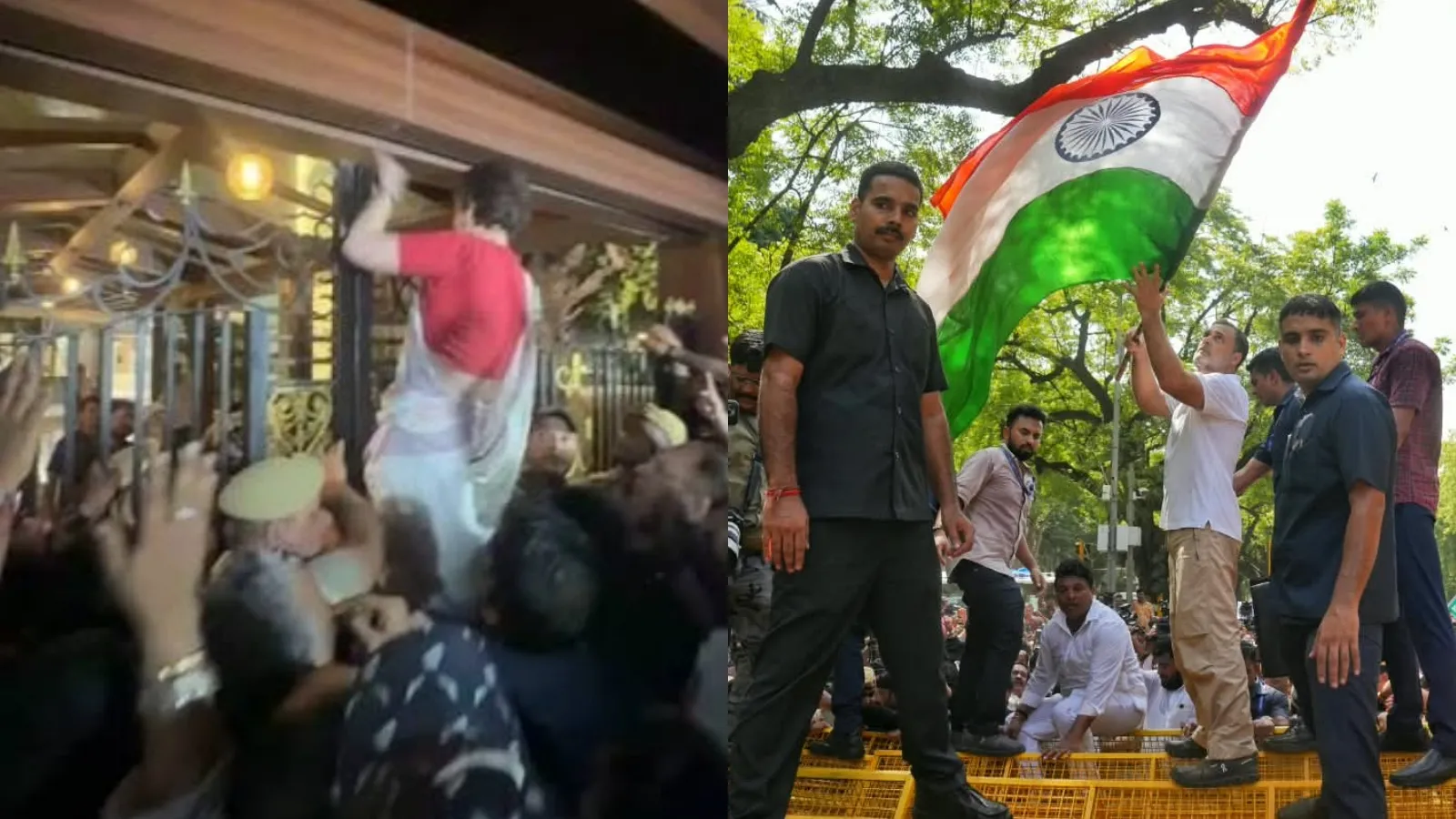
The protest continued because Rahul and Priyanka changed tactics when police blocked the march and detained MPs. Instead of leaving, they moved the demonstration to places where police had not expected them. Their actions kept attention on the demand for a meeting with election commissioners. Rahul first climbed a police barricade while holding the Tricolour. Later, he moved toward a bus near Akashvani Bhawan, where Priyanka was seated. They walked past police with supporters and settled under a tree inside the premises. Priyanka also climbed the gates at Kingsway Camp and opened them after Rahul was taken there. Police eventually removed Rahul and briefly detained him, but the protest continued into the evening. The siblings’ movements made the confrontation more visible and forced police to respond repeatedly. The article says Opposition MPs still sought a meeting, although the Election Commission said it had received no request from any political party.
Based on reporting by Indian Express
How did Rahul and Priyanka Gandhi keep the protest going after police blocked the march and detained several MPs?
The protest continued because Rahul and Priyanka changed tactics when police blocked the march and detained MPs. Instead of leaving, they moved the demonstration to places where police had not expected them. Their actions kept attention on the demand for a meeting with election commissioners.
Rahul first climbed a police barricade while holding the Tricolour. Later, he moved toward a bus near Akashvani Bhawan, where Priyanka was seated. They walked past police with supporters and settled under a tree inside the premises. Priyanka also climbed the gates at Kingsway Camp and opened them after Rahul was taken there.
Police eventually removed Rahul and briefly detained him, but the protest continued into the evening. The siblings’ movements made the confrontation more visible and forced police to respond repeatedly. The article says Opposition MPs still sought a meeting, although the Election Commission said it had received no request from any political party.
What is the INDIA bloc, and why was it marching to meet the Election Commission?
The INDIA bloc is an alliance of Opposition parties in Indian politics. The article presents it as the group behind the march from Parliament Street to the Election Commission. Its leaders wanted the poll panel to address concerns they said threatened the fairness of elections.
The immediate targets were Chief Election Commissioner Gyanesh Kumar and the Election Commission. Opposition leaders alleged electoral irregularities and objected to the Special Intensive Revision of electoral rolls. They wanted to meet the commissioners, ask questions, and press their claim that votes had been stolen. The article uses the phrase “vote chori,” but does not establish that theft occurred.
Police stopped the march with barricades and detained several MPs. The confrontation then shifted to Akashvani Bhawan and later Kingsway Camp. The article says the leaders refused to leave until granted a meeting. However, the Election Commission said it had received no meeting request from Congress or any political party.
How large was the planned march, and how far was the Election Commission headquarters from Parliament Street?
The planned action was large enough to involve roughly 300 members of both Houses of Parliament, according to Rahul Gandhi. That scale mattered because the protest was presented as a collective parliamentary challenge, not merely a small party gathering. It also increased the political visibility of the confrontation.
The route was remarkably short. The Election Commission headquarters stood barely 300 metres from Parliament Street. Despite that distance, Delhi Police stopped the march by placing barricades along the routes. Several MPs were detained and taken away in buses, leaving only a few Congress leaders at the original site.
The short route and large group made the police response especially noticeable. Once the march was blocked, Rahul and Priyanka redirected the protest into Akashvani Bhawan. The article says the confrontation lasted through the evening, with leaders continuing to demand access to the election commissioners. The exact number of participants is attributed to Rahul’s statement.
What are electoral irregularities and a Special Intensive Revision of electoral rolls, and why did the Opposition object to them?
Electoral irregularities are alleged departures from proper election rules or procedures. They can involve voter registration, roll accuracy, polling, counting, or other parts of an election. A Special Intensive Revision is a detailed exercise to check and update electoral rolls. Such reviews may add eligible voters, remove duplicates, and correct records.
These processes matter because electoral rolls determine who appears eligible to vote. The Opposition marched after alleging irregularities and objecting to the Special Intensive Revision. It wanted Chief Election Commissioner Gyanesh Kumar and other commissioners to answer questions. The article does not identify the specific alleged irregularities or explain which revision provisions the Opposition opposed.
The dispute therefore remained political and procedural in the reported protest. Rahul said the leaders wanted to tell commissioners about “vote chori,” while the Election Commission said it had received no meeting request. Any final judgment would require evidence about the alleged problems, the revision process, and its effects on individual voters.
What does the Election Commission of India do, and why would MPs want to question its commissioners directly?
The Election Commission of India is the constitutional body responsible for supervising elections to Parliament, state legislatures, and the offices of President and Vice-President. It also oversees electoral rolls, election schedules, polling arrangements, and related rules. These functions make it central to credible elections.
MPs might seek direct access to commissioners when they believe the poll panel must explain a decision or respond to allegations. In this article, Opposition leaders wanted to question Chief Election Commissioner Gyanesh Kumar about alleged electoral irregularities and the Special Intensive Revision. They said they represented voters and were protecting democracy.
Direct meetings can provide an official channel for presenting evidence, seeking clarification, and recording concerns. They can also affect public confidence, especially during a dispute over voter lists. The reported protest did not produce that meeting. Opposition leaders continued demanding one, while the Election Commission said it had received no request from Congress or any political party.
What consequences can follow when police use barricades and detentions to contain a political protest?
Police barricades and detentions are tools for controlling movement, protecting restricted areas, and managing public order. But they can also change a protest rather than end it. When demonstrators cannot use the planned route, they may seek another place, while police must rapidly adjust their response.
That pattern appeared here. Delhi Police blocked the roughly 300-metre march and detained several MPs in buses. Rahul then moved toward a bus near Akashvani Bhawan, and he and Priyanka entered the premises with supporters. Police later removed Rahul and other leaders. Priyanka subsequently opened gates at Kingsway Camp, allowing workers inside.
The immediate consequences included traffic disruption, clashes over responsibility, and repeated police action. Rahul blamed barricades for inconvenience to commuters, while Priyanka made a similar argument to an officer. The protest became a day-long confrontation instead of a single march. Such events can also deepen political disagreement and raise questions about balancing public order, access, and the right to protest.
Why are accurate electoral rolls foundational to democracy, and how can changing them affect who is able to vote?
Electoral rolls are foundational because they identify the people who can vote at each polling place. Accurate lists support equal participation, reduce confusion, and help election officials organize polling. Errors can exclude eligible citizens, while duplicate or ineligible entries can undermine confidence in the result.
Changing rolls is therefore powerful. Adding a qualified voter can restore that person’s access to the ballot. Correcting a duplicate entry can improve accuracy. But removing a person without proper notice, verification, or an appeal opportunity can prevent an eligible citizen from voting. A revision can affect participation even if the election-day process itself is orderly.
The article says the Opposition objected to a Special Intensive Revision and alleged electoral irregularities, but it gives no details about specific deletions or additions. It reports that leaders sought answers from the Election Commission. The key forward issue is transparency: authorities should explain changes and provide fair ways for affected voters to check and challenge them.
Key Facts:
📌 Rahul and Priyanka entered Akashvani Bhawan after police blocked the march.
📌 Rahul climbed a barricade while waving the Tricolour.
📌 Priyanka later opened gates at Kingsway Camp.
📌 The INDIA bloc is an alliance of Opposition parties.
📌 Leaders demanded action over alleged electoral irregularities.
📌 They also opposed the Special Intensive Revision of electoral rolls.
📌 Rahul said 300 Lok Sabha and Rajya Sabha MPs joined.