News · International Relations
Türkiye, Hungary launch new mechanism to deepen strategic ties
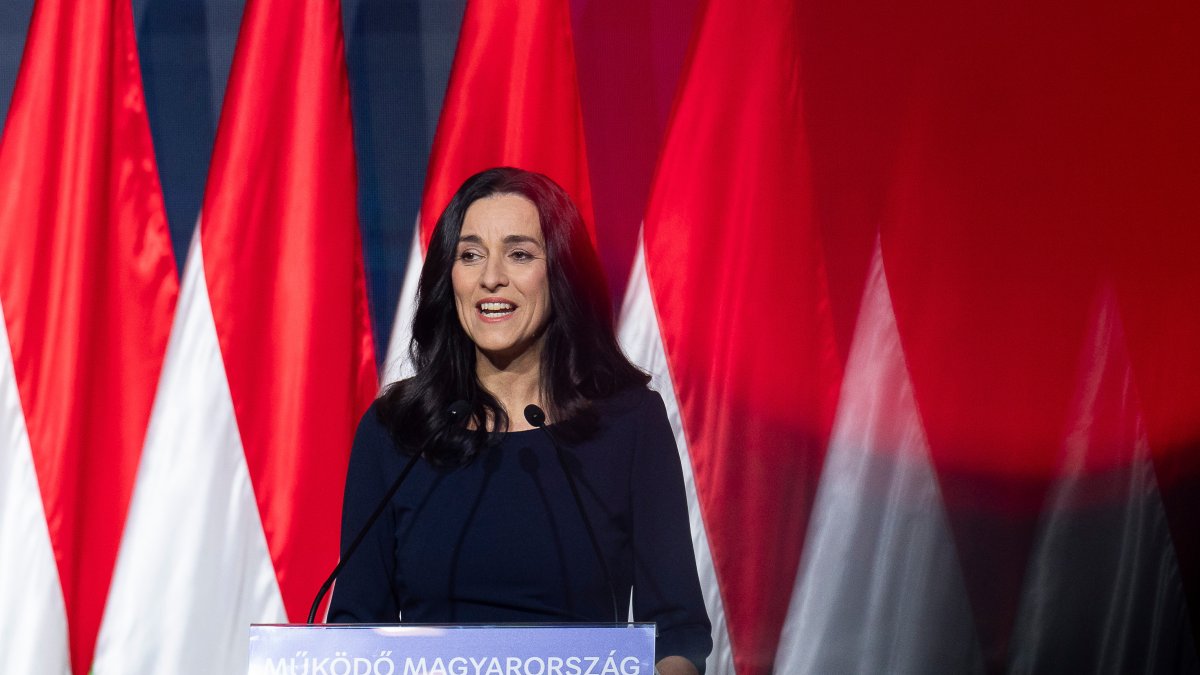
The Joint Planning Group is a new coordination mechanism between Türkiye and Hungary. It matters because both countries want their strategic partnership to produce practical results in trade, defense, energy, and regional security. Their foreign ministers will co-chair it. The group will coordinate decisions made by the High-Level Strategic Cooperation Council. It will also prepare future high-level meetings and help develop joint projects. Its first meeting is scheduled for Thursday, during Hungarian Foreign Minister Anita Orban’s visit to Türkiye on Oct. 8. The mechanism reflects expanding ties between two NATO allies. Türkiye and Hungary upgraded their relationship to an enhanced strategic partnership in 2023. The group could make cooperation more consistent by connecting political decisions with specific economic, defense, transportation, and energy initiatives.
Based on reporting by Daily Sabah Turkey
What is the Joint Planning Group, and why are Türkiye and Hungary creating it?
The Joint Planning Group is a new coordination mechanism between Türkiye and Hungary. It matters because both countries want their strategic partnership to produce practical results in trade, defense, energy, and regional security. Their foreign ministers will co-chair it.
The group will coordinate decisions made by the High-Level Strategic Cooperation Council. It will also prepare future high-level meetings and help develop joint projects. Its first meeting is scheduled for Thursday, during Hungarian Foreign Minister Anita Orban’s visit to Türkiye on Oct. 8.
The mechanism reflects expanding ties between two NATO allies. Türkiye and Hungary upgraded their relationship to an enhanced strategic partnership in 2023. The group could make cooperation more consistent by connecting political decisions with specific economic, defense, transportation, and energy initiatives.
Which areas—such as trade, defense, energy, transportation, and regional security—will the two countries coordinate through this new mechanism?
Türkiye and Hungary will use the mechanism to coordinate economic, security, and diplomatic priorities. Trade is central, with Türkiye seeking progress toward a $10 billion bilateral trade target. Defense cooperation is also prominent because both countries are NATO allies with shared security interests.
Energy, transportation, and connectivity will receive attention as areas for new joint projects. The ministers will also discuss Türkiye-European Union relations, including customs union modernization, visa liberalization, and Türkiye’s membership process. These topics connect bilateral cooperation with wider European policy.
Regional security gives the agenda an international dimension. The ministers are expected to discuss the Russia-Ukraine war, Gaza and Palestine, the Balkans, Iran, and the Strait of Hormuz. Hungary’s role in the Organization of Turkic States is another coordination area, linking Europe with the Turkic world.
How large is the economic relationship between Türkiye and Hungary, and how does the current $5.1 billion trade volume compare with their $10 billion target?
The economic relationship is significant but still below the level Türkiye and Hungary want. Bilateral trade reached approximately $5.1 billion in 2025. Türkiye is highlighting a $10 billion target as a milestone for expanding economic ties and encouraging more mutual investment.
Reaching that target would require about $4.9 billion in additional annual trade. In simple terms, trade would need to grow by roughly 96 percent, making the goal almost double the 2025 volume. The Joint Planning Group can help coordinate projects and policy support for that expansion.
Investment ties are smaller than trade. Turkish investments in Hungary total about $231 million, while Hungarian investments in Türkiye are about $35 million. Around 300 Turkish companies operate in Hungary, compared with nearly 100 Hungarian-capital companies in Türkiye.
What could happen if the Joint Planning Group successfully implements joint projects and expands trade, investment, energy, and defense cooperation?
If the group works effectively, Türkiye and Hungary could move from broad political cooperation toward more concrete results. New projects could expand trade, raise investment, improve connectivity, and deepen energy cooperation. Defense ties could also become more coordinated between the two NATO allies.
The mechanism’s key advantage is continuity. It is designed to implement High-Level Strategic Cooperation Council decisions and prepare future meetings. That structure could help officials identify projects, connect ministries, and maintain momentum instead of treating each issue as a separate diplomatic conversation.
The clearest economic benchmark is the $10 billion trade target, compared with $5.1 billion in 2025. Stronger implementation could also build on the existing business presence: about 300 Turkish companies operate in Hungary, while nearly 100 Hungarian-capital companies operate in Türkiye. The article presents these as goals and possibilities, not guaranteed outcomes.
How did Türkiye-Hungary relations develop from a strategic partnership in 2013 to an enhanced strategic partnership in 2023?
Türkiye and Hungary established the High-Level Strategic Cooperation Council in 2013. That decision elevated their bilateral relationship to a strategic partnership. The council created a regular framework for discussing political, economic, security, and other shared priorities.
The relationship later deepened through repeated council meetings. At the council’s sixth meeting in Budapest in 2023, the two countries upgraded their ties to an enhanced strategic partnership. This wording signaled a broader and more ambitious level of cooperation than the original strategic partnership.
The process continued after the upgrade. At the council’s seventh meeting in Istanbul on Dec. 8, 2025, Türkiye and Hungary established the Joint Planning Group. Co-chaired by the foreign ministers, it is intended to coordinate council decisions and prepare future high-level meetings. It therefore gives the upgraded partnership a practical implementation tool.
Why is Hungary an important partner for Türkiye in relation to the European Union and the Organization of Turkic States?
Hungary matters to Türkiye because it is both a European Union member and an active partner in the Organization of Turkic States. This gives Budapest relevance in two different diplomatic spaces. Türkiye wants Hungary’s support for its long-running EU accession process and related issues.
The article says the ministers will discuss customs union modernization, visa liberalization, and Türkiye’s EU membership process. Hungary also engages with the Organization of Turkic States. Ankara sees Budapest as important for strengthening interaction between Europe and the Turkic world.
This makes Hungary a useful bridge for dialogue, although it cannot decide the EU’s policies alone. Its support can contribute to Türkiye’s European diplomacy, while its Turkic States involvement can broaden connections beyond the EU. The Joint Planning Group gives both countries a regular setting for coordinating these overlapping interests.
What is the difference between NATO, the European Union, and a bilateral strategic partnership, and why might Türkiye want to be included in EU security initiatives even though it is not an EU member?
NATO, the European Union, and a bilateral strategic partnership are different structures. NATO is a military alliance focused on collective defense. The EU is a political and economic union with its own institutions and policies. A bilateral strategic partnership is an agreement between two countries to cooperate closely; it is not a separate international organization.
Türkiye is a NATO member but is not an EU member. The article says Ankara is pursuing EU accession and wants customs, visa, and security discussions to advance. Türkiye and Hungary’s enhanced strategic partnership is separate from both NATO and the EU, though it can support cooperation between them.
Türkiye argues that Europe’s security cannot be separated from its capabilities. It therefore expects effective inclusion in EU security and defense initiatives. The reason is practical: Türkiye wants its NATO experience, military capacity, and regional role considered in European security planning, even while accession remains unresolved.
Key Facts:
📌 The Joint Planning Group is co-chaired by Türkiye’s and Hungary’s foreign ministers.
📌 It coordinates strategic council decisions and prepares future high-level meetings.
📌 The group was established in Istanbul on Dec. 8, 2025.
📌 Trade, defense, energy, transportation, and connectivity are core cooperation areas.
📌 EU customs, visas, and accession issues are also on the agenda.
📌 Regional discussions include Ukraine, Gaza, the Balkans, Iran, and Hormuz.
📌 Bilateral trade reached approximately $5.1 billion in 2025.