News · Politics & Governance
Parliament’s Palestine Caucus to submit motion on Gaza genocide for debate
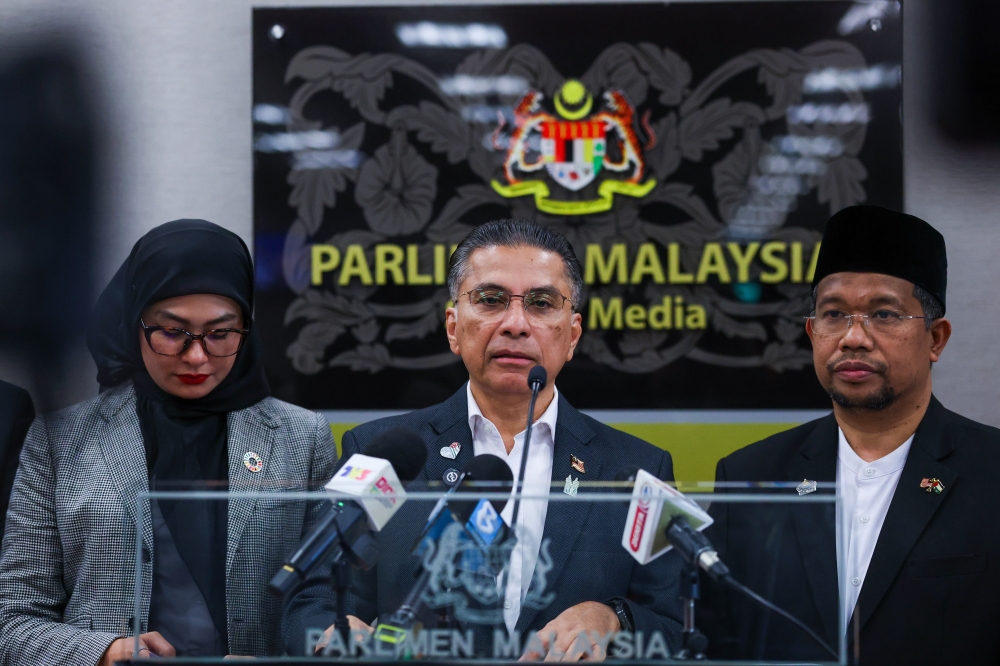
Malaysia’s Parliament Palestine Caucus is a group of lawmakers focused on Palestinian issues. In this case, it is using Parliament to raise Gaza’s humanitarian, legal and political crisis. The caucus gives the issue an organised voice inside the legislature rather than leaving it only to public statements or diplomacy. Its chairman, Syed Ibrahim Syed Noh, said the caucus would submit a motion to the Dewan Rakyat Speaker’s office. The proposed text covers a ceasefire, civilian protection, humanitarian access, Palestinian self-determination and support for relevant international court processes. It also calls for a Malaysian recovery framework. The caucus is now seeking enough time for substantive debate. It also wants participation from MPs across the political divide. Its influence will depend on whether the motion is accepted, scheduled and debated, and on whether the government acts on any recommendations that follow.
Based on reporting by Malay Mail Malaysia
What is Malaysia’s Parliament Palestine Caucus, and what role does it play in this issue?
Malaysia’s Parliament Palestine Caucus is a group of lawmakers focused on Palestinian issues. In this case, it is using Parliament to raise Gaza’s humanitarian, legal and political crisis. The caucus gives the issue an organised voice inside the legislature rather than leaving it only to public statements or diplomacy.
Its chairman, Syed Ibrahim Syed Noh, said the caucus would submit a motion to the Dewan Rakyat Speaker’s office. The proposed text covers a ceasefire, civilian protection, humanitarian access, Palestinian self-determination and support for relevant international court processes. It also calls for a Malaysian recovery framework.
The caucus is now seeking enough time for substantive debate. It also wants participation from MPs across the political divide. Its influence will depend on whether the motion is accepted, scheduled and debated, and on whether the government acts on any recommendations that follow.
What would the proposed motion ask Malaysia’s government and Parliament to do about Gaza?
The motion would ask Malaysia’s Parliament and government to support a lasting ceasefire, protect civilians and secure safe, sustained and unhindered humanitarian aid. It would reject forced displacement and affirm Palestinians’ right to self-determination. These demands address both immediate survival and Palestinians’ political rights.
It would also support the International Court of Justice and International Criminal Court within their respective jurisdictions. The motion would call for stronger diplomatic action, including scrutiny of military assistance and arms transfers that might facilitate violations of international law. This links Malaysia’s policy choices to the conduct of other states.
Finally, it would propose a coordinated Malaysian framework for Gaza’s recovery. Healthcare, education, child rehabilitation and Palestinian-led reconstruction would receive priority. The caucus wants sufficient debate time and cross-party participation before the motion is finalised and scheduled.
How does a motion move from being proposed to being scheduled and debated under Parliament’s Standing Orders?
A proposed motion does not automatically reach the chamber. The sponsoring group normally prepares its wording, submits it to the Speaker’s office and gives the required notice. Parliamentary officers and the Speaker can examine whether it meets the Standing Orders, including rules on form, relevance and admissibility. The article does not state the exact Malaysian timetable or tests.
If accepted, the motion must be placed on the parliamentary agenda. Scheduling depends on the House’s business arrangements and available sitting time. The caucus specifically asked for enough time for substantive debate and for MPs from both government and opposition benches to participate.
During the sitting, MPs may debate the motion under the applicable procedure. The House may then vote, amend it or take another permitted action. A motion can express Parliament’s position, but it does not automatically create a law or guarantee executive action. The article says the caucus will coordinate with the government and MPs to facilitate scheduling.
How large is Gaza’s population and territory, and how many people have been affected by the war and humanitarian crisis?
The Gaza Strip covers about 365 square kilometres. Before the current war, its population was roughly 2.2 to 2.3 million people, according to widely used international demographic estimates. That makes Gaza one of the world’s most densely populated territories. These figures are background context, not figures supplied by this article.
The article does not state how many people have been killed, injured, displaced or otherwise affected. Humanitarian agencies have reported that the crisis has touched virtually the whole population, with extensive displacement and damage to homes and essential services. Exact totals change and should be tied to a specific date and source.
Therefore, the safest answer is that more than two million residents form the affected population, while precise war totals cannot be calculated from the article alone. The caucus’s proposed priorities—aid, healthcare, education and child rehabilitation—reflect the scale and breadth of that humanitarian need.
What are the International Court of Justice and the International Criminal Court, and how are their roles different?
The International Court of Justice, or ICJ, is the United Nations’ principal court. It deals mainly with legal disputes between states and can issue provisional measures or judgments where it has jurisdiction. It can also give advisory opinions when authorised United Nations bodies request them. Its cases concern state responsibility, not ordinary criminal trials of individuals.
The International Criminal Court, or ICC, prosecutes people accused of genocide, crimes against humanity, war crimes and aggression. It investigates and tries individuals, not governments. Its jurisdiction depends on legal conditions such as territory, nationality, a Security Council referral or acceptance by a relevant state, subject to the Rome Statute.
The article says the proposed motion would support both courts within their respective jurisdictions. That wording matters. It recognises that the ICJ and ICC have different mandates, procedures and targets. Supporting their processes does not itself decide the merits of any case or guarantee a particular outcome.
What practical consequences could a Malaysian parliamentary motion have for diplomacy, arms transfers, humanitarian aid, and Gaza’s recovery?
A parliamentary motion can turn concern into a stated national position. If adopted and acted upon, it could strengthen Malaysia’s diplomatic advocacy for a ceasefire, civilian protection and humanitarian access. It could also guide Malaysia’s engagement with other governments and international institutions. However, a motion is not automatically a law or an enforceable international order.
The proposed text specifically calls for scrutiny of military assistance and arms transfers that risk facilitating violations of international law. Malaysia could use that position in diplomatic discussions and policy reviews. It also proposes coordinated recovery planning focused on healthcare, education, child rehabilitation and Palestinian-led reconstruction. Those priorities could help organise future aid.
The immediate reality is that debate and adoption would not alone deliver supplies or rebuild damaged facilities. Implementation would require budgets, agencies, partners and safe access. The motion could nevertheless create political accountability and a framework for sustained Malaysian support, if the government translates its commitments into action.
How does international law define genocide, and how is that legal concept different from other wartime violations?
Under the Genocide Convention, genocide means certain acts committed with intent to destroy, in whole or in part, a national, ethnical, racial or religious group. The listed acts include killing members, causing serious bodily or mental harm, creating destructive living conditions, preventing births or forcibly transferring children. The special intent to destroy the group is central.
War crimes are serious violations of international humanitarian law committed during armed conflict. They include intentionally attacking civilians, torture and unlawful treatment of prisoners. Crimes against humanity involve widespread or systematic attacks against civilians, such as murder, persecution or deportation. They do not require an intent to destroy a protected group.
The article describes Gaza’s situation as genocide in the caucus’s commemoration and proposed motion. That political description is not the same as a final judicial finding. Whether genocide or another crime has legally occurred depends on evidence, definitions and the jurisdiction of a competent court.
Key Facts:
📌 The caucus focuses parliamentary attention on Palestine and Gaza.
📌 Syed Ibrahim Syed Noh chairs the caucus.
📌 It is seeking debate during next week’s parliamentary sitting.
📌 The motion calls for a lasting ceasefire and civilian protection.
📌 It rejects forced displacement and supports Palestinian self-determination.
📌 Recovery priorities include healthcare, education and child rehabilitation.
📌 The caucus will submit the motion to the Dewan Rakyat Speaker’s office.