News · Economy & Business
Anwar: Budget 2027 to turn economic growth into better lives for Malaysians
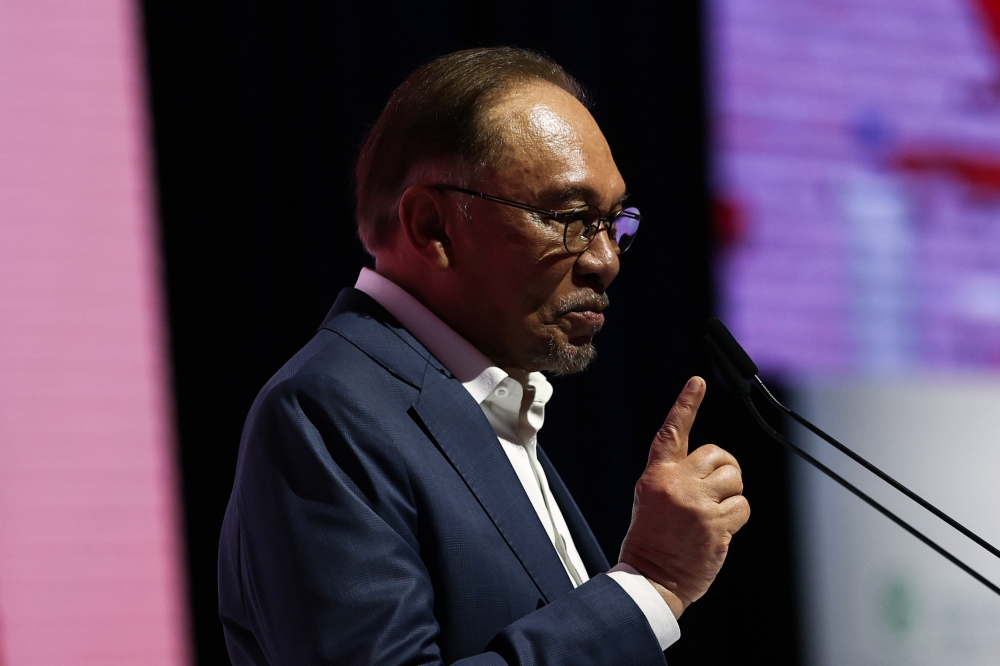
Malaysia’s Budget 2027 is the federal government’s plan for raising and spending public money. It also sets policy direction, not merely accounting figures. Prime Minister Anwar Ibrahim says its central goal is to strengthen the economy and translate growth into a better life for Malaysians. The government labels it the Fifth Madani Budget because it is presented as the fifth budget connected with the Madani framework. The article does not list the earlier budgets or explain the numbering in detail. It does identify the budget’s broad purpose: making development benefits more widely shared. Anwar is scheduled to present the full budget in the Dewan Rakyat on Friday at 3.30pm. Until that presentation, the article gives principles rather than detailed allocations. The announced direction is to reduce burdens, protect people, create opportunities, and make development more equitable. Those details will show how the framework becomes actual programmes and spending.
Based on reporting by Malay Mail Malaysia
What is Malaysia’s Budget 2027, and what does the government mean by calling it the Fifth Madani Budget?
Malaysia’s Budget 2027 is the federal government’s plan for raising and spending public money. It also sets policy direction, not merely accounting figures. Prime Minister Anwar Ibrahim says its central goal is to strengthen the economy and translate growth into a better life for Malaysians.
The government labels it the Fifth Madani Budget because it is presented as the fifth budget connected with the Madani framework. The article does not list the earlier budgets or explain the numbering in detail. It does identify the budget’s broad purpose: making development benefits more widely shared.
Anwar is scheduled to present the full budget in the Dewan Rakyat on Friday at 3.30pm. Until that presentation, the article gives principles rather than detailed allocations. The announced direction is to reduce burdens, protect people, create opportunities, and make development more equitable. Those details will show how the framework becomes actual programmes and spending.
What four priorities does Anwar say Budget 2027 will pursue for Malaysians?
Budget 2027 will pursue four stated priorities. First, it aims to alleviate burdens, especially pressures that make daily life more expensive. Second, it will protect the people through government support and safeguards. Third, it will create opportunities, which can include pathways for work, enterprise, or participation in growth. Fourth, it will ensure development benefits are felt more equitably.
These priorities matter because growth can look strong in national statistics while families experience little improvement. Anwar specifically says economic growth alone is insufficient when some citizens still face rising living costs. The budget therefore links national economic strength with household security and fairer access to progress.
The article does not yet provide programme names, eligibility rules, or amounts. Anwar says he will present all details on Friday. The practical test will be whether final measures reduce pressure, expand opportunities, protect vulnerable groups, and distribute public investment beyond the areas or groups that already benefit most.
How large is Malaysia’s federal budget typically, and how is that money divided among areas such as subsidies, healthcare, education, and development?
Malaysia’s federal budget is usually a very large national plan, measured in hundreds of billions of ringgit. Recent budgets have generally been around the RM400-billion range, although the exact total changes with government priorities, revenue, borrowing, and economic conditions. The article itself gives no total for Budget 2027.
Money is divided across operating and development spending. Operating spending pays for recurring needs such as public salaries, administration, debt service, transfers, and some subsidies. Development spending funds longer-term projects, including infrastructure and public facilities. Healthcare and education can appear across these categories, while subsidies may support households or control selected prices.
There is no fixed annual percentage for each area. A budget may increase health, education, targeted aid, or infrastructure while reducing another allocation. Therefore, the precise shares for Budget 2027 cannot be known from this article. They should be checked against the government’s detailed budget documents after Anwar’s presentation on Friday.
What practical effects could Budget 2027 have on household costs, employment opportunities, and access to public services?
For households, Budget 2027 could ease costs through support, protection, or measures that improve access to essential services. The government’s stated concern is clear: growth is not enough when people still face rising living costs. Any benefit would depend on who qualifies, how much support is provided, and whether measures reach people quickly.
Employment opportunities could expand if spending encourages investment, training, businesses, or infrastructure projects. The key mechanism would be public money supporting activities that create jobs or improve people’s ability to obtain them. Public services could also improve through additional resources for facilities, staff, and service delivery. These are possible channels, not confirmed measures.
The article does not announce specific subsidies, job schemes, or service allocations. Anwar will present the full budget in the Dewan Rakyat on Friday at 3.30pm. Its real impact will depend on implementation, targeting, funding levels, and whether programmes produce lasting gains rather than temporary relief.
Why can a country’s economy grow while some people still struggle with rising living costs?
Economic growth means the economy produces more goods and services, often measured through rising gross domestic product. That increase can come from investment, exports, productivity, or stronger demand. It does not automatically mean every household receives higher income or can afford more. Gains may concentrate in certain regions, industries, or groups.
Inflation adds another pressure. When prices for food, rent, transport, or other essentials rise, families need more money to maintain the same lifestyle. If wages or assistance grow more slowly than prices, purchasing power falls even while national output expands. A country can therefore report healthy growth while many people feel financially squeezed.
Anwar acknowledges this tension directly. He says growth alone is insufficient if some citizens still face rising living costs. Budget 2027 is meant to respond through burden relief, protection, opportunities, and fairer development. Whether it succeeds will depend on how widely income gains and support reach, not only on headline growth figures.
Who is responsible for proposing, approving, and carrying out Malaysia’s national budget?
Malaysia’s executive government prepares the national budget. The Ministry of Finance develops the proposals with ministries and agencies, while the finance minister presents the plan in Parliament. In this article, Anwar Ibrahim holds both roles: he is prime minister and finance minister, and he will present Budget 2027.
Parliament is responsible for examining and approving the spending legislation. The Dewan Rakyat debates the proposals first, followed by the Dewan Negara under Malaysia’s parliamentary process. Once legally authorised, public funds can be released for approved purposes. This separation lets elected representatives question priorities and proposed spending.
Implementation belongs mainly to the Treasury, ministries, departments, and government agencies. They collect revenue, manage allocations, deliver programmes, and report on spending. The article confirms the presentation date but does not describe the approval timetable or implementation machinery. In practice, the budget’s results depend on decisions across all these stages, not on the speech alone.
What are economic growth, inflation, and equitable development, and how do they differ from simply making the economy larger?
Economic growth is an increase in the value of goods and services a country produces over time. Inflation is a sustained rise in average prices, which reduces what money can buy. Equitable development means spreading the benefits of progress more fairly across people, regions, and income groups. These ideas describe different parts of economic life.
A country can grow while inflation makes necessities costlier. It can also grow while gains go mainly to certain industries, cities, or higher-income households. In that case, the economy is larger, but many people may not experience better security or opportunity. Equitable development focuses on who benefits, not only on the size of total output.
This distinction explains Anwar’s message. He says growth alone is insufficient when some citizens face rising living costs. Budget 2027 therefore aims to connect expansion with burden relief, protection, opportunities, and fairer development. The article does not provide indicators or targets, so its success cannot yet be measured from the announcement alone.
Key Facts:
📌 Budget 2027 is Malaysia’s federal spending and policy plan.
📌 It is described as the Fifth Madani Budget.
📌 Anwar will present full details in the Dewan Rakyat.
📌 Budget 2027 will focus on alleviating burdens.
📌 It will protect people and create opportunities.
📌 It aims to distribute development benefits more equitably.
📌 Malaysia’s federal budget is typically worth hundreds of billions of ringgit.