News · International Relations
Why have India-US trade talks stalled again and what’s next?
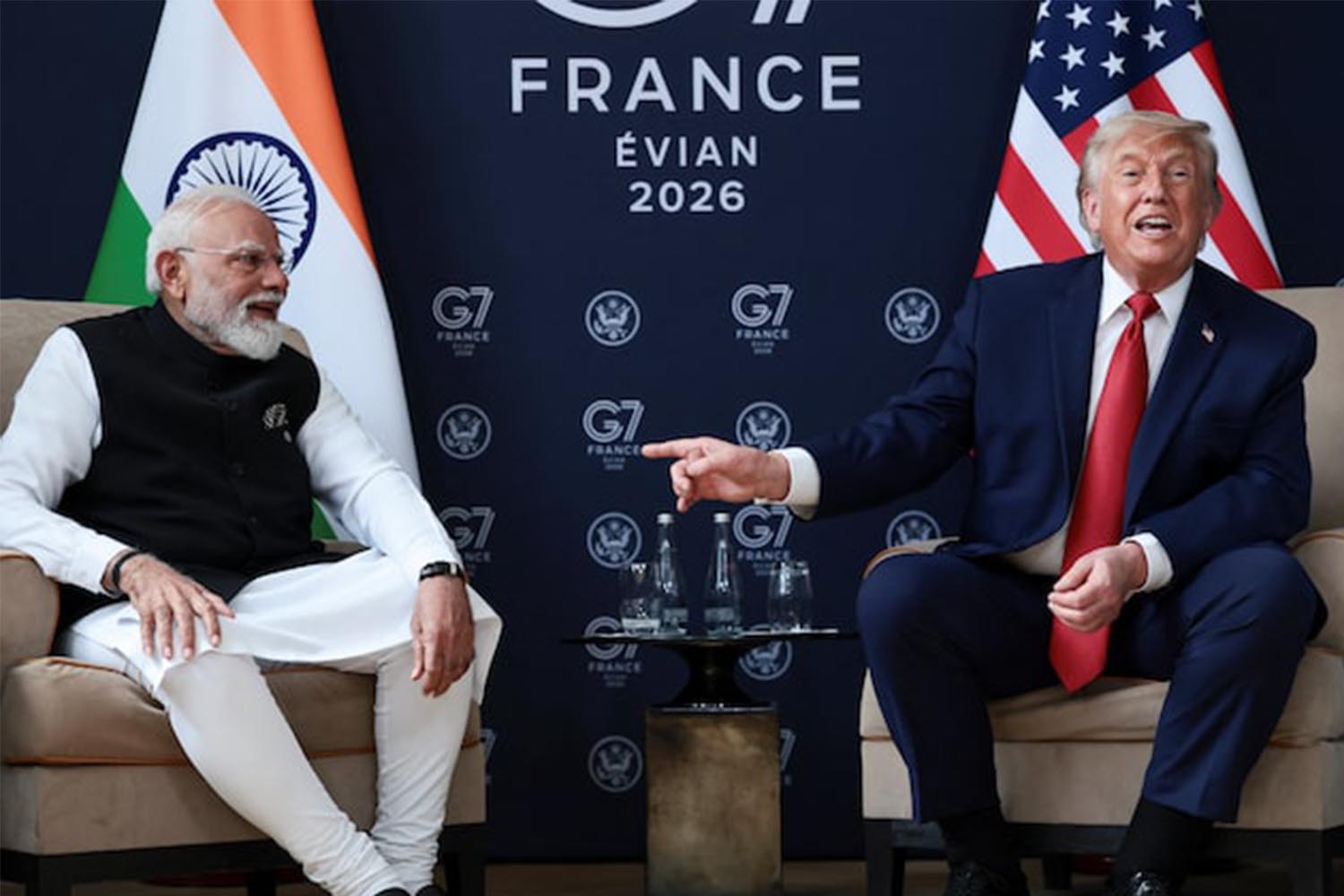
The agreement is stuck because both governments still disagree over market access and tariff certainty. India wants better treatment for its exporters, but it will not easily open politically sensitive farm sectors. The United States wants concessions on trade and pressure on India to reduce Russian oil purchases. India seeks to exclude dairy, poultry, rice, wheat, and other farm products from market-opening commitments. Meanwhile, a new US law could allow tariffs as high as 100% on Indian goods because India continues buying Russian oil. A separate Section 301 investigation into excess industrial capacity could also change the final tariff rate. These unresolved issues make it difficult to calculate the value of a final deal. India wants terms better than those offered to economies such as Vietnam and China. The talks have reached a plateau, but visits and calls planned between senior officials could restart progress.
Based on reporting by Kathmandu Post Nepal
What parts of the India-US trade agreement are still preventing the two countries from reaching a final deal?
The agreement is stuck because both governments still disagree over market access and tariff certainty. India wants better treatment for its exporters, but it will not easily open politically sensitive farm sectors. The United States wants concessions on trade and pressure on India to reduce Russian oil purchases.
India seeks to exclude dairy, poultry, rice, wheat, and other farm products from market-opening commitments. Meanwhile, a new US law could allow tariffs as high as 100% on Indian goods because India continues buying Russian oil. A separate Section 301 investigation into excess industrial capacity could also change the final tariff rate.
These unresolved issues make it difficult to calculate the value of a final deal. India wants terms better than those offered to economies such as Vietnam and China. The talks have reached a plateau, but visits and calls planned between senior officials could restart progress.
What is a bilateral trade agreement, and how can it change the tariffs countries charge on each other's goods?
A bilateral trade agreement is a negotiated set of rules between two countries. It usually covers tariffs, market access, and sometimes standards or restrictions. Its purpose is to make trade more predictable and mutually beneficial. India and the United States are trying to create such an agreement.
Tariffs are charges placed on imported goods. An agreement can reduce them from a high rate to a lower rate, eliminate them for selected products, or preserve exemptions. The February framework cut the punitive US tariff on most Indian goods from 50% to 18%. Later, a Supreme Court ruling produced a 10% baseline rate under the article’s account.
Lower tariffs can help exporters sell more competitively, while higher tariffs protect some domestic producers but raise import costs. The final India-US deal remains unfinished because the countries disagree over agriculture, Russian oil, and future US tariff rules. Those rules determine how much businesses can plan and invest.
How important is the US market to India, in terms of Indian exports and its trade surplus with the United States?
The US market is central to India’s trade position. It is India’s largest export destination, so changes in American tariffs can affect Indian factories, exporters, investors, and the currency. A stable agreement would give businesses clearer access to an exceptionally important customer.
India’s goods exports to the United States reached $42.79 billion in April-August, compared with $40.39 billion a year earlier. In fiscal year 2025/26, India recorded a trade surplus of nearly $34 billion with the US. This means India sold substantially more goods to America than it bought from America during that period.
Exports have remained resilient despite the negotiations. India says major categories, including generic medicines and smartphones, are not covered by the current 10% levy. However, higher tariffs from the Russian-oil dispute or US trade investigation could weaken that resilience and reduce the value of this vital market.
What does each side want from the negotiations, especially regarding Indian agriculture, US tariffs, and India's purchases of Russian oil?
India’s main goal is better tariff treatment for its exporters without exposing politically sensitive agriculture to sudden competition. It wants dairy, poultry, rice, wheat, and other farm products kept outside market-opening commitments. India also wants clearer knowledge of future US tariffs before making concessions.
The United States is pressing India to reduce purchases of Russian crude. Washington argues that these purchases help finance Russia’s war in Ukraine. India says fuel-sourcing decisions reflect the energy needs of its 1.4-billion-person population. Russian oil remains attractive because it has been available at discounted prices.
The disagreement is difficult because each side controls something the other values. India offers access to a large market and wants export opportunities. The US controls tariff treatment and seeks changes in India’s energy policy. Talks could advance during Secretary of State Marco Rubio’s expected visit and further discussions between Modi and Trump.
What could happen to Indian businesses, exports, the rupee, and consumer prices if the United States imposes higher tariffs?
Higher tariffs would make Indian goods more expensive in the US market unless exporters or buyers absorbed the extra cost. That could reduce demand, squeeze Indian companies’ profits, and discourage investment. Because the US is India’s largest export market, the effects could spread beyond individual industries.
The article warns that another tariff increase could hurt businesses, damage market sentiment, and weaken the Indian currency. A weaker rupee can make imported fuel, machinery, and other goods more expensive for India. In the United States, importers often pay tariffs at the border, but they may pass those costs to consumers through higher prices. Exporters may also cut prices to remain competitive.
The scale would depend on which products were targeted and whether exemptions were available. Generic pharmaceuticals and smartphones are not subject to the current 10% levy, according to India. Still, unresolved Russian-oil measures and the Section 301 investigation create continuing risks for trade and financial confidence.
Why did Russian crude become especially important to India after Russia invaded Ukraine, and what trade-offs does India face in continuing to buy it?
Russia’s full-scale invasion of Ukraine changed India’s energy calculations. Russian crude became particularly important because it was available at discounted prices. Buying it helped India manage the fuel needs of its 1.4-billion-person population, especially while global energy markets faced disruption.
The trade-off is direct. Continuing purchases can lower India’s energy costs and support supply security. However, Washington argues that Indian payments help finance Russia’s war in Ukraine. A new US law could therefore enable tariffs of up to 100% on Indian goods. Conflict in the Middle East has added further uncertainty to energy-import decisions.
India has not significantly reduced its Russian oil purchases, according to the article. It says sourcing choices are driven by domestic energy needs rather than political preference. Continuing the purchases may protect consumers and energy access, but it could weaken India’s trade position with the US and complicate the broader relationship.
How do tariffs work in practice, who usually pays them, and why can they influence trade, exchange rates, and diplomatic relations?
A tariff is a government charge on goods entering a country. Customs authorities collect it from the importer, such as a company bringing products into the United States. Importers may absorb the cost, reduce what they pay exporters, or pass it to consumers through higher prices. Tariffs can protect local producers but make imported goods less competitive.
For example, the article says the US previously imposed a punitive tariff on most Indian goods, then reduced it from 50% to 18% under a February framework. The article also describes a 10% baseline rate. If tariffs rise, Indian exporters may sell less, cut prices, or lose market share. Lower imports can also affect trade balances and demand for currencies.
Tariffs therefore influence more than customs bills. They can hurt business confidence, weaken a currency such as India’s rupee, and provoke retaliation or negotiation. In this case, tariff threats are linked to agriculture, Russian oil, sanctions, and wider India-US relations.
Key Facts:
📌 Russian oil purchases could trigger US tariffs as high as 100%.
📌 India wants agriculture largely excluded from market-opening commitments.
📌 A US industrial-capacity investigation could change India’s final tariff rate.
📌 A bilateral trade agreement involves two countries.
📌 Tariffs are charges on imported goods.
📌 The February framework cut a punitive tariff from 50% to 18%.
📌 The United States is India’s largest export market.