News · Defence & Security
Denmark Says Russia Has Conducted Sabotage Attacks Against Its Defense Firms
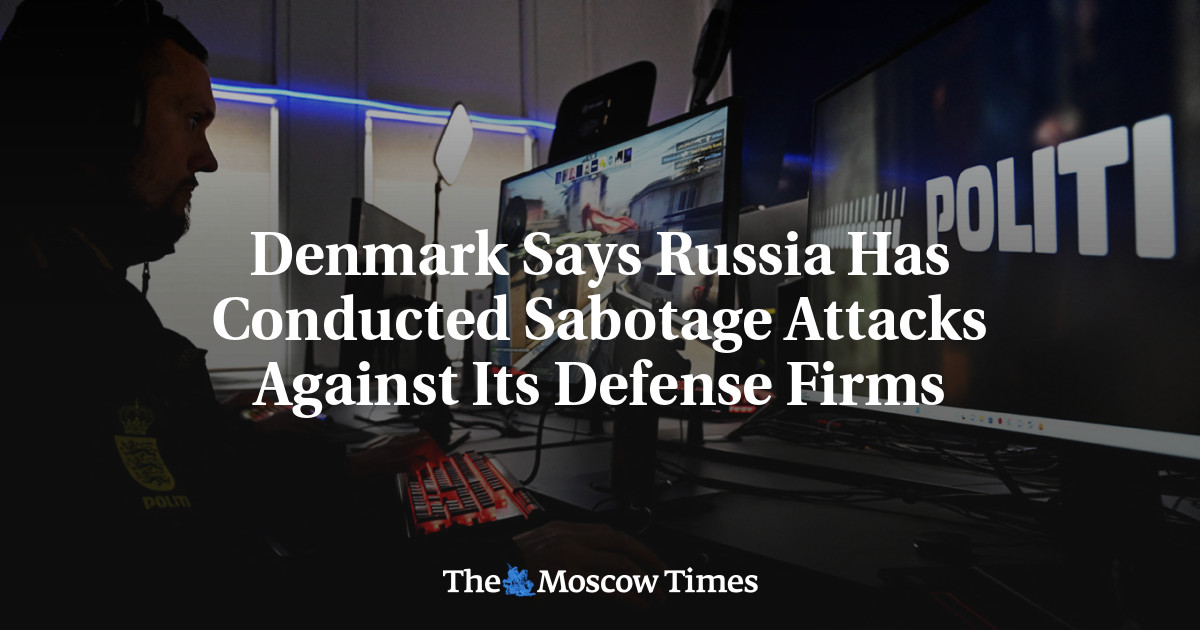
Danish intelligence says Russia has begun targeting Danish companies connected to Ukraine’s military supply chain. This marks an escalation from wider disruption efforts that Moscow believed had failed to deter NATO support. The allegation concerns sabotage, not simply political pressure or online influence. Russia denies involvement, and the Russian Embassy in Copenhagen called the accusations unfounded. PET analyst Josefine Christensen said Moscow is now seeking targets with a direct effect on the front line. That includes weapons production. She also cited a Russian Defense Ministry list naming European drone and drone-component manufacturers as potential military targets. The article does not identify specific Danish companies or describe individual sabotage incidents. The alleged shift suggests that Russia is trying to make Western military assistance more costly and difficult. Denmark’s intelligence services warn that operational boldness is growing. However, the claims remain allegations from Danish authorities, while Moscow rejects them.
Based on reporting by Moscow Times
What does Denmark allege Russia has done to Danish companies that supply weapons or equipment to Ukraine?
Danish intelligence says Russia has begun targeting Danish companies connected to Ukraine’s military supply chain. This marks an escalation from wider disruption efforts that Moscow believed had failed to deter NATO support. The allegation concerns sabotage, not simply political pressure or online influence. Russia denies involvement, and the Russian Embassy in Copenhagen called the accusations unfounded.
PET analyst Josefine Christensen said Moscow is now seeking targets with a direct effect on the front line. That includes weapons production. She also cited a Russian Defense Ministry list naming European drone and drone-component manufacturers as potential military targets. The article does not identify specific Danish companies or describe individual sabotage incidents.
The alleged shift suggests that Russia is trying to make Western military assistance more costly and difficult. Denmark’s intelligence services warn that operational boldness is growing. However, the claims remain allegations from Danish authorities, while Moscow rejects them.
What is hybrid warfare, and how does sabotage fit into it?
Hybrid warfare is a campaign that mixes different forms of pressure instead of relying only on conventional combat. It can include sabotage, cyberattacks, disinformation, espionage, economic coercion, and disruptive actions against infrastructure. The purpose is to weaken an opponent, create uncertainty, and impose costs without openly declaring war. This broader definition comes from established security usage; the article specifically discusses sabotage and disruption.
Sabotage is one tool within that campaign. Russia is accused of using recruited proxies to conduct reconnaissance, photography, and eventually attacks on production or other targets. Drone incidents can also disrupt airports and public confidence. These actions exploit ambiguity because authorities may struggle to prove who ordered them.
The article presents the alleged operations as part of Moscow’s escalating hybrid campaign against Western support for Ukraine. PET says planning increased in spring and execution increased in early summer. Russia denies conducting such operations, so the reported attribution remains contested.
How much has Russia’s alleged sabotage activity increased, and what examples of disruption does the article cite?
The article describes a clear increase in alleged activity, but it gives no numerical measure. PET analyst Josefine Christensen said spring brought “a lot of planning” and “very little carried out.” By early summer, she said, Russia had begun carrying out much more. PET also says Moscow’s operational boldness is growing, especially against targets linked directly to Ukraine’s front line.
Examples include alleged sabotage against companies supplying Ukraine, including weapons producers. The article also mentions Germany’s blame for an attempted drone attack at Leipzig/Halle Airport in August. In September 2025, drones disrupted air traffic at six Danish airports, including Copenhagen’s. Denmark’s prime minister called that incident a hybrid attack.
These examples show several kinds of disruption: industrial targeting, attempted airport attacks, and interference with civilian aviation. The article does not prove that Russia caused every cited incident. Russia denies involvement, and the claims come from Danish authorities or other officials cited in the report.
Who is allegedly carrying out these operations, and how are ordinary people recruited as proxies?
According to PET, the alleged operators are not always trained Russian officers. Russia is increasingly using ordinary people as deniable proxies, including homeless people and people addicted to drugs. The article says these recruits may be chosen because they are vulnerable, accessible, or willing to accept quick payment. Russia’s government is described as retaining political control while allowing greater operational boldness.
Recruitment reportedly begins on Telegram or other social media platforms. A person may first receive a low-risk assignment, such as photographing a location or conducting reconnaissance. If that task succeeds, the work can escalate toward sabotage. Christensen said recruiters may try another person if the first attempt fails, treating the operation as replaceable.
This method broadens the pool of potential attackers and makes early warning harder. It also separates planners from the people physically carrying out tasks. These details are PET’s allegations. The article does not establish how many proxies have been recruited or confirm their identities.
Why would targeting weapons manufacturers have a more direct effect on the war in Ukraine than broader disruption efforts?
Targeting weapons manufacturers could affect the war more directly than broad disruption because production determines how much equipment reaches Ukraine. Damage to a factory, supplier, or component maker can delay deliveries, reduce output, or force costly repairs. By contrast, a wider disruption campaign may create inconvenience or fear without changing military assistance enough to alter battlefield conditions.
The article says Russia concluded that its previous “broad-spectrum targeting” had not deterred NATO from supporting Ukraine. Christensen therefore described a shift toward targets with a direct front-line impact. She specifically named weapons production and cited a Russian list of European drone and drone-component manufacturers described as potential military targets.
The likely strategic aim is to raise the cost and difficulty of continued support. That does not mean every alleged attack would succeed, or that one damaged supplier would stop aid. It means industrial disruption could create delays and bottlenecks. The article reports allegations, while Moscow denies responsibility.
Why might a state use deniable proxies instead of openly using its own military or intelligence officers?
A state might use deniable proxies to create distance between its leadership and an attack. If the people caught are ordinary recruits, officials can dispute whether the government ordered the operation. This can reduce the immediate risk of retaliation or escalation. It can also allow a state to test defenses without openly sending military or intelligence personnel. These are established reasons states use covert proxies; the article does not directly explain the strategic calculation.
The reported Russian method illustrates this distance. PET says recruitment starts through Telegram and other social media. Recruits may photograph a site or conduct reconnaissance before moving toward sabotage. Christensen said they could be anyone seeking quick money, and that another person might be tried if one failed.
Proxy use is not risk-free. Investigators may trace communications, payments, or instructions back to organizers. Public attribution can still produce diplomatic, economic, or security consequences. In this case, Russia denies involvement, while Danish officials say political control remains in Moscow.
How can sabotage, drone disruptions, and other attacks below the level of open war pressure an alliance such as NATO?
Attacks below the level of open war can pressure NATO by imposing repeated costs without creating a clear moment for military retaliation. Sabotage may threaten factories, drone disruptions can affect airports, and other covert actions can undermine public confidence. The challenge is political as well as physical: allies must decide how serious each incident is and how to respond together. This broader explanation uses established security analysis beyond the article’s explicit wording.
The article gives concrete examples. Drones disrupted air traffic at six Danish airports in September 2025, including Copenhagen. Germany blamed Russia for an attempted drone attack at Leipzig/Halle Airport in August. PET also alleges sabotage against companies connected to weapons production. Each incident can force extra spending on protection, investigation, and continuity.
Over time, such pressure may test alliance unity and distract governments from supporting Ukraine. It can also create uncertainty about escalation. Denmark’s defense intelligence service expects Russia to intensify hybrid attacks in coming months. Russia denies involvement in sabotage and hybrid operations.
Key Facts:
📌 Denmark alleges Russia is targeting companies supplying Ukraine’s war effort.
📌 The reported focus has shifted toward weapons and drone production.
📌 Russia denies involvement and calls the accusations unfounded.
📌 Hybrid warfare combines covert pressure, disruption, and military-adjacent tools.
📌 Sabotage can damage targets without open combat.
📌 Proxy operations help preserve uncertainty about responsibility.
📌 PET reported a shift from planning in spring to more operations by early summer.