News · Politics & Governance
The end of the PT era is decreed,
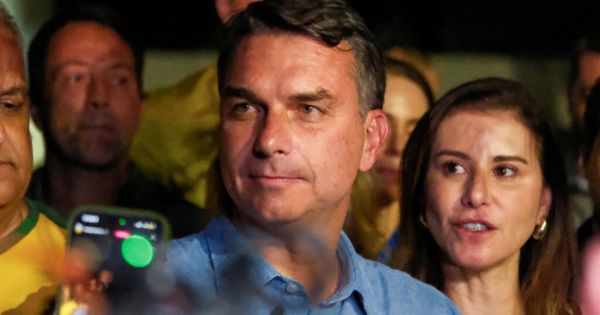
Brazil’s first round produced no outright winner. Flávio Bolsonaro led President Luiz Inácio Lula da Silva by 47.08% to 45.10% of valid votes, with almost 99% counted. The result sends both candidates into a second contest rather than immediately deciding the presidency. Brazil uses a majority system for presidential elections. A candidate normally must win more than half of valid votes. Since neither Bolsonaro nor Lula reached that threshold, the two leading candidates advance. Other candidates are eliminated, and their former supporters can choose again. The runoff is scheduled for October 25. Bolsonaro celebrated what he called a demand for change and declared the “end of the PT era.” Lula questioned Bolsonaro’s record and linked him to the Banco Master investigation. The final result will depend on turnout, campaign messages, and how eliminated candidates’ voters respond.
Based on reporting by MercoPress South America
What happened in Brazil's first-round presidential election, and why will Lula and Flávio Bolsonaro face each other again?
Brazil’s first round produced no outright winner. Flávio Bolsonaro led President Luiz Inácio Lula da Silva by 47.08% to 45.10% of valid votes, with almost 99% counted. The result sends both candidates into a second contest rather than immediately deciding the presidency.
Brazil uses a majority system for presidential elections. A candidate normally must win more than half of valid votes. Since neither Bolsonaro nor Lula reached that threshold, the two leading candidates advance. Other candidates are eliminated, and their former supporters can choose again.
The runoff is scheduled for October 25. Bolsonaro celebrated what he called a demand for change and declared the “end of the PT era.” Lula questioned Bolsonaro’s record and linked him to the Banco Master investigation. The final result will depend on turnout, campaign messages, and how eliminated candidates’ voters respond.
What is the PT, and what does Bolsonaro mean by declaring the “end of the PT era”?
PT stands for Partido dos Trabalhadores, or Workers’ Party. It is Lula’s political party and has been a major force in Brazil’s national politics. Bolsonaro’s phrase, “the end of the PT era,” is therefore a political claim about ending the party’s influence over the presidency and national policy.
His statement followed a first-round result in which he narrowly led Lula. Bolsonaro presented the election as a choice about change. He said Brazil could not take more of the existing situation and portrayed the PT period as something voters should close. The phrase is campaign language, not a formal legal declaration.
The PT would not disappear if Bolsonaro won. Its legislators, supporters, and institutions would remain. The immediate consequence would instead be a change in presidential leadership. The runoff will show whether voters who supported other candidates accept Bolsonaro’s call for change or return Lula to office.
How many votes and what share of the vote did Bolsonaro and Lula receive, and how close was the race?
With almost 99% of votes counted, Bolsonaro held 47.08% of valid votes, while Lula had 45.10%. Bolsonaro thanked “almost 56 million” voters. Applying Lula’s reported percentage to the same valid-vote total gives roughly 53.6 million votes for Lula. The article does not state Lula’s exact count.
The percentage gap was 1.98 points. That is a narrow first-round lead, especially in a large country with many voters. Bolsonaro finished first, but his lead was far too small to settle the presidency under Brazil’s majority rule. Both candidates therefore remained viable for the next round.
The figures also show why the runoff matters. Bolsonaro needs to preserve his support and attract additional voters. Lula must close the small gap and persuade supporters of eliminated candidates. Turnout and voter choices after the first round can change the final winner, even when the initial leader is clear.
What happens in a presidential runoff, and how could the second round change the result of the election?
A presidential runoff gives voters a final choice when no candidate wins a majority in the first round. The two highest-placed candidates advance, while the others leave the race. The candidate who receives more valid votes in the runoff wins the presidency. This creates a clearer majority than a crowded first round can produce.
In this election, Bolsonaro led Lula by 1.98 percentage points, but neither reached 50%. Voters who backed other candidates now face a different decision. Campaigns will seek those voters through new promises, alliances, and attacks. Some first-round voters may also stay home, affecting the totals.
The second round can therefore produce a different winner. Bolsonaro must turn his narrow lead into a majority. Lula must overcome the deficit by retaining his supporters and gaining enough new backing. The article identifies October 25 as the scheduled runoff date, so the first-round ranking is not the final outcome.
Why did the polling institutes miss Bolsonaro's first-round support, and what does that reveal about the limits of election polls?
The polling institutes placed Bolsonaro behind Lula before voting. Datafolha projected Lula at 45% and Bolsonaro at 42%, while AtlasIntel projected 47% for Lula and 44.1% for Bolsonaro. The result instead showed Bolsonaro ahead, with 47.08% against Lula’s 45.10%. The article gives no specific explanation for the discrepancy.
Election polls estimate voter preferences by questioning a sample rather than every voter. Their accuracy depends on sampling, turnout assumptions, question wording, timing, and whether respondents report their choices honestly. These are general limits of polling, not a proven explanation for this particular miss. Poll results describe uncertainty, not counted ballots.
The article says polls also underestimated Jair Bolsonaro’s first-round vote in 2022. That repeated pattern may make supporters and campaigns question the institutes’ models, but it does not prove one cause. The practical lesson is caution: polls can inform expectations, while official vote counts determine the winner.
What powers would Bolsonaro need to use—or change the Constitution—to reduce ministries and end presidential re-election?
Bolsonaro pledged to cut the number of ministries and end presidential re-election. These are different kinds of changes. Government departments can sometimes be reorganized through executive action, but Brazil’s constitutional and statutory rules limit what a president can change alone. Major structural changes may require Congress to pass legislation.
The Constitution specifically matters for re-election. The article says ending it would require a constitutional amendment, which means the president could not accomplish that policy merely by decree. A constitutional amendment must pass the required congressional procedure and voting thresholds. The president can propose or support the change, but lawmakers must approve it.
The ministry proposal would therefore depend on its exact design. Bolsonaro could seek administrative reorganization, while changes affecting legal powers, spending, or agencies could require congressional action. He said one term would be enough for him. Whether either promise became law would depend on constitutional rules, Congress, and political support.
How do Supreme Federal Court appointments work in Brazil, and why do presidential nominations require Senate approval?
Brazil’s Supreme Federal Court, or STF, is the country’s highest constitutional court. When a seat becomes vacant, the president selects a nominee. The Senate then examines the person, normally through a public hearing and vote. A nominee takes office only after receiving the required Senate approval. The article emphasizes that appointments depend on vacancies.
This process divides appointment power. The president chooses a candidate, but senators decide whether that candidate is acceptable. The check is important because STF justices can interpret the Constitution and decide major disputes. They serve long terms, generally until mandatory retirement, so a nomination can influence national law well beyond one presidency. These procedural details reflect established Brazilian constitutional rules.
Bolsonaro said he would appoint at least four justices, but that number would depend on seats becoming available and nominees winning Senate approval. The court sentenced his father to 27 years for attempting a coup, making the promise especially politically significant. It still would not give the president unlimited control over the court.
Key Facts:
📌 Bolsonaro led Lula, 47.08% to 45.10%.
📌 Neither candidate won more than half of valid votes.
📌 The runoff is scheduled for October 25.
📌 PT means Partido dos Trabalhadores, or Workers’ Party.
📌 Lula is the PT’s leading presidential figure.
📌 Bolsonaro’s phrase is a political campaign message.
📌 Bolsonaro received almost 56 million votes.