News · Politics & Governance
Tracing Uttarakhand’s 8.27 lakh ‘missing’ voters: What EC’s camps, house visits will check
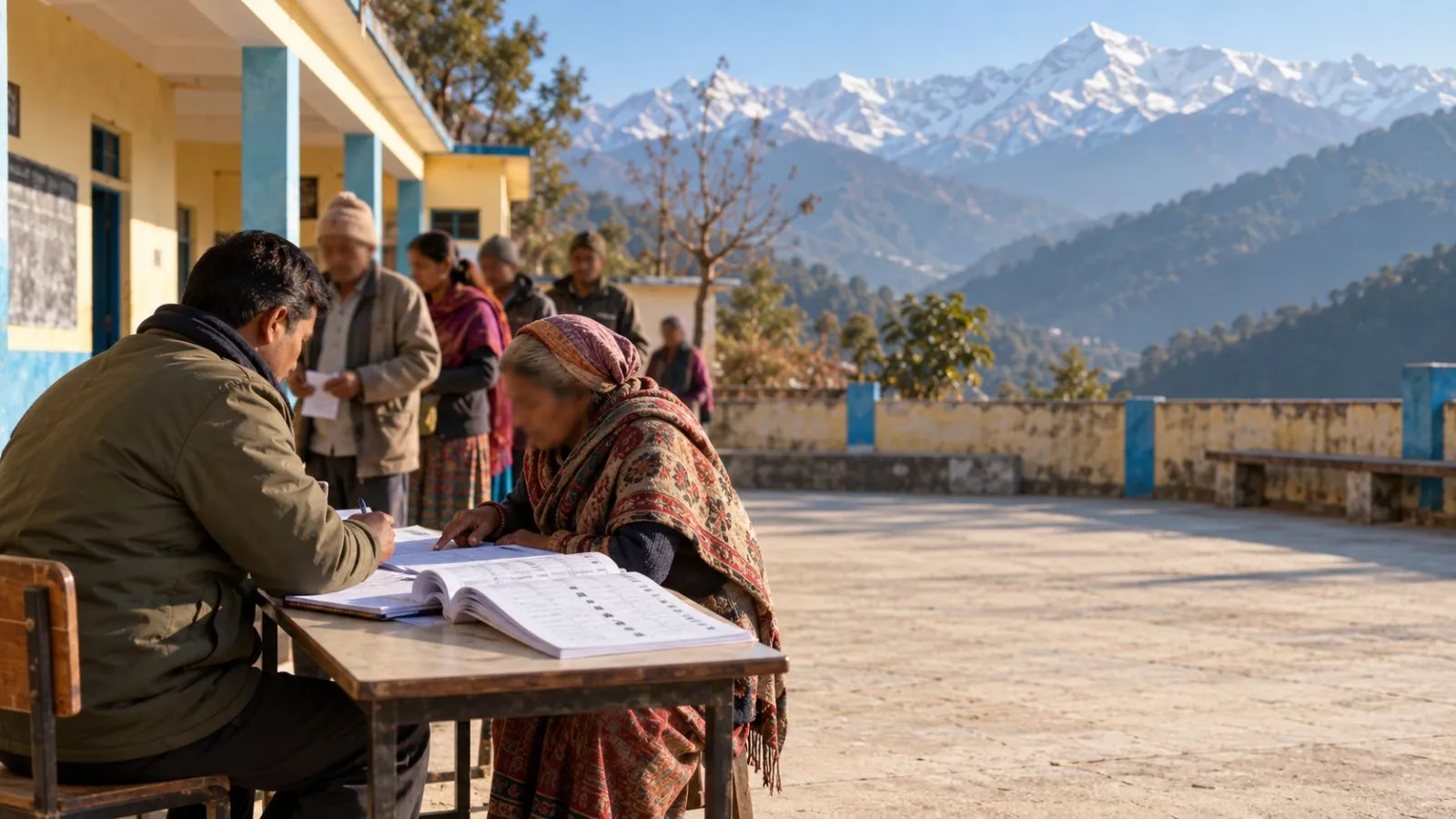
“ASDD” is the label used for electors marked “uncollectible” during Uttarakhand’s Special Intensive Revision, or SIR. The article does not define the abbreviation letter by letter. It explains its practical meaning: these electors were flagged for further tracing and verification rather than automatically treated as permanently ineligible. The Chief Electoral Officer’s data lists 8,26,977 ASDD electors. Officials will compare the current roll with the pre-SIR roll and identify people who appeared earlier but are now missing. They will then check their present status through camps and home visits. This matters because the final roll had about eight lakh fewer electors than before the SIR. The new exercise is meant to correct omissions, not conduct another full revision. Eligible people can be enrolled through Form 6 after verification, while political-party representatives will get opportunities to review the lists.
Based on reporting by Indian Express
What does “ASDD” mean, and why were these voters marked that way during Uttarakhand’s Special Intensive Revision?
“ASDD” is the label used for electors marked “uncollectible” during Uttarakhand’s Special Intensive Revision, or SIR. The article does not define the abbreviation letter by letter. It explains its practical meaning: these electors were flagged for further tracing and verification rather than automatically treated as permanently ineligible.
The Chief Electoral Officer’s data lists 8,26,977 ASDD electors. Officials will compare the current roll with the pre-SIR roll and identify people who appeared earlier but are now missing. They will then check their present status through camps and home visits.
This matters because the final roll had about eight lakh fewer electors than before the SIR. The new exercise is meant to correct omissions, not conduct another full revision. Eligible people can be enrolled through Form 6 after verification, while political-party representatives will get opportunities to review the lists.
How many voters were marked ASDD, and how much did Uttarakhand’s electorate shrink between the January 2025 roll and the final October 2026 roll?
The ASDD figure was 8,26,977 electors during the Special Intensive Revision. Dehradun recorded the most, with 1,86,008, followed by Udham Singh Nagar with 1,77,673 and Haridwar with 1,30,203. These figures show the large group now targeted for verification.
Uttarakhand had 84,29,459 electors on the January 6, 2025 roll. The final roll published on October 3, 2026, contained 71,58,949 electors. Subtracting the final figure from the earlier one gives a reduction of 12,70,510 electors.
The change reflects a revision process with both additions and deletions. From January 2025 to August 13, 2026, officials recorded 4,01,276 additions and 17,05,130 deletions. The verification drive will examine whether some missing names belonged to eligible people who should be restored through Form 6.
What will happen during the polling-station camps and the later house-to-house visits from October 8 to 20?
From October 8 to 10, camps will operate at all 12,543 polling stations. Booth Level Officers, Booth Awareness Group members and Booth Level Agents representing political parties will be present. Their first task is to compare the current roll with the pre-SIR roll and prepare lists of people who have disappeared from the current list.
From October 12 to 20, Booth Level Officers will visit the homes of identified electors. They will ask about each person’s present status and help eligible residents complete Form 6. The visits will also cover other left-out voters and people who became first-time voters on October 1, 2026.
The exercise is designed to repair omissions after the SIR, not restart the entire revision. Lists will be shared with recognised parties’ agents. Electoral Registration Officers will later share booth-wise lists again, allowing parties to point out further eligible voters who were missed.
What happens to a person’s voting rights if they were on the pre-SIR roll but are missing from the final roll, and how can they be re-enrolled?
Being absent from the final electoral roll means a person is not currently registered on the list used for elections. The article does not describe this as a permanent loss of voting rights. Instead, it directs officials to check whether the person was on the pre-SIR roll and remains eligible.
For example, a voter listed before the SIR but missing afterward may be identified when Booth Level Officers compare the two rolls. During a home visit, officials will confirm the person’s present status. If the person qualifies, the BLO will facilitate a Form 6 application for enrolment.
The same process applies to other left-out voters and new voters who turned 18 on October 1, 2026. The camps and visits therefore create a route back onto the roll. Political-party representatives will also review the lists, helping identify eligible people who remain absent.
Which election officials, political-party representatives and local groups are involved in finding and checking missing voters?
Booth Level Officers, or BLOs, are the main officials responsible for finding missing electors. They will compare the pre-SIR and current rolls, prepare lists, run the polling-station checks and conduct home visits. Electoral Registration Officers will supervise the later sharing of booth-wise lists.
Local and political participants are included at each stage. Booth Awareness Group members and Booth Level Agents, known as BLA-2 representatives, will attend the October 8–10 camps. During house visits, BLOs will be accompanied by BAG members and, where possible, BLAs.
The lists prepared by BLOs will go to agents of recognised political parties. After the verification exercise, Electoral Registration Officers will share booth-wise lists again with party representatives. This creates two opportunities to identify eligible voters who were left out and supports broader checking of the officials’ findings.
What safeguards do claims, objections, inquiries and hearings provide when someone’s name is added to or removed from the electoral roll?
The claims-and-objections process is a basic check on changes to an electoral roll. People can raise concerns when a name is added, omitted or proposed for deletion. This gives affected electors and other participants a way to contest errors instead of relying only on officials’ initial records.
The article cites Rule 20 of the Registration of Electors Rules, 1960. It provides for a summary inquiry into claims and objections and an opportunity for the concerned persons to be heard. Electoral Registration Officers must process applications under the Representation of the People Act, 1950, and the relevant rules.
These safeguards do not mean every claim will automatically succeed. They require the authority to examine the issue and provide a hearing before deciding. During the latest period, officials recorded 1,29,872 additions and 1,04,708 deletions. The new verification drive adds further checking after the final roll.
What is an electoral roll, who is legally entitled to be included on it, and why must it be kept accurate for representative democracy to work?
An electoral roll is the official voter list for a constituency or polling area. It tells election authorities who is registered to cast a ballot. Accurate rolls matter because they connect eligible residents to representation and help prevent wrongful exclusion or duplicate voting.
Beyond the article’s specific details, Indian election law generally entitles a citizen aged 18 or above to registration where they are ordinarily resident, unless legally disqualified. The person must meet the applicable registration requirements. Form 6 is the enrolment route mentioned in the article for eligible missing and first-time voters.
Uttarakhand’s drive shows why accuracy requires continuing checks. Officials are comparing the current roll with the pre-SIR list, visiting homes and involving party representatives. The final roll has 71,58,949 electors, after a sharp reduction. Finding eligible omissions helps ensure that representation reflects the people entitled to vote.
Key Facts:
📌 ASDD means electors marked “uncollectible” during the SIR.
📌 Officials flagged 8,26,977 electors for tracing and verification.
📌 Eligible missing electors can seek enrolment through Form 6.
📌 The SIR marked 8,26,977 electors as ASDD.
📌 The electorate fell from 84,29,459 to 71,58,949.
📌 That is a reduction of 12,70,510 electors.
📌 Camps run at all 12,543 polling stations from October 8 to 10.