News · Defence & Security
Five Children Among 28 Killed In Russian Strikes On Ukraine
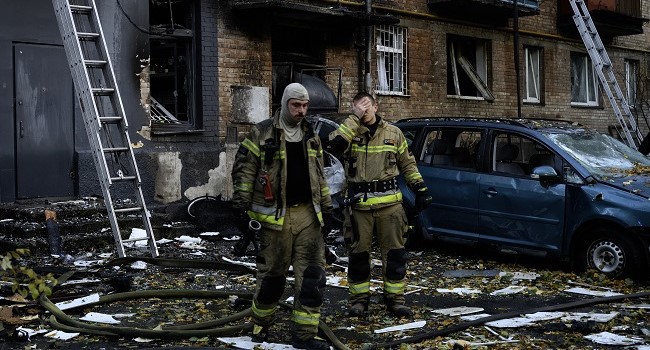
A Russian missile struck Pryluky in northern Ukraine at about 6:30 a.m., while residents slept. Half of a five-storey apartment building collapsed into burning concrete and twisted metal. Ukrainian authorities reported 20 deaths there, including five children. Seven other children were wounded. Other cities were also hit. Two people died when missiles struck a high-rise building in Kremenchuk. Two more died in Oleksandriya. In Kyiv, a strike caused a fire in the crowded Darnytskyi district, killing two people, followed by two additional deaths in later strikes. The attacks affected several regions. The strikes also damaged essential services. Power cuts darkened parts of Kyiv, traffic was disrupted, and water supplies stopped on the capital’s right bank. Residents took shelter in subway stations as sirens continued. The pattern shows how one overnight attack can cause deaths, displacement, fear, and major citywide disruption.
Based on reporting by Channels TV
What happened in Pryluky and the other Ukrainian cities hit by Russian strikes?
A Russian missile struck Pryluky in northern Ukraine at about 6:30 a.m., while residents slept. Half of a five-storey apartment building collapsed into burning concrete and twisted metal. Ukrainian authorities reported 20 deaths there, including five children. Seven other children were wounded.
Other cities were also hit. Two people died when missiles struck a high-rise building in Kremenchuk. Two more died in Oleksandriya. In Kyiv, a strike caused a fire in the crowded Darnytskyi district, killing two people, followed by two additional deaths in later strikes. The attacks affected several regions.
The strikes also damaged essential services. Power cuts darkened parts of Kyiv, traffic was disrupted, and water supplies stopped on the capital’s right bank. Residents took shelter in subway stations as sirens continued. The pattern shows how one overnight attack can cause deaths, displacement, fear, and major citywide disruption.
How many people were killed or wounded, and how many of the victims were children?
The overnight Russian attacks killed at least 28 people across Ukraine, according to the article. The largest number of deaths occurred in Pryluky, where authorities reported 20 fatalities after a missile hit an apartment building. The victims included five children.
Seven other children were among dozens of people wounded in Pryluky. The article does not give one combined national total for all wounded people, but it clearly records extensive injuries. Families were asleep when the strike hit, and survivors described shattered windows, debris, fear, and emergency rescues.
The remaining reported deaths came from other cities. Kremenchuk and Oleksandriya each lost two people. Kyiv reported two deaths in a fire caused by a strike, then two more in later attacks. Further civilian deaths were reported in Russian-controlled parts of Ukraine, including Kherson and near Donetsk, showing casualties on both sides.
What are ballistic missiles, cruise missiles, and attack drones, and how are they different?
The article names ballistic missiles, cruise missiles, and attack drones but does not define them. In standard military usage, a ballistic missile rises along a high, arcing trajectory before descending rapidly toward its target. It can travel extremely fast during the final stage.
A cruise missile is an unmanned guided aircraft. It usually flies within the atmosphere, often at lower altitude, and uses engines and navigation systems to follow a planned route. An attack drone is also unmanned, but it is generally slower and can be designed to carry explosives, strike directly, or circle before attacking.
These differences matter because defenses must detect and respond to each weapon differently. Ballistic missiles offer very little reaction time. Cruise missiles may be harder to spot when flying low. Drones can arrive in large numbers and complicate interception. Ukraine said ballistic missiles were its greatest challenge during this attack.
How large was the overnight attack, and how many missiles and drones did Ukraine say it intercepted?
The overnight attack was large and spread across multiple Ukrainian regions. Ukraine’s air force said Russia launched at least 50 missiles and 130 drones. Reported target areas included Dnipropetrovsk, Kyiv, Kharkiv, and Poltava.
Ukraine said its defenses intercepted five ballistic missiles, 39 cruise missiles, and more than 100 drones. Interception means a weapon was destroyed, diverted, or otherwise stopped before reaching its intended target. The reported figures show that many threats were defeated, but some still struck homes, infrastructure, and other civilian areas.
The scale also explains why officials described the attack as especially dangerous. Air defenses had to track different weapons arriving across a broad area, often simultaneously. Zelensky said ballistic missiles were the greatest challenge and called for new air defenses. Even strong interception rates cannot prevent all damage when an attack combines missiles and large drone waves.
What happens to civilians when strikes damage energy systems, water supplies, buildings, and transport?
Strikes against civilian infrastructure can turn a military attack into a broad humanitarian crisis. Damaged buildings kill or trap residents and destroy homes. Damage to energy systems removes electricity, lighting, heating, communications, and sometimes pumping capacity. Water systems can fail when power or treatment facilities are hit.
The article gives a clear example in Kyiv. Power cuts plunged parts of the capital into darkness on Wednesday evening. Traffic was disrupted, and water supplies were cut on the right bank. Residents carried bags, blankets, and sleeping mats into subway stations because air-raid sirens kept sounding. Fires and shattered windows added immediate danger.
These effects continue after the missiles stop. Families may need emergency shelter, rescue services, repairs, and medical care. Disrupted transport can slow ambulances and workers. As winter approaches, loss of power and heating becomes more dangerous. Repeated attacks also create lasting fear and pressure on city authorities and residents.
Why are energy infrastructure, bridges, and major cities important targets during a war, especially as winter approaches?
Energy infrastructure matters because electricity supports heating, water pumping, communications, hospitals, businesses, and transport. Bridges and major roads move troops, food, fuel, and emergency supplies. Large cities contain dense populations and essential services, so damage there can create effects far beyond one building.
The article shows this pressure clearly. Zelensky warned that the attack could target energy infrastructure, while Kyiv’s mayor warned residents to prepare for war after strikes on bridges and energy facilities. Later, power cuts darkened parts of Kyiv, disrupted traffic, and caused water outages. Residents sought safety in subway stations as sirens continued.
Winter increases the danger because outages can remove heating when temperatures are low. Damaged bridges can isolate neighborhoods and slow repairs or evacuations. Attacking such systems can therefore weaken a country’s ability to function and raise civilian hardship. The article’s events show why protecting infrastructure and restoring services are urgent wartime priorities.
How do air-defense systems detect and destroy incoming weapons, and why are ballistic missiles particularly difficult to stop?
The article says Ukraine intercepted many incoming weapons but does not explain the full process. In general, air-defense networks use radar and other sensors to detect an object, identify its likely type and path, and share that information with command centers. Defenders then choose a suitable system to engage it.
An interceptor missile may collide with or explode near the incoming weapon, destroying it before impact. Guns or electronic systems may work against some shorter-range threats. Drones and cruise missiles can be difficult when they fly low, because terrain and buildings can hide them from radar. Large drone waves can also overwhelm defenses.
Ballistic missiles are harder because they travel on steep, high-speed paths and descend rapidly toward their targets. Their final approach leaves little reaction time, and some can maneuver. Ukraine’s air force intercepted five ballistic missiles, but Zelensky called them the greatest challenge and said new air defenses were essential.
Key Facts:
📌 A missile destroyed half a five-storey apartment building in Pryluky.
📌 Pryluky authorities reported 20 deaths, including five children.
📌 Strikes also killed residents in Kremenchuk, Oleksandriya, and Kyiv.
📌 At least 28 people were killed across Ukraine.
📌 Five children died, and seven other children were wounded.
📌 Pryluky accounted for 20 reported deaths.
📌 Ballistic missiles descend rapidly from high, arcing trajectories.