News · Politics & Governance
Presidency admits more Nigerians fell into poverty under Tinubu
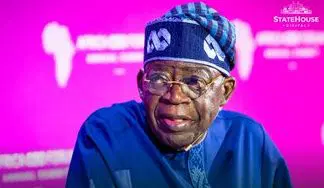
The Presidency admitted that poverty has increased during President Bola Tinubu’s administration. This matters because it directly recognizes a major cost of the government’s economic programme, rather than denying hardship. Special Adviser Daniel Bwala said more people had gone into poverty, but argued that reform was necessary for progress. Bwala linked the worsening situation to the government’s decision to undertake reforms. He said Nigeria already had a population of about 230 million, with many people living in poverty. He also said previous presidents lacked the courage to make similar changes because they feared the consequences. The Presidency presented hardship as a painful stage of reform, not its intended final result. Bwala claimed that marked progress had been made since the reforms began, although the article gives no detailed poverty figures or measures of that progress. The immediate reality remains that many households are struggling, while government supporters expect future benefits.
Based on reporting by Vanguard Nigeria
What did the Presidency acknowledge about poverty under President Tinubu’s administration?
The Presidency admitted that poverty has increased during President Bola Tinubu’s administration. This matters because it directly recognizes a major cost of the government’s economic programme, rather than denying hardship. Special Adviser Daniel Bwala said more people had gone into poverty, but argued that reform was necessary for progress.
Bwala linked the worsening situation to the government’s decision to undertake reforms. He said Nigeria already had a population of about 230 million, with many people living in poverty. He also said previous presidents lacked the courage to make similar changes because they feared the consequences.
The Presidency presented hardship as a painful stage of reform, not its intended final result. Bwala claimed that marked progress had been made since the reforms began, although the article gives no detailed poverty figures or measures of that progress. The immediate reality remains that many households are struggling, while government supporters expect future benefits.
What is an economic reform, and which government reforms does the Presidency say are responsible for the hardship?
Economic reform is a significant change to government policies, rules, or institutions intended to make an economy more stable or productive. Reforms can improve public finances, investment, or production, but they may also create short-term hardship. The article says Tinubu’s administration undertook economic reforms and argues that discomfort is unavoidable during such changes.
The article does not list every reform responsible for the hardship. In Nigeria’s wider policy context, commonly discussed examples include removing fuel subsidies and changing foreign-exchange rules. These changes can alter fuel costs, import prices, transport expenses, and business costs. That can quickly affect household budgets.
The Presidency’s argument is that short-term pain may support longer-term progress. Bwala said previous presidents avoided such action because of fear, while Tinubu chose to proceed. The article does not independently prove which specific reforms caused poverty or quantify their separate effects, so those details require additional evidence.
How large is the population affected, given that Nigeria has about 230 million people, and how many additional people have been pushed into poverty?
Nigeria’s population is about 230 million, according to the figure cited by Bwala. That is the broad population living under the country’s economic conditions, not a count of people newly pushed into poverty. The scale matters because even a small percentage change can affect millions of people.
The article does not provide a baseline poverty rate, a poverty-line definition, or a measured increase. It only says that “more people went down to poverty” after the reforms began. Therefore, the number of additional people cannot be calculated from the article. The 230 million figure must not be treated as the number newly impoverished.
This missing figure limits how precisely readers can judge the claim. Reliable measurement would require comparable poverty surveys taken before and after the reforms. Until such data are supplied, the article supports an acknowledgment of worsening poverty, but not an exact estimate of its size.
What immediate effects can major reforms have on household incomes, prices, jobs, and people’s ability to afford basic needs?
Major reforms can create a short-term squeeze for households. If fuel, imported goods, transport, or food become more expensive, families must spend more to maintain the same lifestyle. If wages do not rise equally quickly, real incomes fall even when nominal pay remains unchanged. This matters because basic needs become harder to cover.
Businesses can face higher energy, transport, financing, or imported-input costs. Some respond by raising prices, reducing production, delaying investment, or cutting workers. Others may pass costs to customers. These effects can spread through supply chains, making inflation broader and weakening household budgets. The article specifically acknowledges discomfort and increased poverty, though it does not detail job losses or price changes.
The immediate result can therefore be lower consumption and greater financial stress. Whether conditions improve later depends on reform quality, implementation, safety nets, investment, and wage growth. The article says the Presidency sees marked progress, but supplies no detailed evidence on household incomes, prices, or employment.
Why can policies such as removing fuel subsidies or changing exchange-rate rules make life more expensive before their possible long-term benefits appear?
Subsidies hold down the price consumers pay by shifting part of the cost to government. Removing a fuel subsidy can therefore make petrol more expensive immediately. Because fuel supports transport, farming, electricity generation, and distribution, the increase can spread to food and other goods. Exchange-rate changes can similarly make imported fuel, machinery, medicines, and raw materials cost more in local currency.
The adjustment happens quickly because businesses must pay the new costs before any wider economic gains develop. Transporters may raise fares, manufacturers may increase prices, and households may reduce consumption. The article does not name subsidy removal or exchange-rate changes, so these are broader, well-established examples of reforms associated with Nigeria’s economic debate.
Possible benefits usually require time. Governments may gain fiscal space, markets may become clearer, and domestic production may eventually strengthen. But those outcomes are not automatic. They depend on effective management and support for vulnerable people. The Presidency’s position is that reform discomfort is unavoidable, while the article records increased poverty during the adjustment.
What programmes and sectoral measures does the Presidency point to as benefits or support, including NELFUND loans, agricultural incentives, and manufacturer assistance?
The Presidency challenged the claim that Nigerians broadly dislike President Tinubu by pointing to groups receiving government support. Its argument is that public opinion is not uniform. Some households may suffer from inflation, while others benefit from education funding, agricultural support, or industrial incentives. That distinction matters when judging the reforms’ overall effects.
Bwala cited the Nigerian Education Loan Fund, or NELFUND, saying about one million families had children who benefited from it. He also mentioned incentives and benefits for the agricultural sector. In addition, he referred to incentives for manufacturers involved in production. These programmes can work through different channels: loans help students meet education costs, farm support can improve production, and manufacturer assistance can reduce business pressure.
The article presents these measures as evidence of benefits, not as a complete evaluation of their results. It gives no detailed loan totals, farm outcomes, or manufacturing data. The forward question is whether such support can reach enough people and offset the hardship created by the wider reforms.
How is poverty measured, and how does inflation reduce people’s real purchasing power even when their incomes have not fallen?
Poverty measurement normally compares income or household consumption with a defined poverty line. The line represents the resources needed to meet basic needs, and surveys estimate how many people fall below it. Measures can also examine poverty’s depth and severity. The article does not state which poverty line or survey method was used, so its claim cannot be quantified from the text alone.
Inflation changes what money can buy. If a worker earns the same salary but food, transport, rent, and medicine become more expensive, that salary buys fewer goods and services. The worker’s nominal income has not fallen, but real purchasing power has. If prices rise faster than wages, more households may be unable to afford an existing basic-needs basket.
This is why poverty analysis should track both incomes and prices. A reform can leave pay unchanged while worsening living standards through inflation. The Presidency acknowledged increased poverty but supplied no poverty-rate, price, income, or consumption figures. Better surveys would show how many people crossed the poverty line and why.
Key Facts:
📌 The Presidency acknowledged that more Nigerians entered poverty under Tinubu.
📌 Daniel Bwala called the hardship a consequence of economic reform.
📌 The article provides no exact number of newly impoverished Nigerians.
📌 Economic reform changes policies or institutions to improve economic performance.
📌 The article does not specify every reform linked to hardship.
📌 Fuel subsidies and exchange-rate rules are wider-context examples, not article-listed details.
📌 Bwala cited Nigeria’s population as about 230 million.