News · Defence & Security
Death toll from Russian attack in Pryluky rises to 19, another 55 people injured
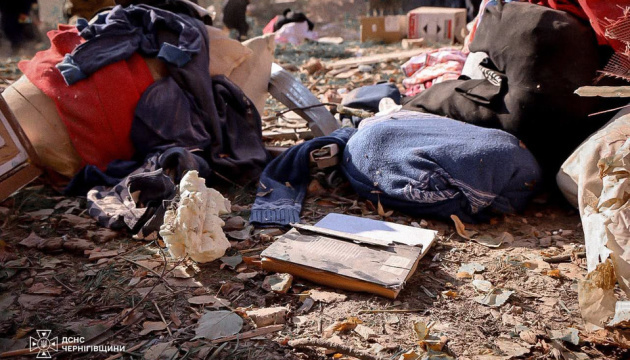
On October 7, a Russian missile attack struck Pryluky in Ukraine’s Chernihiv region. The latest report lists 19 deaths, including five children, and 55 injuries. The toll matters because it shows both the immediate human cost and the continuing needs of survivors and families. The attack damaged or destroyed 346 apartments in residential buildings, nine private houses, and 34 vehicles. Police investigators examined these locations while rescue workers continued responding. Earlier reports had recorded 18 deaths, so the confirmed toll later rose by one. The victims included three one-year-old children and an eight-year-old child. Search-and-rescue operations and recovery work were still underway when the report was issued. That means casualty figures and damage assessments could still change as teams search sites, treat people, and document destruction. The reported numbers provide the current official picture, not necessarily the final account.
Based on reporting by Ukrinform English
What happened in Pryluky on October 7, and what are the latest reported casualties?
On October 7, a Russian missile attack struck Pryluky in Ukraine’s Chernihiv region. The latest report lists 19 deaths, including five children, and 55 injuries. The toll matters because it shows both the immediate human cost and the continuing needs of survivors and families.
The attack damaged or destroyed 346 apartments in residential buildings, nine private houses, and 34 vehicles. Police investigators examined these locations while rescue workers continued responding. Earlier reports had recorded 18 deaths, so the confirmed toll later rose by one. The victims included three one-year-old children and an eight-year-old child.
Search-and-rescue operations and recovery work were still underway when the report was issued. That means casualty figures and damage assessments could still change as teams search sites, treat people, and document destruction. The reported numbers provide the current official picture, not necessarily the final account.
Where are Pryluky and Ukraine’s Chernihiv region located?
Pryluky is a city in northern Ukraine. It belongs to Chernihiv region, also called Chernihiv oblast, one of Ukraine’s administrative regions. Knowing the location helps readers understand where the reported attack occurred and places the event within Ukraine’s northern theater of the war.
Chernihiv region is in northern Ukraine, north of the country’s central regions. Its administrative center is Chernihiv. The region extends toward Ukraine’s borders with Belarus and Russia. Pryluky itself is south of Chernihiv city and is an important regional town. These geographic details are established world knowledge; the article identifies Pryluky and Chernihiv region but does not describe their map locations.
The location also matters for interpreting the report’s local focus. Officials in the Chernihiv region documented casualties, inspected homes, and coordinated emergency work in Pryluky. The article does not claim that the attack affected every part of the region. It reports consequences in the city and the continuing response there.
What is a missile attack, and how can it damage residential buildings and vehicles?
A missile attack is an attack using guided or unguided missiles that carry explosive warheads. When a missile strikes or detonates nearby, its blast releases intense pressure and fragments. Heat can start fires, while debris can injure people and damage surrounding property. The risks are especially severe in populated areas.
Residential buildings can lose windows, walls, roofs, or structural supports. A nearby explosion may also damage apartments without directly hitting the building. Vehicles can be crushed by falling materials, pierced by fragments, burned, or thrown by the blast. In Pryluky, investigators examined 346 apartments, nine private houses, and 34 vehicles after the attack.
The article does not describe the missile type or the exact impact locations. It does show the broad consequences of the strike through official casualty and damage figures. Rescue work and inspections remain important because hidden structural damage, fires, unstable debris, and unexploded dangers may continue threatening residents.
How large was the physical destruction, given that investigators examined 346 apartments, nine private houses, and 34 vehicles?
The reported inspection covered a substantial area of physical damage. Police investigators examined 346 apartments in residential buildings, nine private houses, and 34 vehicles. Counting those listed categories gives 389 property units inspected. This matters because the attack’s impact extended beyond individual injuries to homes, possessions, transport, and community infrastructure.
The figures represent documented damaged or destroyed property, not necessarily total losses. An apartment may have broken windows or serious structural damage, while another may be unusable. A private house could face roof damage, fire, or collapse. Vehicles may be damaged by blast pressure, fragments, or falling debris. The article does not provide a separate breakdown of destroyed versus damaged items.
The inspection was part of the ongoing response. Investigators record losses, help establish what happened, and support later recovery or compensation processes. Because search-and-rescue and aftermath operations continued, the number of affected properties could change as teams reach more sites and complete their assessments.
What do search-and-rescue teams and emergency workers do after a missile strike, and why can their work continue for days?
After a missile strike, search-and-rescue teams look for survivors, remove debris, provide emergency aid, and make damaged areas safer. Firefighters may extinguish fires or prevent them from spreading. Medical workers treat injuries and move patients to hospitals. Utility crews may shut off gas, electricity, or water when damaged systems create additional danger.
This work can continue for days because collapsed or unstable structures are dangerous to enter. Survivors may be hidden under rubble, and teams must search carefully to avoid causing further collapse. Fires, broken utilities, sharp debris, and possible unexploded ordnance can slow operations. In Pryluky, officials said search-and-rescue and efforts to deal with the aftermath were ongoing.
The continuing response also includes clearing debris, documenting damage, supporting displaced residents, and checking buildings. Initial casualty and damage figures may therefore be updated. The article reported 55 injured people and 19 deaths, but ongoing operations show that the emergency had not ended when those figures were announced.
What roles do Ukrainian police investigators and the State Emergency Service play after an attack?
Police investigators and emergency responders have different but connected roles after an attack. Investigators document what happened, identify victims, inspect damaged property, and preserve evidence. Their records can support official casualty counts, criminal investigations, and decisions about assistance. In Pryluky, police inspected 346 apartments, nine private houses, and 34 vehicles.
The State Emergency Service of Ukraine handles urgent rescue and hazard-response tasks. Its personnel can search damaged structures, rescue survivors, fight fires, remove dangerous debris, and help stabilize sites. The article includes a State Emergency Service photograph and says that search-and-rescue and aftermath work continued. These tasks protect people while the wider investigation proceeds.
The two efforts rely on one another. Rescue workers must act quickly to save lives, while investigators need safe access and accurate records. Their work can produce revised casualty totals and fuller damage assessments. In this case, the death toll rose from an earlier reported 18 to 19 as authorities continued responding.
What is international humanitarian law, and what rules does it establish to protect civilians and civilian property during war?
International humanitarian law, or IHL, is the set of rules that applies during armed conflict. Its central purpose is to limit suffering, especially for civilians and people no longer fighting. It requires parties to distinguish between military targets and civilians or civilian objects. Homes, apartment buildings, and vehicles are generally civilian objects unless they become military objectives under the law.
IHL prohibits deliberately attacking civilians and bans indiscriminate attacks. It also requires proportionality: expected civilian harm cannot be excessive compared with the concrete military advantage anticipated. Parties must take feasible precautions, such as choosing means and targets carefully and giving warnings when possible. The rules also protect the wounded and require humane treatment of detainees.
The article reports deaths, injuries, and damage in Pryluky, but it does not provide enough information to make a legal finding about the attack. IHL would require an investigation based on facts such as the target, intent, weapon, precautions, and expected harm. Those findings matter for accountability and civilian protection.
Key Facts:
📌 The attack killed 19 people, including five children.
📌 Another 55 people were injured.
📌 Investigators examined 346 damaged or destroyed apartments.
📌 Pryluky is a city in northern Ukraine.
📌 Pryluky lies in Chernihiv region, or Chernihiv oblast.
📌 Chernihiv region borders Belarus and Russia.
📌 Missile warheads can produce blast pressure, heat, and fragments.