News · Defence & Security
At least three killed and dozens injured as Houthis strike Saudi airports
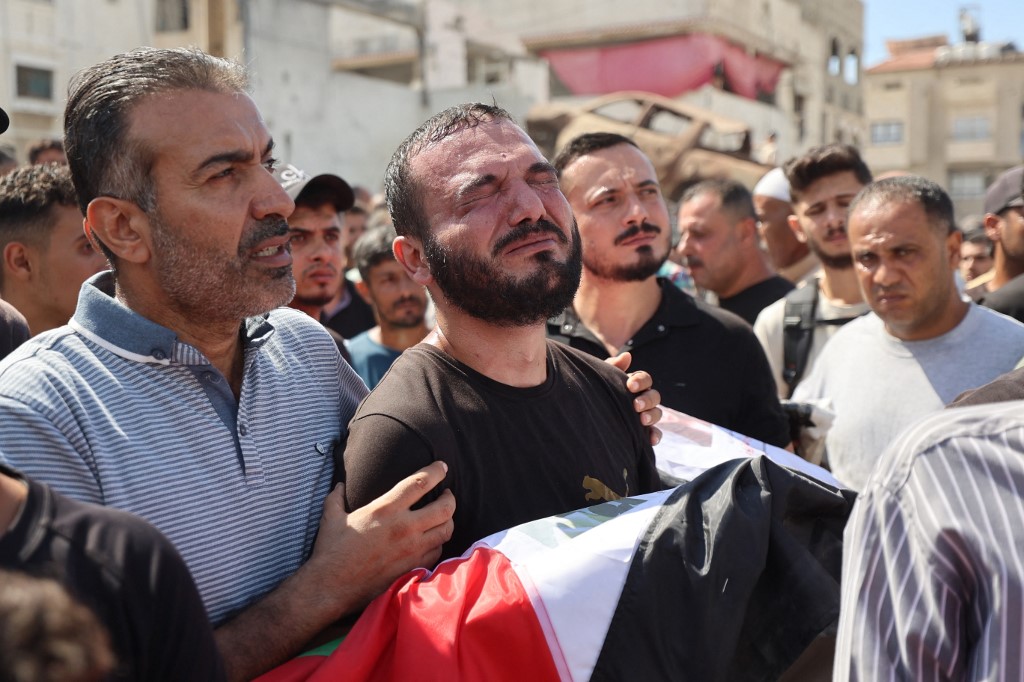
On Tuesday and Wednesday, Abha International Airport and King Khalid International Airport were attacked. Saudi Arabia’s civil aviation authority said the strikes targeted facilities at both airports. The attacks matter because airports connect civilian travel, trade, emergency services, and national infrastructure. Damage or danger there can affect far more people than those at the immediate impact site. The reported attacks occurred at Abha, in southwestern Saudi Arabia, and at King Khalid International Airport in the capital, Riyadh. The authority said an Egyptian and an Algerian national died at Abha. A Sudanese national died at the Riyadh airport. The Houthis said they carried out several attacks, including a ballistic missile strike against King Khalid Airport. The article reports three deaths and 36 injuries across the attacks. It does not describe the full extent of physical damage or say whether either airport closed completely. Even limited damage can lead to security checks, delays, diversions, or temporary restrictions while authorities inspect runways and facilities.
Based on reporting by Middle East Eye
What happened at Abha International Airport and King Khalid International Airport?
On Tuesday and Wednesday, Abha International Airport and King Khalid International Airport were attacked. Saudi Arabia’s civil aviation authority said the strikes targeted facilities at both airports. The attacks matter because airports connect civilian travel, trade, emergency services, and national infrastructure. Damage or danger there can affect far more people than those at the immediate impact site.
The reported attacks occurred at Abha, in southwestern Saudi Arabia, and at King Khalid International Airport in the capital, Riyadh. The authority said an Egyptian and an Algerian national died at Abha. A Sudanese national died at the Riyadh airport. The Houthis said they carried out several attacks, including a ballistic missile strike against King Khalid Airport.
The article reports three deaths and 36 injuries across the attacks. It does not describe the full extent of physical damage or say whether either airport closed completely. Even limited damage can lead to security checks, delays, diversions, or temporary restrictions while authorities inspect runways and facilities.
How many people were killed or injured, and which nationalities were among those killed?
The attacks killed three people and injured 36, according to Saudi Arabia’s civil aviation authority. That means at least 39 people were directly reported killed or wounded. The figure shows how an attack on an airport can harm civilians and workers, even when the intended target is infrastructure. Airports are crowded places with passengers, employees, and nearby communities.
Two people died at Abha International Airport. They were an Egyptian national and an Algerian national. One Sudanese national died at King Khalid International Airport in Riyadh. The authority did not provide, in the article, the victims’ ages, occupations, or detailed information about the injured people.
The article describes the injuries as involving 36 people, but it does not give their nationalities or medical conditions. The death toll could change if authorities later revise their count. For now, the confirmed reported toll is three dead and 36 injured, with three nationalities identified among those killed.
Who are the Houthis, and where are they based?
The Houthis, formally known as Ansar Allah, are an armed political and religious movement from Yemen. They emerged from the country’s Zaydi Shia community, especially in northern Yemen. They became a powerful force during Yemen’s civil war and have governed or controlled large areas. Their attacks matter because Yemen borders Saudi Arabia, placing Saudi cities, airports, and other infrastructure within missile and drone range.
The movement took control of Sanaa, Yemen’s capital, in 2014. It has since fought Yemen’s internationally recognized government and its allies. The Houthis have used missiles and drones in attacks across the region. In this article, they claimed responsibility for strikes on Abha and King Khalid international airports.
Their territorial control and military capabilities have made them a major regional actor. However, “based in northern Yemen” does not mean every attack is launched from one fixed location. Launch sites, targets, and weapons can vary. The article identifies the Houthis as the group claiming the airport attacks, but it does not provide operational details.
Why are the Houthis and Saudi Arabia involved in a conflict?
The Houthi-Saudi conflict is rooted in Yemen’s civil war. The Houthis seized Sanaa in 2014 and challenged Yemen’s internationally recognized government. In 2015, Saudi Arabia led a military coalition that intervened to support that government and push back the Houthi movement. Saudi Arabia viewed a Houthi-controlled Yemen as a serious security threat on its southern border.
The conflict has included airstrikes, missile launches, drone attacks, and fighting inside Yemen. Saudi Arabia and its partners targeted Houthi military positions, while the Houthis attacked Saudi territory and other regional targets. Iran has provided varying forms of support to the Houthis, according to governments and international analysts, making the war part of a broader Saudi-Iranian rivalry. Iran denies directing Houthi operations.
The war has caused severe humanitarian suffering in Yemen and has repeatedly threatened regional transport and energy infrastructure. Although diplomatic efforts and periods of reduced fighting have occurred, the conflict remains unresolved. The airport attacks show how Yemen’s war can create risks beyond Yemen’s borders, especially for neighboring Saudi Arabia.
What is a ballistic missile, and why can an airport be a military target?
A ballistic missile is a guided or unguided weapon that receives most of its speed from a rocket before following a high, curved path through the atmosphere. It can travel long distances and descend rapidly toward a target. Some ballistic missiles carry conventional explosives, while others can carry different warheads. Their speed and flight path make detection and interception difficult.
An airport may be targeted for several reasons. It is a major transport hub, so an attack can disrupt travel and create fear. Airport facilities also include runways, control systems, fuel stores, communications, and security infrastructure. Some airports may have military connections or support military logistics. In the article, the Houthis claimed a ballistic missile strike on Riyadh’s King Khalid International Airport.
Targeting an airport does not mean every person there is a military target. International humanitarian law distinguishes military objectives from civilians and civilian objects. Any attack must follow rules on distinction and proportionality. The article reports deaths and injuries but does not establish the intended target or assess the legality of the strikes.
What can happen to flights, passengers, and airport operations after an attack like this?
An attack can disrupt an airport long after the weapon is gone. Authorities may stop departures and arrivals, clear terminals, inspect runways, treat the wounded, and search for additional threats. Flights can be delayed, cancelled, or diverted to other airports. Passengers may be stranded, while airlines and cargo operators face extra costs and scheduling problems.
The article reports attacks on Abha and King Khalid airports, with three people killed and 36 injured. If a missile damages a runway, terminal, aircraft, fuel system, or air-traffic equipment, normal operations may become unsafe. Even when damage is limited, airport managers may impose temporary restrictions while emergency teams investigate. Air-traffic controllers must also coordinate safe movements during disruption.
The article does not say whether either airport closed or how many flights were affected. The longer-term impact depends on the damage, repeated threats, and the strength of security measures. Repeated attacks can reduce passenger confidence, interrupt trade, and pressure authorities to add defenses, reroute flights, or change operating procedures.
How do Saudi Arabia and other countries try to detect and intercept missiles aimed at cities and airports?
Missile defense begins with detection. Ground-based radar can track fast objects, while satellites can detect the heat from a rocket launch. Command centers combine those signals with intelligence and share warnings with military units and civil authorities. The aim is to identify a threat early, estimate its path, and protect people before impact.
Countries then use layered defenses. Interceptor systems such as Patriot and THAAD can fire missiles designed to destroy incoming weapons in the air. Fighter aircraft may help against some threats, while shorter-range systems protect specific sites. Saudi Arabia and its partners have used Patriot systems against missile and drone threats. No defense is perfect, especially when attacks involve multiple weapons or different flight paths.
Civil measures matter too. Authorities can issue alerts, move people into shelters, pause airport operations, and guide emergency responders. Airports may strengthen monitoring and rehearse evacuation procedures. The article reports attacks and casualties, but it does not say whether a missile was intercepted. Future protection will depend on detection time, defense coverage, system performance, and coordination among countries.
Key Facts:
📌 Abha and King Khalid airports were attacked on Tuesday and Wednesday.
📌 The strikes targeted airport facilities, according to Saudi aviation authorities.
📌 The Houthis claimed responsibility for the attacks.
📌 Three people were killed in the airport attacks.
📌 Thirty-six people were wounded, according to Saudi authorities.
📌 The dead included Egyptian, Algerian, and Sudanese nationals.
📌 The Houthis are also known as Ansar Allah.