News · Health & Medicine
France earmarks a further €7m to help fight DRC's worst-ever Ebola crisis
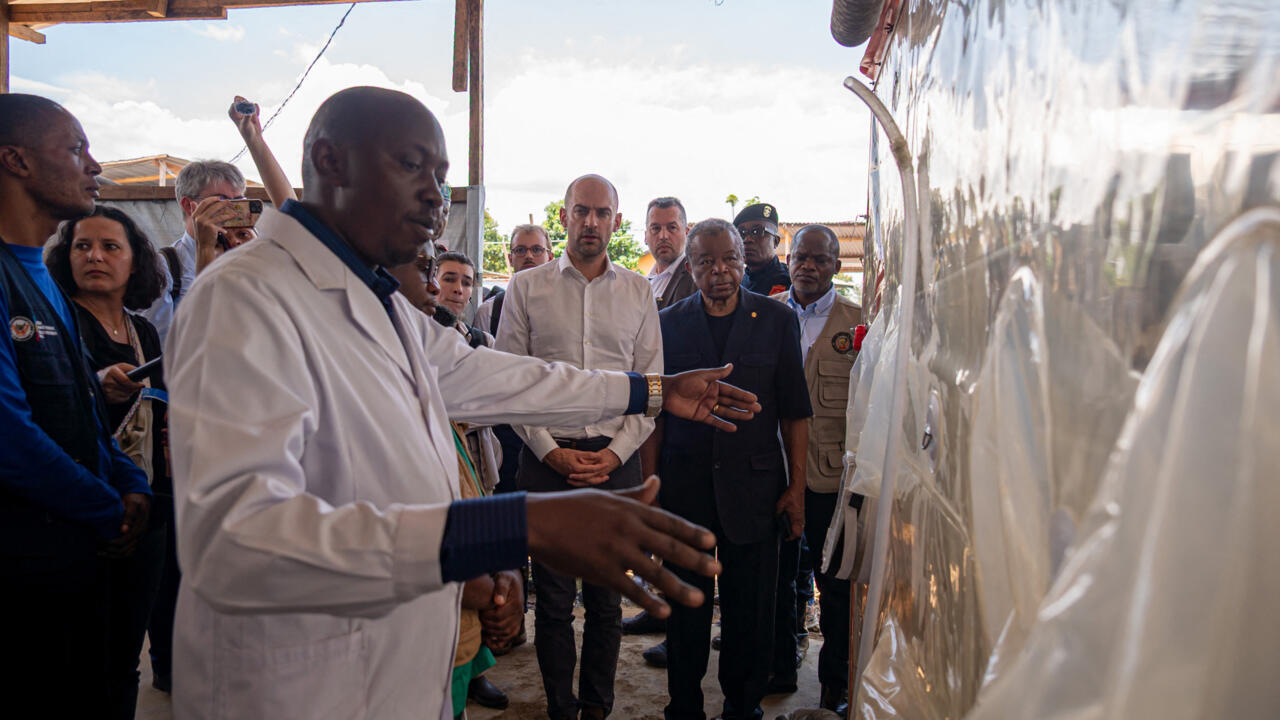
France is adding €7 million to the international response against the DRC’s severe Ebola outbreak. The money supports efforts to limit transmission, treat patients, protect health workers, and assist humanitarian operations. It matters because the epidemic is expanding while medical capacity remains under pressure. Foreign Minister Jean-Noël Barrot announced the package after visiting the DRC. He said France’s contribution for this year now totals €23 million. The funding comes as Doctors Without Borders warns that Ebola cases are rising sharply in North Kivu and that treatment capacity is insufficient. Money alone cannot end the outbreak. Communities also need trusted health services, safe isolation, trained workers, and enough beds for infected patients. France’s funding adds resources, but the response still faces violence, misinformation, community deaths, and the danger of spread into neighboring countries.
Based on reporting by RFI English
What is France funding with the additional €7 million, and how much has it committed to the DRC this year in total?
France is adding €7 million to the international response against the DRC’s severe Ebola outbreak. The money supports efforts to limit transmission, treat patients, protect health workers, and assist humanitarian operations. It matters because the epidemic is expanding while medical capacity remains under pressure.
Foreign Minister Jean-Noël Barrot announced the package after visiting the DRC. He said France’s contribution for this year now totals €23 million. The funding comes as Doctors Without Borders warns that Ebola cases are rising sharply in North Kivu and that treatment capacity is insufficient.
Money alone cannot end the outbreak. Communities also need trusted health services, safe isolation, trained workers, and enough beds for infected patients. France’s funding adds resources, but the response still faces violence, misinformation, community deaths, and the danger of spread into neighboring countries.
What is Ebola, and why can it be so deadly?
Ebola is an infectious disease caused by Ebola viruses. It can produce severe illness, including fever, weakness, vomiting, diarrhea, and sometimes bleeding. The disease spreads through contact with infected body fluids. It matters because patients can become seriously ill quickly, while caregivers and family members may also be exposed.
The article reports 4,082 deaths among 8,463 cases linked to the Bundibugyo strain. That high toll reflects the danger of severe disease and the challenges of finding and treating patients during a large outbreak. For this strain, the article says there is still no vaccine or specific treatment.
Ebola is not automatically fatal. Early medical care, careful infection control, supportive treatment, contact tracing, and isolation can improve survival and reduce spread. Delayed care is dangerous because more virus exposure can occur at home, in communities, or in health facilities lacking specialist resources.
How large is this outbreak, in terms of cases, deaths, affected provinces, and the share of new cases coming from North Kivu?
The DRC outbreak is the country’s 17th Ebola outbreak and has spread across seven provinces. As of 2 October, the World Health Organization had recorded 8,463 cases and 4,082 deaths since the Bundibugyo strain emerged. These figures show both the outbreak’s breadth and its severe human cost.
It began in the northeastern Ituri province. Ituri, North Kivu, and Haut-Uele account for most reported cases. North Kivu has become a major hotspot. Doctors Without Borders said the province’s outbreak intensified dramatically from early September and represented nearly 40 percent of newly confirmed cases nationwide.
The outbreak is therefore not evenly distributed. New hotspots are appearing, while treatment capacity is stretched. More than 60 percent of Ebola-related deaths still occur in communities, according to MSF. Without earlier care, stronger local trust, and expanded treatment capacity, transmission could continue into neighboring areas.
How could an infected person traveling from the DRC through Uganda to Kenya create a risk of cross-border transmission?
An infected traveler can create cross-border risk by moving through several crowded places before diagnosis. People on buses, at border points, in clinics, and at airports may have close contact with the traveler or contaminated body fluids. The danger is greater when illness is not recognized quickly.
The article says the Kenyan man became ill about a month earlier, received treatment in the DRC, traveled by road to Kampala, and then flew to Nairobi on 3 October. Kenya listed 28 contacts, including relatives and healthcare workers. One contact had tested positive when the report was published.
This does not mean every contact becomes infected. Health authorities can reduce risk by identifying contacts, monitoring them, testing people with symptoms, using protective equipment, and isolating suspected cases. Rapid coordination across borders is essential because travelers may pass through several health systems before detection.
Why does a shortage of specialized treatment beds increase the risk of Ebola spreading among patients, healthcare workers, and communities?
Specialized Ebola units are designed for strict separation, protective equipment, safe waste handling, and trained staff. These controls reduce contact with infectious body fluids. When beds are unavailable, confirmed patients may stay in ordinary facilities that cannot provide the same level of protection.
The article says 34 percent of confirmed patients in North Kivu were still being treated in non-specialized facilities. MSF warned that these centers lacked the resources and expertise required, increasing transmission risks among patients and healthcare workers. Referring patients elsewhere can also expose people during transport and delay treatment.
The effects can spread beyond hospitals. Infected workers may carry the virus home, while patients’ relatives and community members may be exposed during caregiving or funeral practices. More beds, trained teams, safe referrals, and early diagnosis are therefore vital to breaking transmission chains.
Why is trust between health workers and local communities essential for people to seek care early and accept isolation?
Trust is a practical public-health tool during an Ebola outbreak. People must believe that treatment centers will protect them, respect their families, and provide useful care. They also need confidence that isolation is necessary rather than a punishment. Without that confidence, fear and rumors can delay help-seeking.
MSF reported that more than 60 percent of Ebola-related deaths continued to occur in communities. Its coordinator said patients must seek care early and accept isolation measures. Early care limits the time a sick person spends near relatives and neighbors. Isolation also reduces contact with other patients and health workers.
Building trust requires honest communication, respectful treatment, local involvement, and visible safety practices. It also requires enough beds and competent care. If communities remain suspicious of treatment centers, patients may avoid them, increasing deaths at home and allowing transmission to reach neighboring areas.
How do vaccines, treatments, infection-control measures, and early isolation work together to stop a contagious viral outbreak?
Vaccines, treatments, infection control, and isolation address different parts of an outbreak. Vaccines protect people before exposure, when an effective vaccine exists. Treatment supports patients and can improve survival. Infection-control measures protect caregivers and facilities. Early isolation separates infectious people before they expose more contacts.
For example, a suspected patient can be identified through contact tracing, tested, and moved safely into an Ebola treatment unit. Staff wearing protective equipment can provide supportive care while preventing contact with body fluids. Vaccinated contacts may gain additional protection where an approved vaccine applies. Health workers can then monitor other exposed people for symptoms.
The article says the Bundibugyo strain still has no vaccine or specific treatment, making prevention and supportive care especially important. It also describes insufficient beds and non-specialized facilities. Expanding capacity, building community trust, and coordinating across borders can combine these defenses and slow transmission.
Key Facts:
📌 France added €7 million for the DRC’s Ebola response.
📌 France’s total DRC contribution reached €23 million this year.
📌 North Kivu’s Ebola surge is straining treatment capacity.
📌 Ebola is a contagious viral disease.
📌 The article reports 4,082 deaths among 8,463 cases.
📌 The Bundibugyo strain lacks a vaccine and specific treatment.
📌 The outbreak includes 8,463 cases and 4,082 deaths.