News · Politics & Governance
Germany news: Merz rails against extremism, AfD sympathizers
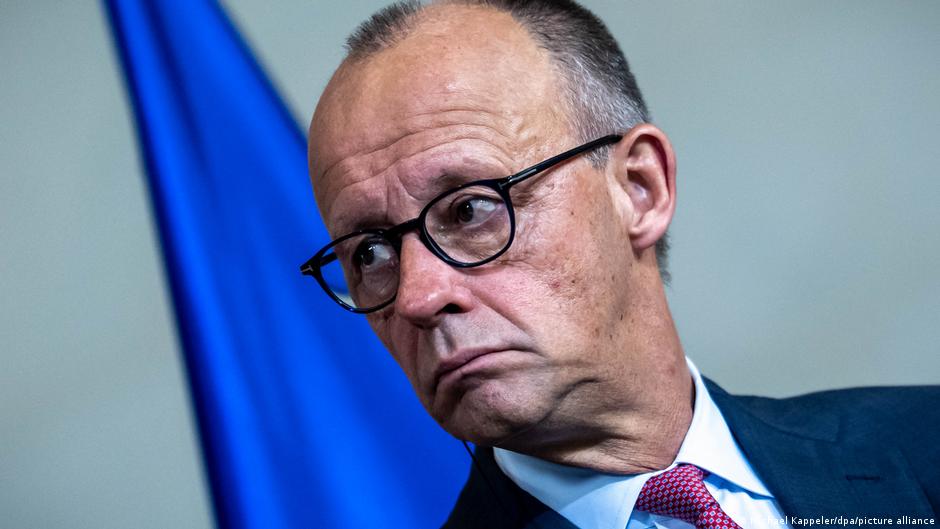
Tobias Rausch’s election made him speaker of Saxony-Anhalt’s state parliament. The position is formally parliamentary, but the event carried major political weight because the AfD is Germany’s far-right party. Chancellor Friedrich Merz said the development showed extremism pushing into state institutions. The article describes the election as the first time since 1945 that a far-right politician has led a German state parliament. It also reports that AfD and BSW lawmakers soon jointly demanded an end to sanctions on Russia and aid for Ukraine. That cooperation added to concerns about extremist influence. The immediate result was Rausch’s installation as speaker, not control of the state government. The longer-term effect depends on how he uses the office and whether mainstream lawmakers continue cooperating with the AfD. The article does not provide the complete vote breakdown or every party’s explanation.
Based on reporting by DW News
What happened when Tobias Rausch of the AfD was elected speaker of Saxony-Anhalt's state parliament?
Tobias Rausch’s election made him speaker of Saxony-Anhalt’s state parliament. The position is formally parliamentary, but the event carried major political weight because the AfD is Germany’s far-right party. Chancellor Friedrich Merz said the development showed extremism pushing into state institutions.
The article describes the election as the first time since 1945 that a far-right politician has led a German state parliament. It also reports that AfD and BSW lawmakers soon jointly demanded an end to sanctions on Russia and aid for Ukraine. That cooperation added to concerns about extremist influence.
The immediate result was Rausch’s installation as speaker, not control of the state government. The longer-term effect depends on how he uses the office and whether mainstream lawmakers continue cooperating with the AfD. The article does not provide the complete vote breakdown or every party’s explanation.
What are the AfD and BSW, and what does “political extremism” mean in this context?
The AfD, or Alternative for Germany, is a right-wing populist party widely described in the article as far right. BSW stands for Bündnis Sahra Wagenknecht, or Alliance Sahra Wagenknecht. The article describes it as far left. Both parties opposed continued German support for Ukraine and demanded an end to Russia sanctions.
In this context, political extremism means challenging the basic rules and values of liberal democracy. Merz accused the AfD and BSW of wanting to erase “the DNA of our democracy.” That phrase points to threats against democratic institutions, pluralism, and the constitutional social order.
The labels describe political direction, not identical programs. The AfD and BSW differ sharply on many economic and social questions. Yet the article highlights cooperation on Russia and Ukraine policy. Their presence in legislatures matters because elected representation can give radical positions institutional visibility and influence.
How many votes did Rausch receive, and how does that compare with the 44 seats held by the AfD and BSW together?
The supplied article does not give Rausch’s vote total. That missing number matters because it would show whether he won with only AfD support or needed votes from lawmakers outside the far-right party. Without it, the size of his coalition cannot be established from the source.
The article does provide one useful benchmark: the AfD and BSW together hold 44 seats in Saxony-Anhalt’s state parliament. Comparing Rausch’s vote total with 44 would indicate whether he received fewer, equal, or more votes than those parties’ combined seats. However, the excerpt does not provide enough information for that calculation.
The result therefore proves that Rausch was elected, but not how broad his support was. Any exact vote number or claim about mainstream-party assistance would require the omitted portion of the report or an official parliamentary record. Supplying a number without that evidence would be speculation.
What does a state parliamentary speaker do, and why does holding that position matter politically?
A state parliamentary speaker, usually called the president of the parliament, chairs plenary debates and ensures that parliamentary rules are followed. The speaker also represents the legislature publicly and helps oversee its administration. The office is meant to protect orderly, fair proceedings rather than advance one party’s program.
The speaker controls the flow of sittings, recognizes speakers, and rules on procedural questions. Those powers can shape how debates unfold and how efficiently business moves forward. The speaker does not automatically control the state government, set foreign policy, or command the entire legislature.
Rausch’s election matters because the office gives the AfD institutional visibility and a prominent public platform. It can also test whether he acts impartially. The article’s wider context makes this politically sensitive: Merz warned that extremism was entering state legislatures, while AfD and BSW lawmakers promoted positions opposing Ukraine aid and Russia sanctions.
Why is Rausch's election described as a historic break since it is the first time a far-right politician has led a German state parliament since 1945?
The “historic break” refers to Germany’s postwar political history. Since 1945, no far-right politician had led a German state parliament, according to the article. Rausch’s election therefore crossed a boundary that had held through decades of federal and state democracy.
That boundary mattered because postwar Germany built institutions around rejecting dictatorship, racism, and attacks on democratic government. A parliamentary speaker is not a head of government, but the office is highly visible and central to legislative procedure. Electing an AfD politician to it gives the far right an official role inside a core democratic institution.
The event does not mean the AfD now governs Saxony-Anhalt. It does show that mainstream-party decisions and parliamentary arithmetic can open institutional doors to it. Merz’s warning about extremism reflects this concern. Future significance will depend on whether the speaker follows neutral rules and whether other parties normalize or resist further cooperation.
What political consequences can result when lawmakers from a mainstream party help an extremist party's candidate win office?
When mainstream lawmakers help an extremist candidate win, they can make that party appear more acceptable and politically powerful. The office supplies public legitimacy, media attention, and access to institutional influence. That can weaken the informal “firewall” some parties maintain against extremist cooperation.
The mechanism is parliamentary arithmetic. If the extremist party lacks enough votes alone, supportive or absent mainstream lawmakers can provide the margin. In return, the winning candidate gains a formal post, while the mainstream party may face questions about its motives and commitments. Secret voting can make individual responsibility harder to establish.
The consequences can include party infighting, public criticism, leadership pressure, and voter punishment. It may also encourage further cooperation on motions or appointments. In Saxony-Anhalt, the controversy is sharper because Merz says extremism threatens democracy, while AfD and BSW lawmakers are already coordinating on Russia and Ukraine demands.
How do secret ballots, party discipline, and the division of powers between state and federal governments shape accountability in Germany's parliamentary democracy?
Secret ballots let lawmakers vote without publicly revealing their individual choice. That protects independence, but it also makes it harder for voters and parties to identify who supported a controversial candidate. Party discipline still matters because lawmakers usually coordinate positions and may face political consequences for breaking ranks.
The speaker’s election shows the tension. A party group can recommend a candidate, but a secret vote may produce support from outside that group. Observers can compare the result with the known seat totals, yet they cannot always identify individual defectors. Public statements, later votes, and party reactions become important accountability tools.
Germany’s federal system adds another limit. State parliaments handle state matters, while foreign and energy policy belong mainly to the federal government. The article notes that Saxony-Anhalt’s lawmakers cannot directly end Russia sanctions or Ukraine aid. They can still pressure Berlin through resolutions, publicity, and electoral politics.
Key Facts:
📌 Tobias Rausch of the AfD became Saxony-Anhalt’s parliamentary speaker.
📌 Merz called the election a “historic break.”
📌 The article does not provide the full vote breakdown.
📌 AfD means Alternative for Germany and is described as far right.
📌 BSW is Sahra Wagenknecht’s left-populist political alliance.
📌 Merz linked extremism to threats against democratic institutions.
📌 The supplied excerpt omits Rausch’s exact vote total.