News · Social Issues
Hindutva through memory: Erasing India's mosques
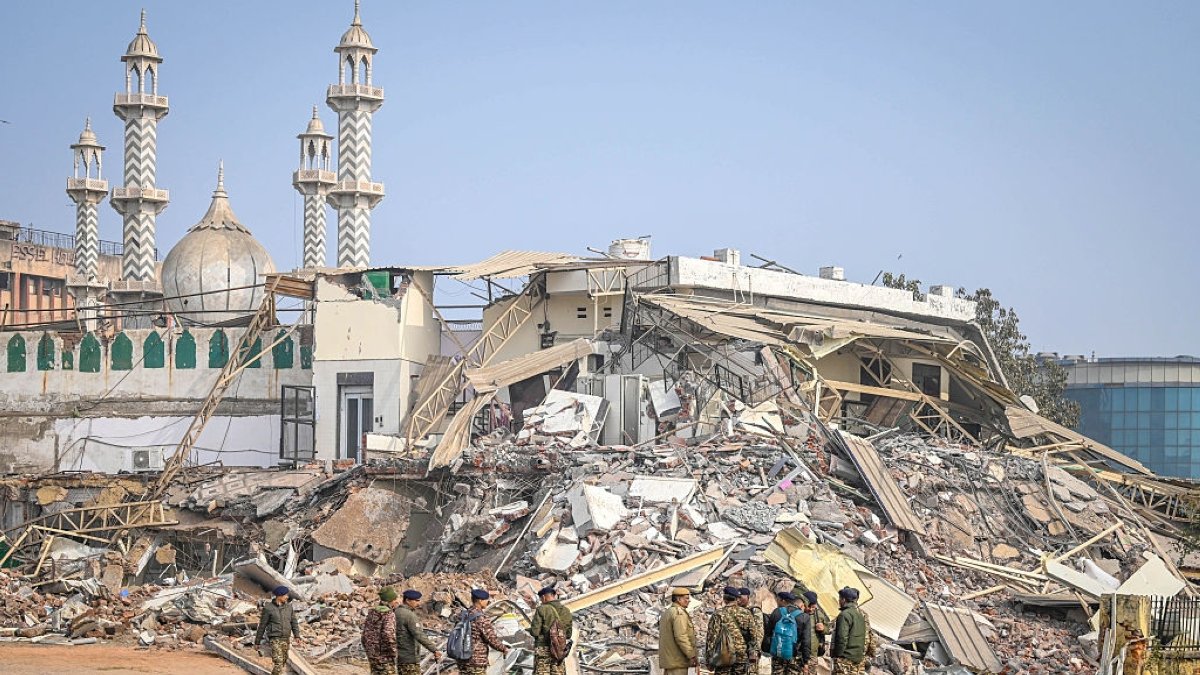
“Hindutva through memory” describes a political method: construct a past in which Hindus supposedly suffered continuous humiliation under Muslim rule, then use that story to shape decisions today. Mosques become symbols of an alleged historical debt rather than functioning places of worship. The article traces this story to James Mill’s colonial division of Indian history into Hindu, Muslim, and British periods. V.D. Savarkar later recast that framework as a story of Hindu resistance to Muslim invaders. This account erases centuries of shared life, including Hindu service in Mughal government and Akbar’s policy of peace with all. Its consequences are visible in claims that mosques occupy former temple sites. Ayodhya became the major example, and similar claims now appear in Sambhal, Dhar, and elsewhere. The memory-based narrative therefore helps transform disputed history into court cases, demolitions, and state-backed religious symbolism.
Based on reporting by Daily Sabah Turkey
What does the phrase “Hindutva through memory” mean in the context of India's mosques?
“Hindutva through memory” describes a political method: construct a past in which Hindus supposedly suffered continuous humiliation under Muslim rule, then use that story to shape decisions today. Mosques become symbols of an alleged historical debt rather than functioning places of worship.
The article traces this story to James Mill’s colonial division of Indian history into Hindu, Muslim, and British periods. V.D. Savarkar later recast that framework as a story of Hindu resistance to Muslim invaders. This account erases centuries of shared life, including Hindu service in Mughal government and Akbar’s policy of peace with all.
Its consequences are visible in claims that mosques occupy former temple sites. Ayodhya became the major example, and similar claims now appear in Sambhal, Dhar, and elsewhere. The memory-based narrative therefore helps transform disputed history into court cases, demolitions, and state-backed religious symbolism.
What is happening to Muslim mosques, shrines, tombs, and community sites in places such as Ayodhya, Dhar, and Ujjain?
The article describes a pattern affecting mosques, shrines, tombs, and Muslim community sites. Some are targeted through claims that they stand on former Hindu temples. Others are removed during road widening, encroachment drives, or redevelopment, with officials citing land records and zoning instead.
Ayodhya supplied the most powerful precedent. In Dhar, the Madhya Pradesh High Court declared the medieval Kamal Maula mosque a temple, ending a long arrangement in which both communities shared the site. In Ujjain, authorities sought to clear part of the Shahi Masjid for a Hindu pilgrimage planned for 2028. Police used tear gas and batons against a vigil.
The article also cites removals of 538 tombs in Uttarakhand and 108 in Gujarat. It says more than 2,100 actions against Muslim religious and community sites were recorded in one media compilation. No official nationwide count exists.
How widespread have removals and actions against Muslim religious and community sites been since the BJP came to power in 2014?
The scale is difficult to measure because India has no official nationwide count of Muslim religious sites demolished since the BJP came to power in 2014. That missing record makes comparisons harder and, the article argues, is itself significant. Available government and media figures nevertheless indicate a broad pattern.
Uttarakhand’s government reported removing 538 tombs. Gujarat told its legislative assembly in 2024 that 108 had been razed. Separately, an Indian media compilation recorded more than 2,100 actions against Muslim religious and community sites during only the previous six years. These figures include more than mosque demolitions.
They cover tombs, shrines, and community sites, and not every action necessarily means complete removal. Still, the numbers show that the issue extends beyond famous disputes such as Ayodhya or Dhar. Without transparent national data, the full scale remains uncertain, while local removals continue under varying official explanations.
How did the 1992 demolition of the Babri Masjid become a model for later claims that mosques were built over Hindu temples?
Babri Masjid became the model because the Ram Janmabhoomi movement presented a 16th-century mosque as a continuing insult: it allegedly stood on Rama’s birthplace. On December 6, 1992, kar sevaks mobilized by the Sangh Parivar demolished it. Riots followed, killing more than 2,000 people, most of them Muslims.
The key mechanism was normalization through institutions. In 2019, the Supreme Court awarded the site for a temple while calling the demolition a grave violation of the rule of law. In January 2024, Prime Minister Narendra Modi consecrated the temple and described Hindu pride as restored. A disputed grievance thus received legal and state ceremony.
After Babri, claims multiplied in places including Sambhal, Dhar, and Ajmer. Courts repeatedly entertained such cases. The article says each decision can draw legitimacy from the previous one, turning an exceptional event into a repeatable process for challenging mosques.
Which political groups, government authorities, and courts are involved in the disputes over these sites?
Hindu nationalist organizations are central actors. The article identifies the Sangh Parivar as the force that mobilized the kar sevaks who demolished Babri Masjid. BJP-led governments and officials also appear repeatedly, including authorities handling clearances, land records, pilgrimage plans, and waqf administration.
Courts are another major arena. The Supreme Court decided the Ayodhya title dispute, while the Madhya Pradesh High Court declared Dhar’s Kamal Maula mosque a temple. Courts have also entertained claims involving other mosques. The Jammu and Kashmir Waqf Board, chaired by a BJP leader, installed a national-emblem plaque inside Srinagar’s Hazratbal shrine, prompting protests and police detentions.
Muslim worshippers and local communities resist, protest, or dismantle structures under pressure. Police have dispersed demonstrators, including in Ujjain. Prime Minister Narendra Modi’s 2024 temple consecration shows how national political leadership can give symbolic force to local and judicial disputes.
What protections does India's Places of Worship Act provide, and how have court cases and demolitions challenged those protections?
India’s Places of Worship Act of 1991 was designed to prevent religious disputes from rewriting the past. It froze each shrine’s religious character as it stood at independence. Ayodhya was the sole exception, allowing that dispute to proceed separately from the general rule.
The article says the protection has faced pressure in two ways. Challenges to the 1991 Act remain pending, with no final hearing date. At the same time, courts have entertained claims that mosques stand on earlier Hindu temple sites. The Dhar judgment and disputes in places such as Sambhal show how legal challenges can reopen questions the law intended to close.
In late 2024, the Supreme Court barred punitive demolitions and halted new suits against mosques. However, the article describes demolitions and clearances continuing elsewhere. The gap between legal safeguards and events on the ground therefore remains central to the controversy.
How can a selective interpretation of history turn past grievances into present-day decisions about who belongs, who owns institutions, and whose places of worship are protected?
A selective interpretation of history compresses centuries into one moral story: Hindus are cast as victims, Muslims as inheritors of guilt, and mosques as visible evidence of old domination. The article says this story depends on erasing shared history, including Hindu service under Mughal rulers and Akbar’s policy of peace with all.
Once that framework becomes politically powerful, historical claims can influence present decisions. A mosque may be treated not as a protected place of worship but as a symbol of conquest. Authorities can question its land, courts can entertain claims about an earlier temple, and political leaders can present restoration as a form of justice.
This process affects more than buildings. It can determine which communities may use shared sites, who controls waqf institutions, and whose religious presence receives state recognition. The article’s examples from Ayodhya, Dhar, Ujjain, and Kashmir show how memory can become a tool for redistributing public legitimacy and space.
What are the consequences of using a selective, grievance-centered version of history to justify demolishing Muslim religious sites and challenging their legal protections?
A grievance-centered history changes how citizens see one another and how institutions apply the law. Muslims may be treated as responsible for actions attributed to historical rulers, while Hindu majoritarian claims gain moral authority. The result is insecurity around worship, property, and community institutions. Shared sites can become battlegrounds instead of places used by both communities.
Babri shows the danger. Its 1992 demolition triggered riots that killed more than 2,000 people, most of them Muslims. The Supreme Court later called the destruction a grave violation of the rule of law, yet awarded the site for a temple. In Dhar, a shared arrangement ended after a court ruling; in Ujjain, police dispersed mosque supporters during a clearance dispute.
The broader consequence is institutional erosion. Legal protections become uncertain when courts entertain historical claims and demolitions proceed under other labels. The article warns that repeated decisions can normalize selective enforcement and make state recognition itself part of religious conflict.
Key Facts:
📌 - It turns a selective history of Muslim rule into present-day political action.
📌 - Colonial historical categories helped shape the later nationalist narrative.
📌 - Ayodhya became the template for newer mosque-and-temple disputes.
📌 - Dhar’s Kamal Maula site lost a two-decade shared arrangement.
📌 - Ujjain’s Shahi Masjid faced partial clearance for a 2028 pilgrimage.
📌 - Uttarakhand reported removing 538 tombs; Gujarat reported 108.
📌 - India has no official nationwide count of demolished Muslim sites.