News · Defence & Security
At least 28 killed in Ukraine, Zelenskyy condemns one of Russia's most 'vile strikes'
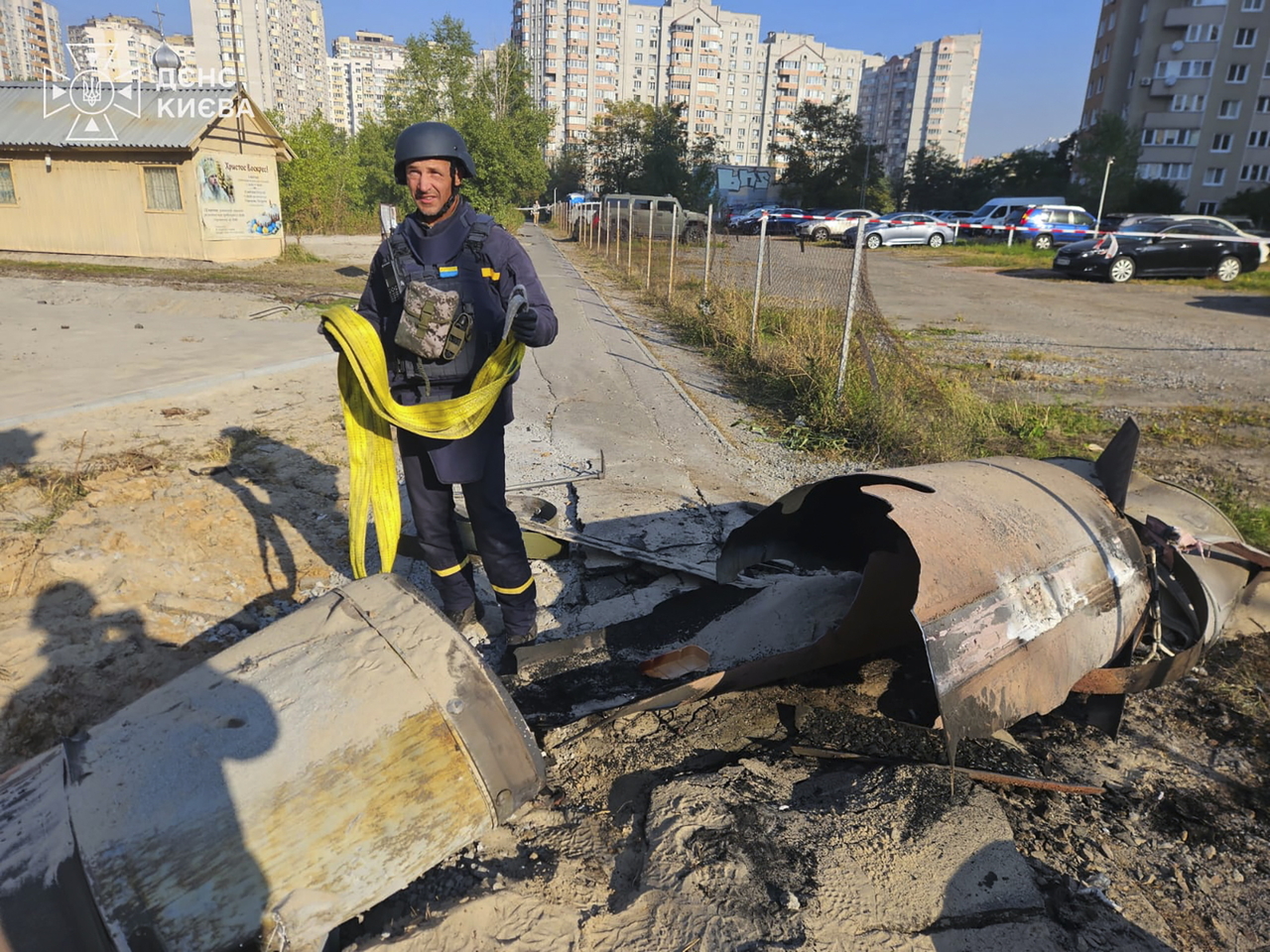
Russia launched a large overnight missile-and-drone attack across Ukraine. The strikes killed at least 28 people and injured about 100, according to Ukrainian officials. They damaged homes, industrial facilities, and energy infrastructure. The attack mattered most in civilian areas, where rescue workers had to search collapsed buildings for survivors. Pryluky, in northern Chernihiv region, suffered the heaviest losses. A Russian missile destroyed several sections of a five-story residential building. Regional officials said 20 people died there, including five children, while around 55 people were wounded. Rescuers brought 15 survivors out of the rubble. Falling drone debris also killed two people in a Kyiv suburb. Other reported locations included Kyiv, Oleksandria, and Kremenchuk. Russian officials said they targeted military-industrial sites in several regions, including facilities linked to Fire Point. The attacks show how military targets and civilian neighborhoods can be affected within the same strike pattern.
Based on reporting by Korea Herald
What happened in Ukraine during this attack, and which places suffered the heaviest damage?
Russia launched a large overnight missile-and-drone attack across Ukraine. The strikes killed at least 28 people and injured about 100, according to Ukrainian officials. They damaged homes, industrial facilities, and energy infrastructure. The attack mattered most in civilian areas, where rescue workers had to search collapsed buildings for survivors.
Pryluky, in northern Chernihiv region, suffered the heaviest losses. A Russian missile destroyed several sections of a five-story residential building. Regional officials said 20 people died there, including five children, while around 55 people were wounded. Rescuers brought 15 survivors out of the rubble. Falling drone debris also killed two people in a Kyiv suburb.
Other reported locations included Kyiv, Oleksandria, and Kremenchuk. Russian officials said they targeted military-industrial sites in several regions, including facilities linked to Fire Point. The attacks show how military targets and civilian neighborhoods can be affected within the same strike pattern.
How large was the attack in terms of weapons fired, deaths, injuries, and damage across Ukraine?
The attack was large because it combined many weapons and struck locations across Ukraine. President Volodymyr Zelenskyy said Russia fired 70 missiles overnight, including many high-velocity ballistic missiles, alongside dozens of Shahed attack drones. The weapons hit or affected Kyiv and several other regions, stretching Ukraine's defenses and emergency services.
The nationwide death toll reached at least 28, according to Interior Minister Ivan Vyhivskyi. Zelenskyy reported 100 injured people. Pryluky recorded 20 deaths, including five children, and about 55 wounded. A drone's falling debris killed two people in a Kyiv suburb. Residential buildings, industrial facilities, and energy infrastructure sustained damage.
Ukraine's air force said it intercepted just over 80 percent of 46 jet-powered drones. That success did not stop the attack's overall harm, because missiles also reached populated areas and ballistic weapons remained a major challenge. Russia described its targets as military-industrial facilities in several Ukrainian regions.
What are ballistic missiles and Shahed drones, and how do they differ as weapons?
In general, a ballistic missile travels at very high speed along a trajectory shaped by powerful acceleration and gravity. It can cover long distances quickly and arrive with little warning. A Shahed drone is an unmanned aircraft designed to carry out an attack, usually flying more slowly and at lower altitude. The article identifies Shaheds as attack drones but does not explain their engineering.
The difference matters because defenses must detect and respond to each weapon differently. Ballistic missiles can be difficult to track and intercept during their fast approach. Drones may be easier to detect or shoot down, but large numbers can overwhelm attention and defensive resources. Ukraine reported intercepting over 80 percent of 46 jet-powered drones in this attack.
Even a high drone-interception rate cannot guarantee safety. Some drones or debris can still cause deaths, while ballistic missiles may strike separately. Zelenskyy called ballistic missiles Ukraine's major challenge and said Patriot systems were needed to protect lives.
Why do attacks on apartment buildings, energy systems, and industrial facilities cause such widespread harm to civilians?
Apartment buildings contain many civilians in one concentrated space. A missile that collapses several floors can kill residents, trap others, and create a complex rescue operation. Energy infrastructure supports homes, hospitals, communications, and water systems, so damage can spread hardship far beyond the original blast. Industrial facilities may also support defense production or civilian employment.
Pryluky shows the human cost clearly. A missile destroyed parts of a five-story residential building. Rescuers used ladders, an excavator, and shovels to search the rubble. They brought out 15 survivors, but 20 people died, including five children. Around 55 people were wounded in the town.
The wider attack damaged industrial facilities and energy infrastructure in addition to homes. Russia said it targeted military-industrial sites, including Fire Point facilities, while Ukraine reported civilian deaths in several places. This overlap makes protection difficult and increases the consequences when defenses fail or debris falls in populated areas.
Why are ballistic missiles especially difficult for Ukraine to defend against, and why is the Patriot system important?
Ballistic missiles are difficult to defend against because they move at high velocity and can reach targets quickly. Their speed leaves defenders less time to detect, track, and engage them. The article also says Ukraine's air defenses have struggled with Russia's expanding, round-the-clock attacks. Missiles therefore remain more dangerous than many drones that can be intercepted more often.
Zelenskyy said ballistic missiles were Ukraine's major challenge. He said he and his team were searching every day for Patriot systems that could protect people's lives. The article identifies the US-made Patriot as the only weapon in Ukraine's arsenal capable of stopping high-velocity ballistic missiles.
That makes Patriot supplies strategically important, but global stocks have been strained by the Iran war and the Ukraine conflict. Ukraine received $1.34 billion from the European Union and planned to direct it toward defense needs. More Patriot systems could strengthen protection, but the article does not say how many Ukraine will receive.
How can Ukraine intercept more than 80 percent of some drones yet still suffer major destruction and loss of life?
An interception percentage measures only the weapons successfully stopped, not the damage caused by those that get through. Even a small number of surviving drones can strike buildings or release debris over crowded areas. Defenses may also be protecting several cities at once, while missiles create a separate and more serious threat.
Ukraine's air force said it downed just over 80 percent of 46 jet-powered drones. Yet falling debris from a drone killed two people in a Kyiv suburb. In Pryluky, a Russian missile destroyed parts of an apartment building, killing 20 people and injuring about 55. The attack also involved 70 missiles, many ballistic.
The result is a layered danger. Drone defenses may perform better than in recent weeks, when they intercepted 50 to 60 percent, but the remaining weapons still matter. Ballistic missiles can cause severe destruction independently. Ukraine therefore needs both stronger drone defenses and Patriot systems for ballistic threats.
What rules of war govern attacks on military targets located near civilian buildings and essential infrastructure?
The laws of armed conflict require distinction, proportionality, and feasible precautions. Forces must direct attacks at military objectives, not civilians or civilian objects. They must avoid attacks expected to cause excessive civilian harm compared with the concrete military advantage anticipated. They must also choose methods and timing that reduce danger to civilians when feasible.
A military-industrial facility near an apartment building may be a military objective, but nearby homes remain protected civilian objects. An attack must account for residents, likely blast effects, and falling debris. If an attack cannot distinguish its target from civilians, or expected harm is excessive, it may be unlawful. The article reports Russian claims about military targets but gives no legal ruling.
The reported destruction in Pryluky and deaths in several cities underline why these rules matter. Investigators would need reliable evidence about the target, weapon, precautions, and expected harm. The article does not provide enough information to assess legality. Civilian deaths alone do not automatically prove a violation, but they demand scrutiny.
Key Facts:
📌 Pryluky suffered the attack's heaviest losses.
📌 A missile destroyed a five-story residential building in Pryluky.
📌 Twenty people died in Pryluky, including five children.
📌 Russia fired 70 missiles overnight.
📌 At least 28 people died nationwide.
📌 Ukraine reported 100 people injured.
📌 The attack included many high-velocity ballistic missiles.