News · Politics & Governance
Trump rallies for Paxton in third Texas trip in a month as Republicans defend stronghold
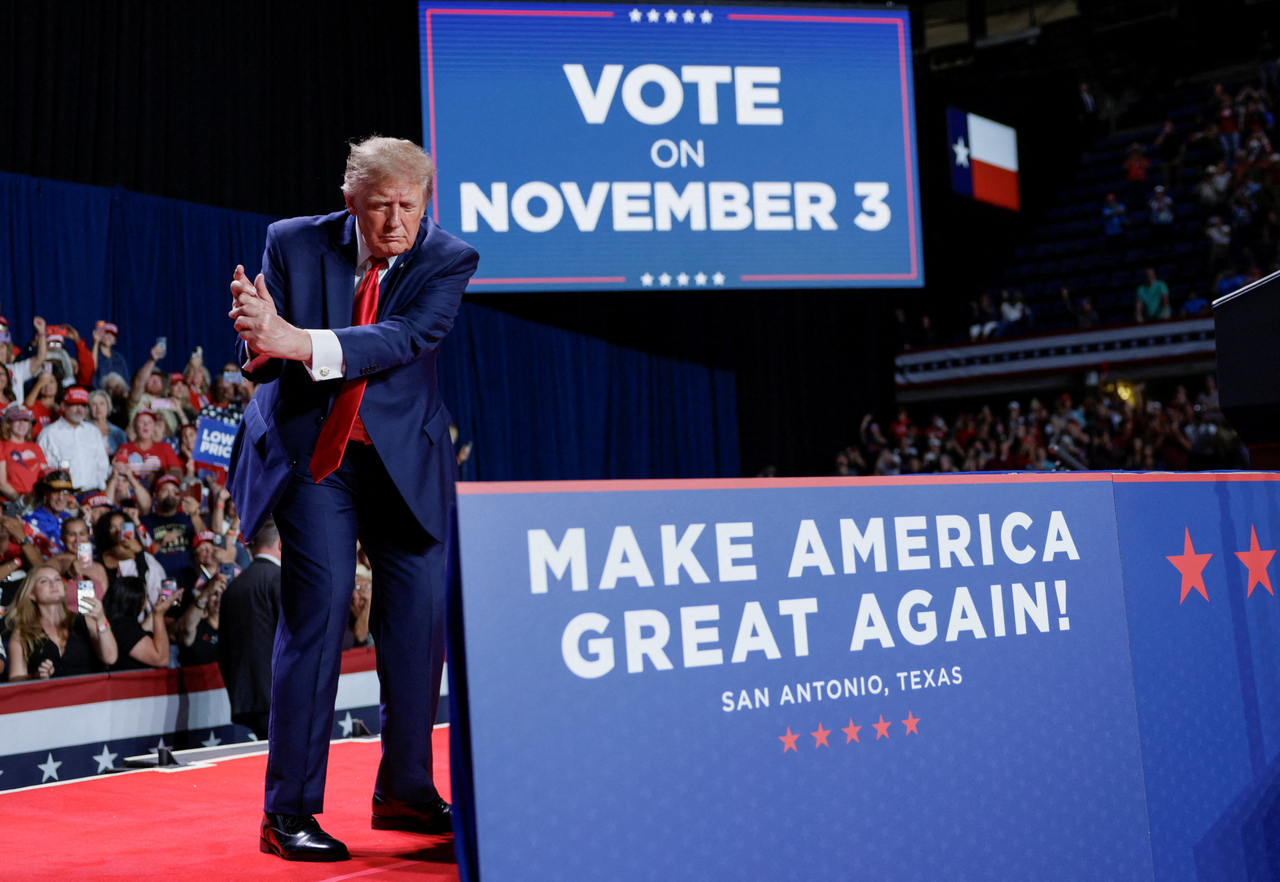
Trump traveled to San Antonio to help Ken Paxton in a race Republicans once expected to win comfortably. Recent polls showed Democrat James Talarico ahead, making the contest a serious threat to the party’s slim Senate majority. A defeat would also damage Trump because he personally chose Paxton in the primary. At the rally, Trump praised Paxton’s loyalty and urged supporters to back him. Paxton thanked Trump for coming “for me, for us, and for Texas.” The event was designed to mobilize Trump’s base, especially after Republicans faced criticism over an earlier Trump-centered convention in Dallas. The visit was part of Trump’s wider 32-day campaign blitz through Republican-leaning states. His approval rating stood at 32 percent in a Reuters/Ipsos poll, while Democrats led Republicans among registered voters. Trump’s support may energize conservatives, but it can also repel undecided voters, making the rally’s effect uncertain.
Based on reporting by Korea Herald
Why did Donald Trump travel to San Antonio for a rally with Ken Paxton?
Trump traveled to San Antonio to help Ken Paxton in a race Republicans once expected to win comfortably. Recent polls showed Democrat James Talarico ahead, making the contest a serious threat to the party’s slim Senate majority. A defeat would also damage Trump because he personally chose Paxton in the primary.
At the rally, Trump praised Paxton’s loyalty and urged supporters to back him. Paxton thanked Trump for coming “for me, for us, and for Texas.” The event was designed to mobilize Trump’s base, especially after Republicans faced criticism over an earlier Trump-centered convention in Dallas.
The visit was part of Trump’s wider 32-day campaign blitz through Republican-leaning states. His approval rating stood at 32 percent in a Reuters/Ipsos poll, while Democrats led Republicans among registered voters. Trump’s support may energize conservatives, but it can also repel undecided voters, making the rally’s effect uncertain.
Who are Ken Paxton and James Talarico, and what Senate race are they contesting?
Ken Paxton and James Talarico are competing for a Texas seat in the US Senate. Paxton is the Republican candidate and a longtime Trump ally. Talarico is the Democratic challenger. Their contest has become unusually competitive in a state Republicans have traditionally controlled.
Trump endorsed Paxton in the Republican primary after criticizing incumbent Republican Senator John Cornyn. At the San Antonio rally, Trump praised Paxton’s loyalty and attacked Talarico repeatedly. Paxton thanked Trump and predicted that Republicans would win. Talarico was not present at the event described in the article.
The race matters beyond the candidates themselves. Recent polling gave Talarico a lead among likely voters, with one New York Times/Siena College poll showing 51 percent for Talarico and 45 percent for Paxton. Republicans are spending heavily because losing Texas could complicate their effort to retain the Senate majority.
What is a US midterm election, and why is this Texas Senate race part of it?
A US midterm election is a national election held halfway through a president’s term. Voters choose members of Congress, including all House seats and some Senate seats, rather than electing the president. These elections can change which party controls Congress and how easily the president advances priorities.
The Texas race belongs to the midterms because it is a contest for a US Senate seat. Ken Paxton is running as the Republican candidate against Democrat James Talarico. The election is scheduled for November 3, and Republicans are defending the seat while trying to preserve their Senate majority.
Texas matters because it was expected to be safely Republican but has become competitive. Recent polls put Talarico ahead. The race therefore shows how midterm campaigns can force a governing party to defend territory it thought was secure. Its outcome could also affect other close congressional contests in Texas.
How narrow is the Republicans' Senate majority, and how could losing Texas affect control of the Senate?
The article describes Republicans’ Senate majority as slim, meaning they have little room for losses. A close Texas race is therefore strategically important. Republicans must defend vulnerable seats while trying to keep enough senators to control the chamber after the midterms.
Texas illustrates the danger. Trump won the state by 14 points in 2024, but recent polling showed Democrat James Talarico leading Republican Ken Paxton. A New York Times/Siena College poll gave Talarico 51 percent and Paxton 45 percent among likely voters. Republicans are spending heavily to defend a seat once viewed as safe.
If Paxton loses, Republicans’ path to retaining the Senate becomes more difficult. The article calls such a result a major setback for a Republican stronghold. It would also hurt Trump personally because he backed Paxton over John Cornyn and has made repeated visits to help him.
Why has Texas become competitive for Republicans even though Trump won the state by 14 points in 2024?
Texas remains Republican-leaning, but the article describes it as an unexpected midterm battleground. Trump won the state by 14 points in 2024, yet recent polls showed Democrat James Talarico ahead of Republican Ken Paxton. The change matters because Republicans had expected Texas to be safely in hand.
The article links Republican struggles to voters’ concerns about high costs and the war with Iran. Trump’s approval rating was 32 percent in a Reuters/Ipsos poll. Democrats led Republicans 44 percent to 37 percent among registered voters. Those conditions can make a normally secure state more competitive, especially during a midterm election.
Republicans are responding with heavy spending and repeated Trump visits. They are also defending competitive House seats in South Texas. The Texas result will show whether Trump’s support can restore the party’s advantage or whether broader voter concerns continue to put Republican candidates at risk.
What could happen to Republicans and Donald Trump if Paxton loses the Senate race?
Paxton’s defeat would carry consequences beyond one Senate seat. Republicans are trying to retain a slim Senate majority, so losing Texas would make that goal harder. The state was also considered a Republican stronghold, making a Democratic victory especially damaging to the party’s standing.
Trump’s personal role raises the stakes. He backed Paxton over incumbent Republican Senator John Cornyn, repeatedly visited Texas, and used a rally to mobilize supporters. James Henson of the University of Texas at Austin said losing would be “devastating for Republicans and devastating for Donald Trump” because of Trump’s support for Paxton.
The result could shape judgments about Trump’s political influence. Brandon Rottinghaus said Trump’s visits were necessary but not sufficient, because the president can inspire voters while also repelling them. A loss would suggest that rallies and endorsements could not overcome Paxton’s polling deficit and broader Republican troubles.
How do presidential endorsements, campaign rallies, and voter turnout influence elections for Congress?
Presidential endorsements can influence congressional races by directing attention, signaling party support, and helping a candidate mobilize loyal voters. Rallies serve a similar purpose. They create visibility, energize supporters, and encourage volunteers and donors. Turnout is the key mechanism: congressional candidates win only if enough supporters cast ballots.
The Texas race shows both the opportunity and the risk. Trump endorsed Paxton, praised his loyalty, and held a packed San Antonio rally. Supporters cheered, while protesters interrupted several times. Trump’s campaign operation also spent millions on competitive House races. These actions put Republican candidates before a large political audience.
Yet enthusiasm alone may not decide the election. Recent polls showed Talarico ahead, and Brandon Rottinghaus called Trump’s visits “necessary but not sufficient.” Trump can inspire his base but also repel other voters. The final effect depends on turnout, persuasion, and whether the rally changes voters’ choices before November 3.
Key Facts:
📌 Recent polls showed Democrat James Talarico ahead of Ken Paxton.
📌 Trump endorsed Paxton during the Republican primary.
📌 The rally aimed to mobilize Trump’s supporters for Paxton.
📌 Paxton is the Republican Senate candidate from Texas.
📌 Talarico is Paxton’s Democratic opponent.
📌 One poll showed Talarico leading Paxton 51 percent to 45 percent.
📌 Midterm elections occur halfway through a president’s four-year term.