News · Politics & Governance
India news: Opposition doubles down against poll chief after detentions
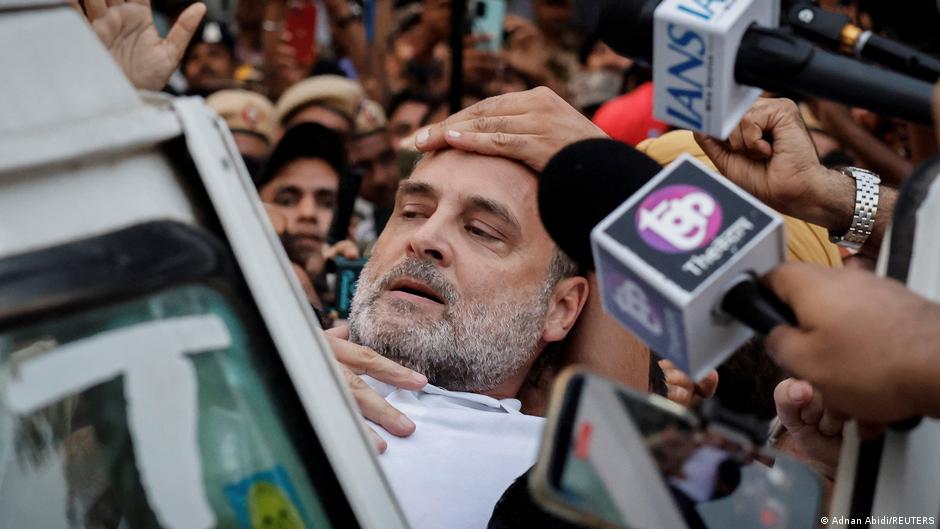
The planned action is a political protest against India's chief election commissioner. It matters because the opposition is challenging the conduct or credibility of the country's election authorities. The article frames the new demonstration as a continuation of earlier protests, not as an isolated event. The detentions appear to have strengthened the opposition's resolve. Detention can turn a procedural dispute into a wider confrontation over political rights and accountability. However, the source gives no names, numbers, legal grounds, or details about those detained, so the precise connection cannot be established from the article alone. The opposition alliance is set to protest again in Delhi. The article also reports a similar demonstration planned in Bengaluru by the group it calls “Cockroach.” It does not provide a route, date, expected attendance, or official response, leaving the protests' immediate scale and consequences unclear.
Based on reporting by DW News
What protest is India's opposition alliance planning in Delhi, and why has it intensified after the detentions?
The planned action is a political protest against India's chief election commissioner. It matters because the opposition is challenging the conduct or credibility of the country's election authorities. The article frames the new demonstration as a continuation of earlier protests, not as an isolated event.
The detentions appear to have strengthened the opposition's resolve. Detention can turn a procedural dispute into a wider confrontation over political rights and accountability. However, the source gives no names, numbers, legal grounds, or details about those detained, so the precise connection cannot be established from the article alone.
The opposition alliance is set to protest again in Delhi. The article also reports a similar demonstration planned in Bengaluru by the group it calls “Cockroach.” It does not provide a route, date, expected attendance, or official response, leaving the protests' immediate scale and consequences unclear.
What does the Chief Election Commissioner do in India's electoral system?
India's Chief Election Commissioner is the senior member of the Election Commission of India, the constitutional body responsible for administering elections. The commission oversees the electoral process from preparing voter rolls and announcing schedules to managing polling and counting. Its central purpose is to ensure that voters and candidates face common rules.
The commissioner works with the other election commissioners rather than personally running every polling station. The institution issues directions, monitors compliance, recognizes political parties, and can act against violations of election rules. It also coordinates the large administrative machinery needed to conduct elections across India.
The source article does not describe these responsibilities directly; this explanation uses established constitutional knowledge. The office matters in the current dispute because opposition parties are protesting the chief election commissioner. If the authority is seen as neutral, losing parties are more likely to accept results.
What powers do Indian authorities have to detain people during a political protest?
During a political protest, Indian police can use arrest or preventive detention powers when they claim a person poses a public-order risk, violates an applicable law, or disobeys lawful restrictions. Authorities may also impose conditions on assemblies, such as location, timing, or crowd size. These powers are meant to prevent violence and serious disruption, not silence lawful criticism.
Detention should follow legal procedures, including informing an arrested person of the grounds, allowing access to legal remedies, and bringing an ordinary arrestee before a magistrate within the required period. Preventive detention follows a separate framework and remains subject to statutory and constitutional safeguards. Courts can review unlawful detention.
The source only says the opposition intensified its protests after detentions. It does not name the detainees or explain the legal basis. Therefore, the article cannot establish whether the detentions were arrests, preventive custody, or another police measure.
How large are the planned protests, and are similar demonstrations expected outside Delhi?
The planned protests are politically significant, but their size cannot be measured from the information provided. The article says India's opposition alliance will stage another protest in Delhi. It does not state an expected crowd, number of participating parties, number of locations, or duration.
There is evidence of activity outside the capital. The article says India's “Cockroach group” will stage a similar protest in Bengaluru. That indicates the dispute may extend beyond Delhi, but the source does not define the group, explain its relationship with the opposition alliance, or give an attendance forecast.
The current reality is therefore geographic spread without a reported numerical scale. Police preparations, public response, and political impact cannot be assessed from the article. Any claim about a mass protest or nationwide movement would go beyond the supplied facts.
What could happen to public trust in India's elections if opposition parties believe the election authorities are acting unfairly?
Election authorities are trusted when competing parties believe they apply rules fairly. If opposition parties conclude that the authorities favor one side, supporters may doubt voter rolls, enforcement decisions, results, or the legitimacy of the government formed afterward. The damage can spread beyond one election because trust is difficult to rebuild.
For example, a party that believes the chief election commissioner acted unfairly may protest rather than accept an adverse decision. If supporters share that belief, demonstrations can grow and political disagreement can become a broader institutional crisis. Detentions connected with protests may intensify that perception, especially when authorities do not clearly explain their actions.
The article reports renewed protests but does not describe polling irregularities or public opinion. The likely implication is institutional: visible disputes could pressure the Election Commission to explain decisions and demonstrate neutrality. Without those assurances, future results may face stronger challenges from losing parties.
How is India's Election Commission intended to remain independent from the government and political parties?
India's Election Commission is intended to administer elections independently rather than act as a department of the ruling government. Its constitutional status gives it authority over election conduct, while its multi-member structure is designed to prevent one political actor from controlling every decision. Commissioners are expected to apply the same rules to all parties.
Independence also relies on protections around tenure and removal. The Chief Election Commissioner has a difficult removal process, broadly comparable to that of a Supreme Court judge. Other election commissioners cannot be removed by the executive on its own. The commission also issues binding directions within its constitutional and legal powers.
These safeguards are intended to protect impartiality, but independence depends on how institutions operate in practice. The article does not discuss appointments, budgets, or removal procedures. It does show why independence matters: opposition parties are protesting the chief election commissioner and questioning electoral authority.
Why are independent election authorities essential for a democracy in which competing parties must accept election results?
Democracy depends not only on casting ballots but also on accepting the count. An independent election authority provides a shared referee. It applies election rules to the government and opposition alike, supervises voting, and certifies results. That neutrality helps winners govern and losers concede without treating defeat as proof of a rigged process.
The mechanism is trust. Parties can challenge decisions through established procedures, but they are more likely to respect the outcome when the referee is credible. If the authority appears partisan, a losing party may reject results, encourage supporters to protest, or refuse to recognize the government's legitimacy. Conflict can then move from institutions into the streets.
The article reports opposition protests against India's chief election commissioner and further demonstrations after detentions. It does not prove that elections were unfair. It does show the practical stakes: perceived bias can make acceptance harder, while transparent and independent administration can protect stability.
Key Facts:
📌 India's opposition alliance plans another protest in Delhi.
📌 The demonstration targets the chief election commissioner.
📌 A similar protest is planned in Bengaluru.
📌 The Chief Election Commissioner leads India's Election Commission.
📌 The commission administers elections across India.
📌 The article links the office to opposition protests.
📌 The article says detentions preceded renewed opposition protests.