News · Defence & Security
Russian bomb kills 33 in street in east Ukraine city
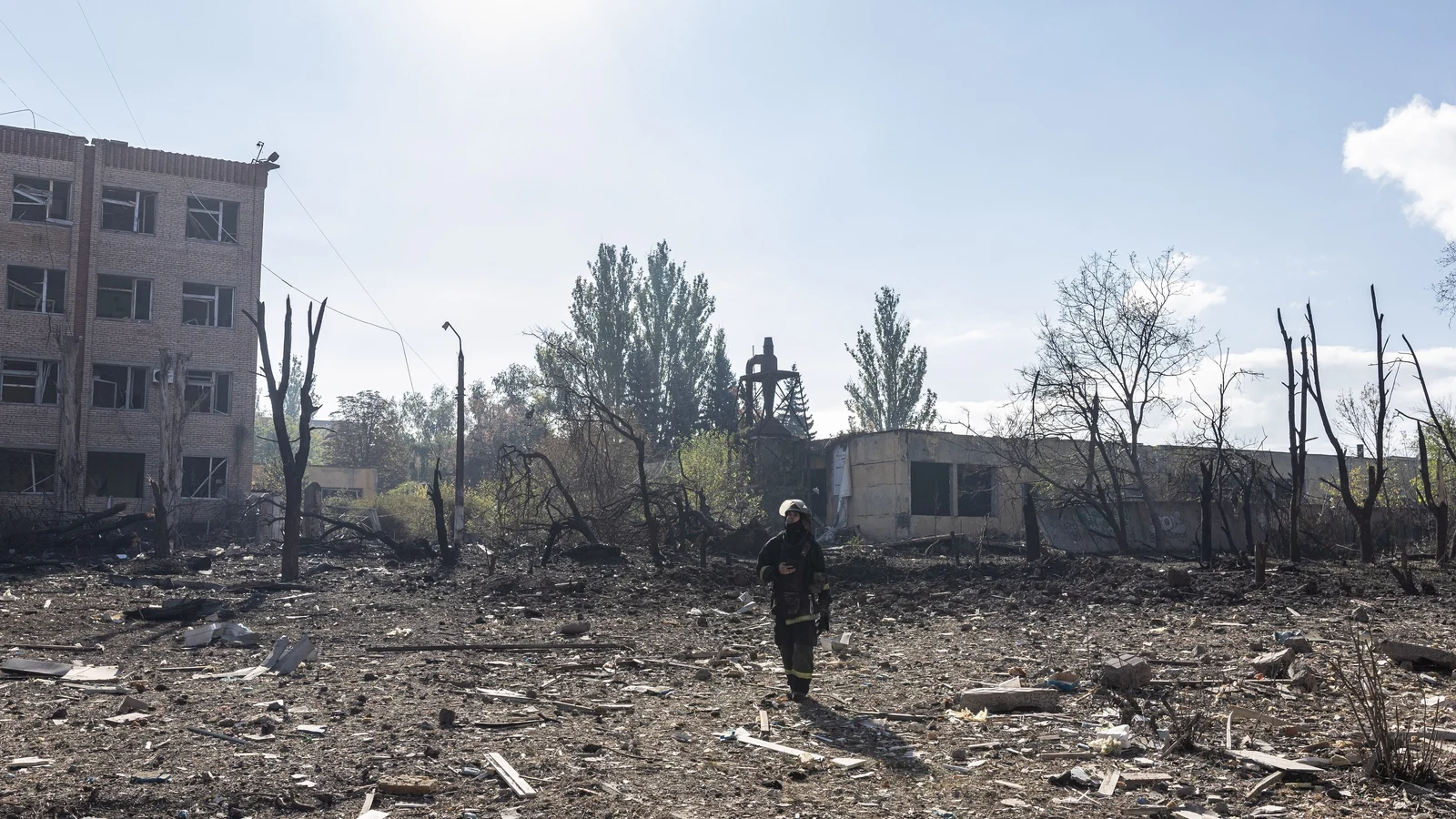
At least 33 people died in a Russian bomb attack on Kramatorsk, a key Ukrainian city in Donetsk. Another 18 people were wounded. Authorities described the strike as a targeted attack on civilians. Its location made the danger especially stark: police said two city buses were operating nearby, while President Volodymyr Zelensky called the site a bus stop. Police images showed bodies, debris, and what appeared to be a burned-out bus. Regional governor Vadym Filashkin said attackers may see a passenger bus as an attractive target because one strike can kill many people. Russia denies targeting civilians, but has repeatedly attacked Ukrainian cities during its full-scale invasion. The strike also changed daily life immediately. Filashkin ordered public transport halted in Kramatorsk and Sloviansk, saying authorities could not risk residents' lives. The attack came as Russian forces increased drone and guided-bomb strikes across Ukraine's fortress belt.
Based on reporting by RTE Ireland
What happened in Kramatorsk, and how many people were killed or wounded?
At least 33 people died in a Russian bomb attack on Kramatorsk, a key Ukrainian city in Donetsk. Another 18 people were wounded. Authorities described the strike as a targeted attack on civilians. Its location made the danger especially stark: police said two city buses were operating nearby, while President Volodymyr Zelensky called the site a bus stop.
Police images showed bodies, debris, and what appeared to be a burned-out bus. Regional governor Vadym Filashkin said attackers may see a passenger bus as an attractive target because one strike can kill many people. Russia denies targeting civilians, but has repeatedly attacked Ukrainian cities during its full-scale invasion.
The strike also changed daily life immediately. Filashkin ordered public transport halted in Kramatorsk and Sloviansk, saying authorities could not risk residents' lives. The attack came as Russian forces increased drone and guided-bomb strikes across Ukraine's fortress belt.
What is a guided bomb, and why can it be especially destructive in a city?
A guided bomb is an explosive weapon fitted with systems that help it adjust its flight toward a selected target. Guidance may use satellite signals, lasers, cameras, or other sensors. This differs from an unguided bomb, whose path depends mainly on its release point, speed, and gravity. The source mentions guided-bomb strikes but does not identify the weapon used in Kramatorsk.
In a city, even a weapon aimed at one location can cause severe harm. Buildings, roads, vehicles, and crowds are close together. A strike near a bus stop or operating buses can therefore injure many people at once. Guidance can improve accuracy, but it does not make an attack safe for civilians when targets are embedded in urban areas.
The article says Russia has increased guided-bomb and drone attacks on Kramatorsk and other fortress-belt cities. It also says Russia denies targeting civilians. The continuing strikes have led officials to halt public transport to reduce exposure.
How large was this attack compared with other recent attacks in Ukraine?
The Kramatorsk attack was exceptionally large by the article's description. Authorities said it killed at least 33 people and wounded 18. The report calls it one of the largest single attacks in Ukraine this year. It does not provide a complete list of recent attacks, so a wider ranking cannot be established from the available facts.
The article offers one immediate comparison. Separate morning drone strikes on Kyiv killed three people and wounded 14. That means the Kramatorsk attack caused far more deaths in one reported incident, although the Kyiv figures still show serious harm. The Kramatorsk strike also occurred where buses were operating, increasing the potential for many casualties in one place.
Together, the incidents show the breadth of the attacks. Russian forces were striking both a major city, Kyiv, and cities in Donetsk's fortress belt. Kyiv was especially exposed because the article says Ukraine faced a shortage of air defences. In Kramatorsk, officials responded by suspending public transport.
Why is Kramatorsk part of Ukraine's strategically important “fortress belt” in Donetsk?
Kramatorsk matters because it belongs to Ukraine's “fortress belt” in Donetsk. Local officials describe this belt as the backbone of Ukraine's defences in the region. The article also calls Kramatorsk and Sloviansk key fortress-belt cities. Their importance is therefore military and geographic: they form part of the defensive area still held by Ukraine.
That role helps explain the pressure on these cities. Moscow's forces have increased drone and guided-bomb strikes on Kramatorsk and other cities in the belt. The attacks are occurring while Russia seeks the remaining Ukrainian-held part of Donetsk. The article says the pace of Russian battlefield gains there has slowed significantly this year.
The fortress belt remains central to the war's next stage. Russia demands that Ukraine surrender the rest of Donetsk under Kyiv's control before fighting stops. Ukraine refuses. Continued attacks and the suspension of public transport show how the region's military importance directly affects civilian life.
What happens to civilians and cities when public transport is halted because of repeated attacks?
When public transport stops under attack, civilians face a difficult trade-off. They may be safer from strikes on buses and busy stops, but they lose a shared way to reach work, services, relatives, or safer places. The source directly records the safety reason: Vadym Filashkin said authorities had “no right to risk” citizens' lives.
The immediate example is Kramatorsk, where police said two buses were operating during the strike. Images showed what appeared to be a charred bus shell. Filashkin therefore ordered transport halted in Kramatorsk and nearby Sloviansk. This action removes buses from streets that attackers might strike, but it does not remove the broader danger from drones or bombs.
The longer-term effect is a city under restricted movement. The article does not detail how residents will travel or how long the suspension will last. It does show that repeated attacks force local authorities to choose between access and exposure. Continued strikes could make daily life and emergency response harder.
How do Russia's territorial demands in Donetsk relate to the fighting around Kramatorsk and Sloviansk?
The fighting around Kramatorsk and Sloviansk is tied directly to the dispute over Donetsk. Russia has demanded that Ukraine give up the rest of the region still under Ukrainian control before Moscow stops fighting. Ukraine refuses. The fortress belt is the defensive backbone of that remaining area, according to local officials.
This explains why Russian forces have increased drone and guided-bomb strikes on the belt. Kramatorsk and Sloviansk are identified as key cities within it. Their defences help Ukraine hold territory, while their position makes them important to Russia's territorial objective. The article says Russian battlefield gains in the region have slowed significantly this year.
The result is pressure on both the front and civilian life. Russia continues attacks while its territorial demand remains unmet. Ukraine continues to reject ceding the territory. Transport was halted in both cities after the Kramatorsk strike, showing how the political dispute produces immediate restrictions for residents.
How do air-defense systems detect and stop drones and bombs, and why can a shortage of them leave cities such as Kyiv vulnerable?
Air-defense systems protect cities by detecting incoming aircraft, drones, or missiles and assessing their direction and speed. Radar is commonly used, while other sensors can add information. Defenders then try to stop the threat with an interceptor missile, gun, electronic interference, or another countermeasure. The source does not identify which systems Ukraine used in the reported attacks.
Drones and bombs create different challenges. A drone may be detected and tracked before an interceptor reaches it. A guided bomb can be harder to stop because it is already falling quickly toward a target. If several threats arrive together, defenders must divide limited equipment and ammunition among them. These are general air-defense principles, not specific details reported about Kramatorsk or Kyiv.
The article says Russian forces launched frequent waves against Kyiv amid a shortage of Ukrainian air defences. That shortage leaves more incoming threats able to reach cities. The three deaths and 14 injuries in Kyiv show the immediate danger, while the continuing waves suggest vulnerability could persist without stronger protection.
Key Facts:
📌 At least 33 people were killed in Kramatorsk.
📌 Another 18 people were wounded.
📌 Two city buses were operating near the strike.
📌 Guided bombs can adjust their flight toward selected targets.
📌 The article links guided bombs to increased strikes on Kramatorsk.
📌 Crowded urban areas place civilians close to potential impact sites.
📌 Kramatorsk was described as one of this year's largest single attacks.