News · Defence & Security
Ukraine says 30 killed, 18 wounded in Russian attack on passenger buses in Kramatorsk
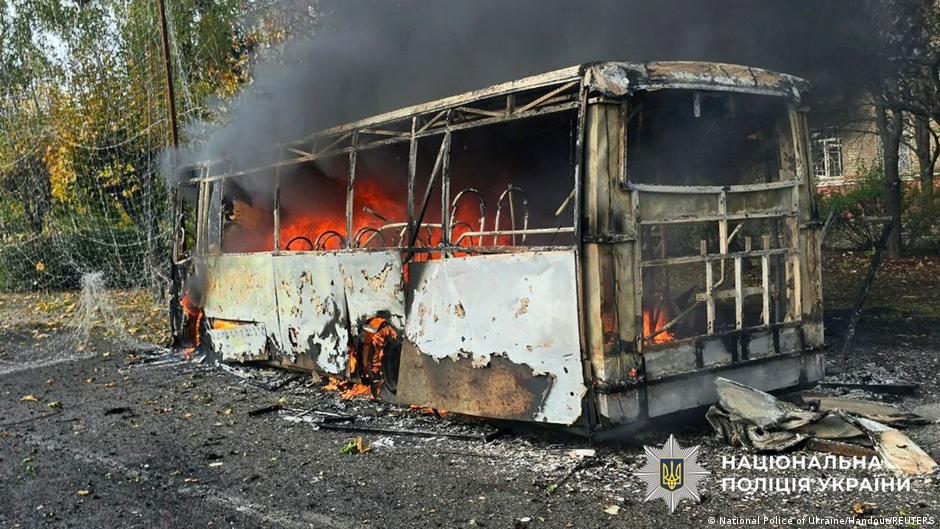
A Russian glide bomb struck two passenger buses travelling along a street in Kramatorsk, eastern Ukraine. The attack killed at least 30 people and wounded 18 others. It also damaged a residential building. The scale of the casualties shows how quickly an attack on ordinary public transport can become a mass-casualty event. Ukrainian authorities said the buses were carrying passengers when the bomb hit. Prosecutors released images showing a burned-out bus and bodies on the ground. The Donetsk regional prosecutor’s office opened a preliminary investigation into a suspected war crime. Governor Vadym Filashkin said Russian forces deliberately targeted civilian transport. Public transport services were suspended after the strike. Officials said passenger and driver safety had become the priority in Kramatorsk and nearby Sloviansk. The attack also intensified evacuation calls because Kramatorsk lies near the front line. Russia’s responsibility and the legal classification remain matters for investigation, but the reported civilian death toll is already severe.
Based on reporting by DW News
What happened to the passenger buses in Kramatorsk, and how many people were killed or wounded?
A Russian glide bomb struck two passenger buses travelling along a street in Kramatorsk, eastern Ukraine. The attack killed at least 30 people and wounded 18 others. It also damaged a residential building. The scale of the casualties shows how quickly an attack on ordinary public transport can become a mass-casualty event.
Ukrainian authorities said the buses were carrying passengers when the bomb hit. Prosecutors released images showing a burned-out bus and bodies on the ground. The Donetsk regional prosecutor’s office opened a preliminary investigation into a suspected war crime. Governor Vadym Filashkin said Russian forces deliberately targeted civilian transport.
Public transport services were suspended after the strike. Officials said passenger and driver safety had become the priority in Kramatorsk and nearby Sloviansk. The attack also intensified evacuation calls because Kramatorsk lies near the front line. Russia’s responsibility and the legal classification remain matters for investigation, but the reported civilian death toll is already severe.
What is a glide bomb, and why can it be especially dangerous to people in cities?
A glide bomb is an aircraft-dropped weapon designed to travel toward a target rather than simply fall vertically. It uses wings or control surfaces to extend its reach after release. The article names the weapon used in Kramatorsk but does not explain its technical design; this definition comes from established military knowledge.
The key mechanism is distance. An aircraft can release the weapon away from the immediate target area, while the bomb continues gliding toward a selected location. It may carry a large explosive charge. In a city, a strike near buses, homes, or other crowded places can kill passengers and damage nearby buildings at the same time.
That danger was evident in Kramatorsk. The bomb hit two passenger buses and also struck a residential building, killing at least 30 people and wounding 18. The incident led authorities to suspend public transport and renew calls for civilians to leave areas near the front line.
Why did the attack lead authorities to suspend public transport and urge civilians to evacuate?
Authorities suspended public transport because the attack showed that passenger buses could be exposed to lethal strikes. At least 30 people died and 18 were wounded when a glide bomb hit two buses in Kramatorsk. A residential building was also struck. The decision aimed to reduce further risks to passengers and drivers.
Governor Vadym Filashkin said Russian forces were deliberately targeting civilian transport. He said officials had no right to risk the lives of passengers and drivers. The regional governor’s office reported that public transport services had been suspended. These steps followed an attack that Ukrainian authorities described as striking buses while they travelled along a street.
Officials also urged remaining civilians to evacuate to safer areas because Kramatorsk is near the front line. Russian forces have advanced toward the city’s eastern outskirts. The immediate reality is reduced public mobility and greater pressure on civilians to leave. The article does not give a timetable for restoring bus services or completing evacuations.
Why is Kramatorsk strategically important in the war in eastern Ukraine?
Kramatorsk matters because it is one of the main Ukrainian-held cities in Donetsk, a region Russia claims to have annexed. The city lies close to the front line and forms part of Ukraine’s heavily defended eastern “fortress belt.” Its location connects the fighting zone with military support and civilian movement.
Throughout much of the war, Kramatorsk has served as a key military logistics hub. Russian forces have advanced toward its eastern outskirts, increasing pressure on the city. Ukrainian authorities have also called for remaining civilians to evacuate to safer areas. These facts make the city important both as a defensive position and as a populated urban center near combat.
The surrounding area remains contested. Ukrainian forces have conducted counterattacks in recent weeks and claimed to have recaptured several square kilometers. Kramatorsk’s strategic value means attacks there can affect military logistics, transport, and civilian safety. Its proximity to the front line also explains why officials are reducing public transport and urging evacuation.
What is a war crime, and why might an attack on passenger buses be investigated as one?
A war crime is a serious violation of international humanitarian law committed during an armed conflict. The article does not provide a full legal definition, but established law protects civilians and civilian objects from deliberate or indiscriminate attacks. Investigators must examine what was targeted, who ordered the strike, and what was known about the people present.
The Kramatorsk strike is under preliminary investigation because a glide bomb hit two passenger buses carrying civilians. It also struck a residential building. Governor Vadym Filashkin said Russian forces deliberately targeted civilian transport. If evidence showed that civilians or civilian buses were intentionally attacked, or that the attack was indiscriminate, that could support a war-crime allegation.
The legal process is not complete. The Donetsk regional prosecutor’s office described the case as a suspected war crime and opened an investigation. That wording signals an allegation requiring evidence, not a final judgment. Investigators would need to establish the circumstances, the intended target, and whether international humanitarian law was violated.
How has Kramatorsk's history since 2014 shaped its role in the current conflict?
Kramatorsk’s history helps explain why it remains central to the war. Pro-Russian separatists briefly occupied the city in 2014, but Ukrainian forces retook it. Since then, Kramatorsk has remained one of the main Ukrainian-held cities in Donetsk, a region Russia claims to have annexed.
The city’s role expanded during the conflict. It has served as a key military logistics hub and forms part of Ukraine’s heavily defended eastern “fortress belt.” Its location near the front line makes it useful for supporting Ukrainian operations, but it also exposes the city to Russian pressure. Russian forces have advanced toward its eastern outskirts.
The current fighting continues around Kramatorsk. Ukrainian forces have conducted counterattacks nearby and claimed to have recaptured several square kilometers. The city’s past occupation, later recapture, and present military importance help explain evacuation calls and the danger to civilians. The bus strike shows that this strategic position also carries major risks for everyday travel.
What basic rules of international humanitarian law govern attacks near civilians, and how do they distinguish military targets from civilian objects?
International humanitarian law requires parties to distinguish between military objectives and civilians or civilian objects. It also requires proportionality, meaning expected civilian harm cannot be excessive compared with the anticipated military advantage. Attackers must take feasible precautions to verify targets and reduce harm. These rules protect people even during active fighting.
A military objective must normally make an effective contribution to military action and offer a definite military advantage if attacked. Passenger buses and residential buildings are generally civilian objects. They do not become lawful targets merely because they are near a front line. If a civilian object were being used for military purposes, its status would require careful assessment, not assumption.
The Kramatorsk case raises these questions because a glide bomb struck two passenger buses and a residential building. Ukrainian prosecutors opened a suspected war-crime investigation. The article reports allegations of deliberate targeting, but does not establish the intended target or all surrounding facts. Investigators must assess distinction, proportionality, precautions, and available evidence.
Key Facts:
📌 - A glide bomb struck two passenger buses in Kramatorsk.
📌 - At least 30 people were killed.
📌 - Eighteen people were wounded.
📌 - A glide bomb travels toward its target after being released.
📌 - The article identifies the weapon but gives no technical details.
📌 - Urban strikes can affect transport and nearby buildings.
📌 - Public transport services were suspended after the strike.