News · Defence & Security
Russian forces strike bus in Kramatorsk: 12 killed, 14 injured
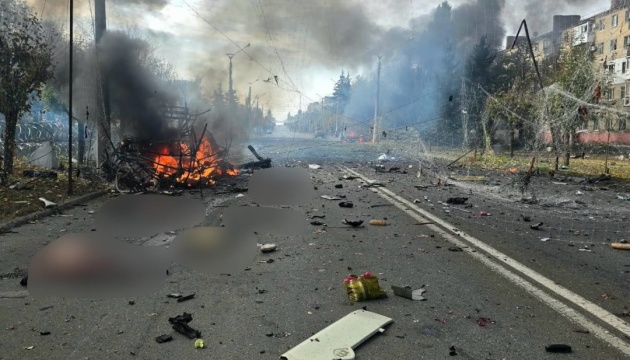
A guided bomb struck a Kramatorsk street at about 10:00 while two passenger buses were traveling there. The attack damaged both buses and a nearby apartment building. It shows how a strike in a populated area can affect moving passengers and residents at the same time. The National Police identified the munition as a UMPB D-30 SN guided bomb. The bomb hit one of the city’s streets, where the buses were passing. Passenger vehicles were carrying people when the strike occurred, making the location especially dangerous for civilians. By 11:30, authorities reported 12 deaths and 14 injuries. Investigators, paramedics, patrol officers, State Emergency Service personnel and other specialists were working at the site. Damage assessments and information about the attack were still being clarified.
Based on reporting by Ukrinform English
What happened when Russian forces struck the street in Kramatorsk, and which vehicles and buildings were damaged?
A guided bomb struck a Kramatorsk street at about 10:00 while two passenger buses were traveling there. The attack damaged both buses and a nearby apartment building. It shows how a strike in a populated area can affect moving passengers and residents at the same time.
The National Police identified the munition as a UMPB D-30 SN guided bomb. The bomb hit one of the city’s streets, where the buses were passing. Passenger vehicles were carrying people when the strike occurred, making the location especially dangerous for civilians.
By 11:30, authorities reported 12 deaths and 14 injuries. Investigators, paramedics, patrol officers, State Emergency Service personnel and other specialists were working at the site. Damage assessments and information about the attack were still being clarified.
How many people were killed or injured, and what does that number show about the attack’s civilian impact?
The attack killed 12 people and injured 14 others, according to information available by 11:30. These figures show a severe civilian impact in a single strike. The casualties occurred in a city street where ordinary passenger buses were operating, rather than at an isolated military location described in the report.
The National Police said two buses were traveling through the area when the munition hit. The city council initially reported at least 12 deaths and 13 injuries, while the later police update raised the injury count to 14. This difference reflects information being updated as emergency work continued.
The numbers also show why rapid rescue and medical responses matter. Paramedics, police, emergency personnel and investigators were at the scene. The final toll could depend on further checks, because the report said information about the consequences was still being clarified.
What is a UMPB D-30 SN guided bomb, and how is a guided bomb different from an unguided bomb?
A UMPB D-30 SN is a type of guided aerial bomb. The article identifies it as the munition used in the Kramatorsk strike but does not provide its weight, range, warhead or guidance technology. Those details should not be inferred from the report alone.
The key difference is control after release. A guided bomb can use onboard sensors, navigation equipment or control surfaces to adjust its flight toward a selected aim point. An unguided bomb has no comparable active steering system. Its path depends mainly on release conditions, gravity, wind and the aircraft’s movement.
Guidance can improve accuracy, but it does not make an attack automatically lawful or harmless. In Kramatorsk, the bomb struck a street where two buses were traveling and damaged an apartment building. The reported civilian deaths and injuries show why weapon accuracy and target selection both matter.
Where is Kramatorsk, and why is it an important city in the Russia-Ukraine war?
Kramatorsk is a city in Donetsk Oblast in eastern Ukraine. The article itself does not explain the city’s geography or strategic importance, so this location and context come from established background knowledge rather than the report.
Kramatorsk matters because it is one of the major cities in the Donetsk region, an area central to Russia’s war against Ukraine. It has been an important population center and transport hub in a region where military activity and civilian life overlap. Streets, buses and apartment buildings can therefore exist close to wartime danger.
The reported strike illustrates that wider reality. Russian forces hit a street while two passenger buses were moving, killing 12 people and injuring 14. The attack also damaged an apartment building. Continued strikes in and around important cities can disrupt transport, threaten residents and place heavy demands on emergency services.
Who responded at the scene, and what immediate tasks do police, paramedics, and emergency workers perform after a strike?
Several services responded at the strike site: an investigative team, paramedics, patrol police officers, State Emergency Service personnel and other specialized workers. Their combined response matters because a strike scene can involve casualties, damaged structures, fire, unexploded ordnance and evidence that must be preserved.
Paramedics assess victims, provide urgent treatment and move the injured to medical care. Police secure the area, control access, protect civilians and record initial information. Investigators document damage, identify victims, collect evidence and establish what happened. Emergency service personnel search damaged areas, remove hazards and support rescue operations.
The article confirms that these groups were working at the site after the strike. It does not list each team’s exact actions. Their presence shows that the response was both medical and investigative, while officials continued clarifying the attack’s consequences and the casualty figures.
Why can the use of guided bombs in a city threaten people who are traveling on ordinary buses or living in nearby apartment buildings?
Guidance helps a weapon steer toward an intended aim point, but it does not remove the danger to civilians. Urban areas contain moving vehicles, homes, pedestrians and people who may have little warning. A strike can also cause fragments, blast pressure, fires or structural damage beyond the immediate point of impact.
The Kramatorsk example makes this clear. A UMPB D-30 SN guided bomb hit a city street while two passenger buses were traveling there. Both buses were damaged, and an apartment building was also damaged. The strike killed 12 people and injured 14, according to the update at 11:30.
The risk depends on more than whether a weapon is guided. Attackers must consider the target, timing, surroundings and likely civilian presence. The incident shows why strikes near public transport and residential buildings can produce deadly consequences even when a weapon is designed to be more accurate.
What rules of international humanitarian law govern attacks near civilians, and how are possible violations investigated?
International humanitarian law requires parties to distinguish military targets from civilians and civilian objects. Attacks may not be directed at civilians, and indiscriminate attacks are prohibited. Parties must also take feasible precautions and consider whether expected civilian harm would be excessive compared with the anticipated military advantage.
In Kramatorsk, the reported location included two passenger buses and an apartment building. Those facts would be relevant to any legal assessment, along with the intended target, available information, weapon accuracy, warning measures and the attacker’s knowledge. The article does not establish whether a violation occurred.
Possible violations are investigated by documenting the scene, interviewing witnesses, identifying victims, examining damage and analyzing remnants or other evidence. The article reports that an investigative team was working at the site. National authorities and, where applicable, international investigators can compare that evidence with the law and the circumstances of the strike.
Key Facts:
📌 - A guided bomb struck a Kramatorsk street around 10:00.
📌 - Two passenger buses and an apartment building were damaged.
📌 - The buses were traveling when the strike occurred.
📌 - Twelve people were killed in the strike.
📌 - Fourteen people were injured by 11:30.
📌 - The casualties occurred near two traveling passenger buses.
📌 - The National Police identified the munition as a UMPB D-30 SN guided bomb.