News · Defence & Security
Trump reportedly weighing fresh Iran strikes before midterms
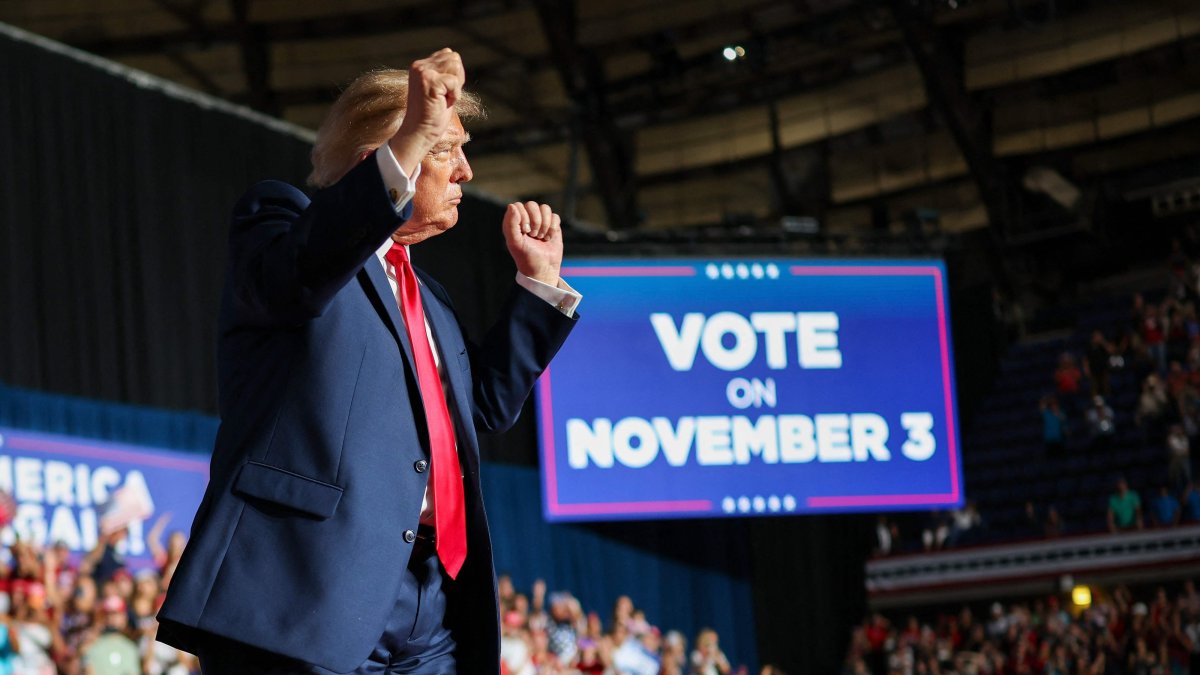
The reported plan concerns possible U.S. military strikes against Iran before the Nov. 3 midterm elections. The Pentagon has been asked to present choices to President Donald Trump. The options could include the size, targets, and timing of any operation. The issue matters because a strike could restart a wider conflict. The Pentagon’s basic role is to turn presidential decisions into military choices. A department official told Anadolu Agency that developing and presenting military options is the department’s job. The Atlantic reported that officials were still debating potential targets and the scale of attacks. Advisers reportedly preferred action after the elections. The reports do not establish that strikes will happen. Axios reported that the Pentagon told U.S. Central Command to prepare for possible major combat operations, but gave no launch date. A White House official said Trump had all options available. The timing and eventual decision therefore remained unsettled.
Based on reporting by Daily Sabah Turkey
What military action is the White House reportedly considering, and what has it asked the Pentagon to prepare?
The reported plan concerns possible U.S. military strikes against Iran before the Nov. 3 midterm elections. The Pentagon has been asked to present choices to President Donald Trump. The options could include the size, targets, and timing of any operation. The issue matters because a strike could restart a wider conflict.
The Pentagon’s basic role is to turn presidential decisions into military choices. A department official told Anadolu Agency that developing and presenting military options is the department’s job. The Atlantic reported that officials were still debating potential targets and the scale of attacks. Advisers reportedly preferred action after the elections.
The reports do not establish that strikes will happen. Axios reported that the Pentagon told U.S. Central Command to prepare for possible major combat operations, but gave no launch date. A White House official said Trump had all options available. The timing and eventual decision therefore remained unsettled.
What are U.S. midterm elections, and why can their timing matter to a president's foreign-policy decisions?
U.S. midterm elections are federal elections held midway through a president’s four-year term. Voters choose members of the House of Representatives and some senators. The president is not elected in midterms. These elections can change which party controls Congress and can influence the political environment around military action.
Timing matters because a president may face public scrutiny, congressional pressure, or concerns about how voters view a foreign conflict. A decision before voting can affect the election debate, while delaying action can postpone immediate risks. These are general features of U.S. politics, not claims that a specific decision was made for electoral reasons.
The article reports that the White House sought options before Nov. 3. It also says advisers believed new strikes would be best after the midterms. Trump later said he expected a deal with Iran after the elections, while warning of a major choice between agreement and destruction.
What is U.S. Central Command, and what role does it play in preparing military operations in the Middle East?
U.S. Central Command, or CENTCOM, is a unified U.S. military command responsible for planning and conducting operations across the Middle East and surrounding areas. Its job includes coordinating forces from different military services. That makes it a central link between national strategy and battlefield preparation.
When leaders consider military action, CENTCOM can develop operational plans, assess forces and logistics, identify targets, and prepare commanders. It does not independently decide whether the United States goes to war. Civilian leaders set policy, while military commands translate approved decisions into executable plans.
According to Axios, Pentagon officials instructed CENTCOM several days earlier to complete preparations for resuming major combat operations in Iran. The report did not include a specific launch date. The Pentagon also said its general duty is to develop and present military options to the president. Preparation therefore showed readiness planning, not proof that strikes had been ordered.
How important is the Strait of Hormuz to global energy supplies, and how much oil and gas normally pass through it?
The Strait of Hormuz is a narrow waterway linking the Persian Gulf with the Gulf of Oman and the wider ocean. It is a critical energy chokepoint because large volumes of oil and gas exports must pass through it. Disruption can affect supplies far beyond the countries bordering the gulf.
Energy agencies commonly estimate that roughly 20 to 21 million barrels of oil and petroleum liquids move through Hormuz each day. Around one-fifth of global liquefied natural gas trade also passes through the strait annually. Exact figures vary by year and by whether the estimate counts crude oil alone or broader petroleum liquids.
The source article does not provide a volume figure, but it calls Hormuz a strategic route for energy supplies. It says Iranian missile and drone attacks effectively closed the strait after war began. Disagreement over security and navigation later stalled implementation of a U.S.-Iran understanding, keeping the waterway central to future risks.
What consequences can military strikes and attacks on shipping have for regional security, energy prices, and international trade?
Military strikes can increase regional insecurity by provoking retaliation, widening the fighting, and placing nearby bases, cities, and shipping routes at risk. Attacks on commercial vessels create additional danger for crews and cargo. Together, these effects can make governments and companies treat an entire region as unsafe.
The key mechanism is disruption of transport. If ships avoid a route, face attacks, or cannot pass through a chokepoint, deliveries take longer and insurance and shipping costs can rise. Energy markets may also price in possible shortages. Those pressures can raise oil, gas, and transport costs, though the size and duration depend on how long disruption lasts.
The article provides a direct example: Iranian missile and drone attacks followed the U.S.-Israeli war and effectively closed the Strait of Hormuz. It identifies Hormuz as a strategic energy route. Continued disagreements over security and navigation could therefore affect regional stability, energy markets, and international trade.
What is a memorandum of understanding, and why might an agreement to halt hostilities fail to be implemented?
A memorandum of understanding, or MOU, is a written agreement describing what parties intend to do together. It can set goals, responsibilities, and steps without necessarily being a full treaty. Its legal force depends on the text and the parties’ intentions. An MOU can still carry significant political weight even when enforcement is limited.
Implementation requires more than signing. Governments must agree on practical details, trust one another, and follow through on promised actions. Disputes over security arrangements, access, monitoring, navigation, or sequencing can stop an agreement from operating. A change in political priorities or renewed attacks can also undermine cooperation.
The article says the United States and Iran signed an MOU in June after mediation by Pakistan and Qatar. It was intended to halt hostilities and support negotiations. Implementation later stalled amid disagreements, including security and navigation in the Strait of Hormuz. The stalled process leaves the conflict unresolved.
What legal and constitutional rules govern a U.S. president's authority to order military strikes without a formal declaration of war?
The Constitution divides war powers. Congress has authority to declare war, fund military operations, and regulate the armed forces. The president is commander in chief and directs military forces. U.S. practice and court decisions have allowed some actions without a formal declaration, especially defending the country or protecting forces, but the boundaries can be disputed.
The War Powers Resolution of 1973 requires the president to notify Congress when U.S. forces enter hostilities or situations presenting an imminent risk. It generally expects withdrawal within 60 days unless Congress authorizes the action, with a possible 30-day extension for safe withdrawal. The president must also rely on available funding and other legal authorities.
These rules do not automatically make every strike lawful or unlawful. The legal basis depends on facts, including self-defense, congressional authorization, the operation’s scale, and how long it continues. The article reports proposed options, not a completed strike, and does not describe any legal authorization for one.
Key Facts:
📌 The White House reportedly sought military options against Iran before Nov. 3.
📌 Potential strike size and targets remained under debate.
📌 CENTCOM received instructions to prepare for possible major combat operations.
📌 Midterm elections occur halfway through a U.S. president’s term.
📌 They elect members of Congress, not the president.
📌 Advisers reportedly preferred possible strikes after the midterms.
📌 CENTCOM is a U.S. military command covering the Middle East.