News · Defence & Security
Russia boosts prewinter strikes, killing 33 in Ukraine's Kramatorsk
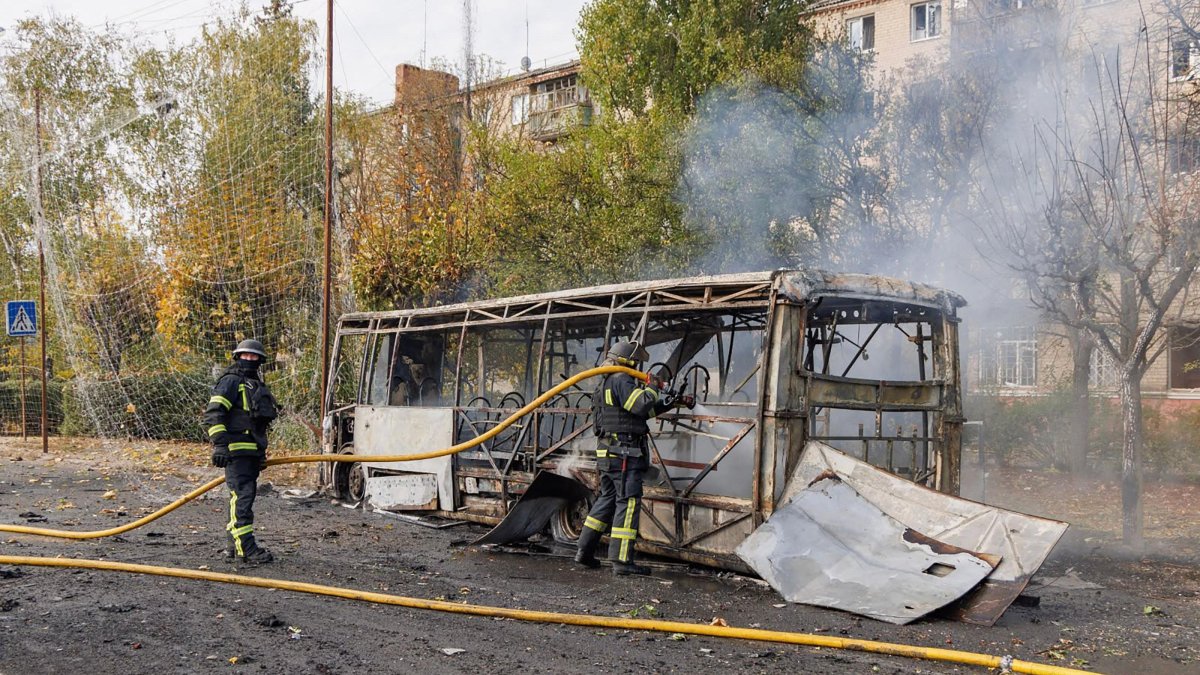
A Russian strike in eastern Ukraine hit a public bus and caused mass civilian casualties. At least 33 people were killed and about 18 were injured, according to the article. The attack matters because buses carry many passengers in concentrated spaces, increasing the potential harm from one strike. Vadym Filashkin, head of the regional military administration, said public transport in Kramatorsk and neighboring Sloviansk was stopped. He said the security situation had sharply worsened and that authorities could not risk passengers’ or drivers’ lives. The Kramatorsk City Council called the attack a crime against civilians and said there were no military targets there. The transport suspension is an immediate protective measure. It reduces the number of people exposed on roads and at bus stops. The article links the decision to a wider escalation before winter, including missile and drone attacks. It does not give a timetable for restoring service.
Based on reporting by Daily Sabah Turkey
What happened in Kramatorsk, and what immediate steps did local authorities take?
A Russian strike in eastern Ukraine hit a public bus and caused mass civilian casualties. At least 33 people were killed and about 18 were injured, according to the article. The attack matters because buses carry many passengers in concentrated spaces, increasing the potential harm from one strike.
Vadym Filashkin, head of the regional military administration, said public transport in Kramatorsk and neighboring Sloviansk was stopped. He said the security situation had sharply worsened and that authorities could not risk passengers’ or drivers’ lives. The Kramatorsk City Council called the attack a crime against civilians and said there were no military targets there.
The transport suspension is an immediate protective measure. It reduces the number of people exposed on roads and at bus stops. The article links the decision to a wider escalation before winter, including missile and drone attacks. It does not give a timetable for restoring service.
How many people were killed or injured in the attacks described, including the strikes in Kramatorsk, Pryluky, and Kyiv?
The figures in the article add up to 59 reported deaths and 84 reported injuries across the three locations. That total combines the eastern Ukrainian strikes, the missile attack on Pryluky, and the drone strikes on Kyiv. These numbers show how separate attacks can create a broad civilian emergency within only a few days.
The eastern strikes, including the bus attack, killed at least 33 people and injured about 18. In Pryluky, the death toll reached 22, including five children, while at least 54 people were injured. In Kyiv, late-Wednesday drone strikes killed four people and injured 12, including four children. Adding those reported figures produces the total.
The total should be read as the article’s reported count, not a final independently verified toll. Rescue workers were still searching Pryluky rubble for unaccounted residents. The continuing searches and damaged buildings mean casualty numbers could change as emergency operations continue.
What is international humanitarian law, and how does it protect civilians during war?
International humanitarian law is the body of rules that governs conduct during armed conflict. Its central purpose is to limit suffering, especially for civilians and other people not taking part in fighting. It matters here because Ukrainian officials accused Russia of striking civilian locations, including a bus and residential buildings.
The rules require parties to distinguish military targets from civilians and civilian objects. They also prohibit deliberately attacking civilians and restrict attacks expected to cause excessive civilian harm compared with a concrete military advantage. These protections do not disappear because a war is intense. They apply during attacks, rescue work, and treatment of the wounded.
The article reports Ukrainian allegations that Russia violated these rules, including claims that locations had no military targets. Those accusations are not independently adjudicated in the text. The reported civilian deaths, injuries, and damage show why these legal protections matter, while accountability would require investigation and evidence beyond the article.
How can repeated missile and drone strikes cause power outages and make winter conditions more dangerous for civilians?
Repeated missile and drone strikes can make winter outages more dangerous by disrupting electricity, heating, communications, water systems, and essential services. Cold weather increases dependence on power, while darkness and freezing conditions make damaged homes harder to occupy safely. The article links intensifying attacks with worsening outages in Kyiv and preparations for prolonged blackouts.
DTEK said Ukrenergo ordered emergency outages in Kyiv. These were separate from regular rolling outages, showing that an unexpected grid problem required faster action. Kyiv police also reported unexploded ballistic warheads near residential buildings. Such hazards can delay repairs and keep residents away from damaged areas.
Ukraine restarted a public awareness campaign urging families to store drinking water, prepare emergency kits, and maintain off-grid power sources. President Zelenskyy warned that attacks could escalate as winter approaches. The article therefore points to a continuing risk: more strikes could mean longer disruptions, greater pressure on emergency workers, and harder conditions for civilians.
Why are ballistic-missile defenses, interceptor missiles, and ammunition for combat aircraft important in protecting Ukrainian cities?
Ballistic-missile defenses matter because they can detect and intercept incoming ballistic weapons before those weapons reach populated areas. Interceptor missiles are the defensive projectiles used to destroy or disable threats in the air. Ammunition for combat aircraft supports another layer of defense by helping Ukrainian aircraft operate against aerial threats.
The article gives a concrete warning: Kyiv police found and defused two unexploded ballistic missile warheads, each weighing about half a ton, near residential buildings. Earlier drone strikes in Kyiv killed four people and injured 12, including four children. These incidents show why stopping weapons before impact can save lives and limit damage.
Zelenskyy appealed to NATO countries for additional defense support. He specifically requested anti-ballistic capabilities, combat-aircraft ammunition, and investments in interceptors. The article presents these supplies as urgent because Russia may increase daily missile and drone attacks as winter approaches.
How is the long-range aerial war between Russia and Ukraine different from the largely deadlocked fighting along the front line?
The article describes two different parts of the war. Russia and Ukraine are conducting a long-range aerial campaign with missiles and drones. At the same time, their armies are largely deadlocked along the front line. The distinction matters because battlefield movement and attacks on distant cities can follow different patterns.
The reported examples are spread across Ukraine and Russia. Russian missiles and drones struck Kramatorsk, Pryluky, and Kyiv. Ukraine said it struck a refinery complex in Salavat, about 1,200 kilometers east of Moscow. Yandex also said a data center in Russia’s Ryazan region was damaged by a Ukrainian drone attack.
These attacks can affect civilians, energy supplies, industrial sites, and online services far from the ground front. The article gives no indication that the deadlock has ended. Instead, it describes an ongoing long-range exchange, with President Zelenskyy warning that Russian aerial attacks may intensify as winter approaches.
What is an electrical power grid, and why might operators impose emergency outages after attacks on energy infrastructure?
An electrical power grid is the connected network that carries electricity from generating facilities through transmission lines and substations to homes, businesses, and public services. It must keep supply and demand balanced. If important equipment is damaged or power flows change suddenly, operators may cut electricity temporarily to protect the wider system.
The article reports that Ukraine’s grid operator, Ukrenergo, ordered emergency outages in Kyiv. DTEK said these were different from regular rolling outages scheduled across the country. The distinction suggests an urgent response to current grid conditions, rather than a planned timetable. The article does not identify the exact equipment failure behind the emergency order.
Emergency outages can reduce pressure on the network and help prevent a larger breakdown. They also leave residents without normal services, especially during winter. Ukraine urged families to store water, prepare emergency kits, and keep off-grid power sources because Moscow’s attacks could produce prolonged blackouts.
Key Facts:
📌 A public bus was struck during Russian attacks in eastern Ukraine.
📌 At least 33 people were killed and about 18 injured.
📌 Public transport stopped in Kramatorsk and neighboring Sloviansk.
📌 The reported attacks killed 59 people altogether.
📌 The reported attacks injured 84 people altogether.
📌 Pryluky’s dead included five children.
📌 International humanitarian law limits suffering during armed conflict.