News · Politics & Governance
India news Live Updates, 8 October 2026: Rahul Gandhi and Co. reach Delhi’s Raj Ghat for Day 3 of EC protest
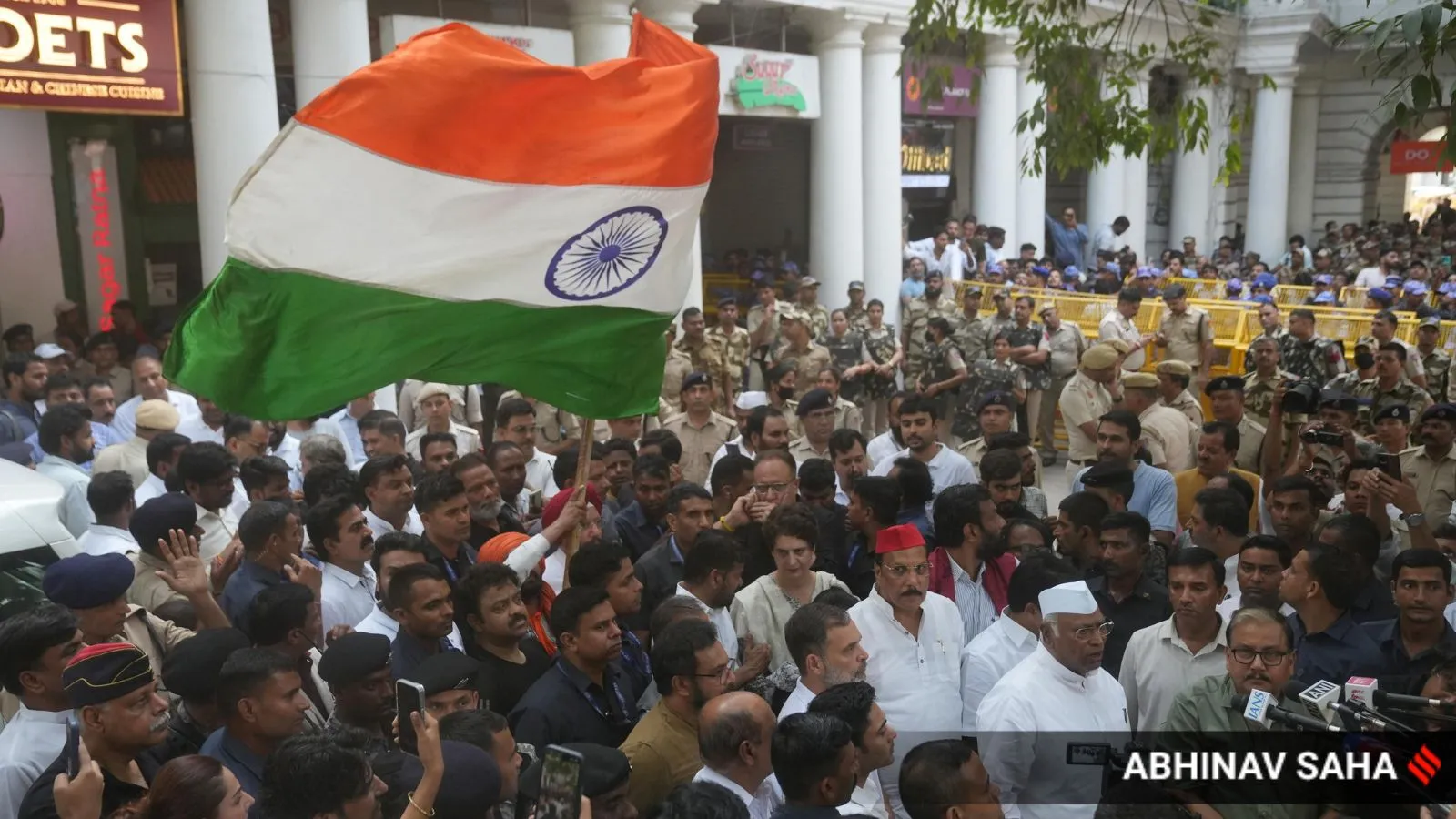
Rahul Gandhi and INDIA bloc lawmakers are protesting what they describe as irregularities in the Special Intensive Revision of electoral rolls. They are demanding the resignation of Chief Election Commissioner Gyanesh Kumar. The protest is also a challenge to how the Election Commission has handled the revision process. The lawmakers travelled by bus to Rajghat after lunch hosted by Congress president Mallikarjun Kharge in Connaught Place. Gandhi said they had not been allowed to protest for the previous two days. Delhi Police had stopped them at the Election Commission’s office and at Jantar Mantar. The protest had reached day three and round three when the report was published. Police tightened security in central Delhi, especially near Nirvachan Sadan, and deployed more personnel in Connaught Place. The Delhi High Court also agreed to hear a plea seeking permission for a protest at Jantar Mantar.
Based on reporting by Indian Express
What are Rahul Gandhi and INDIA bloc lawmakers protesting at Raj Ghat?
Rahul Gandhi and INDIA bloc lawmakers are protesting what they describe as irregularities in the Special Intensive Revision of electoral rolls. They are demanding the resignation of Chief Election Commissioner Gyanesh Kumar. The protest is also a challenge to how the Election Commission has handled the revision process.
The lawmakers travelled by bus to Rajghat after lunch hosted by Congress president Mallikarjun Kharge in Connaught Place. Gandhi said they had not been allowed to protest for the previous two days. Delhi Police had stopped them at the Election Commission’s office and at Jantar Mantar.
The protest had reached day three and round three when the report was published. Police tightened security in central Delhi, especially near Nirvachan Sadan, and deployed more personnel in Connaught Place. The Delhi High Court also agreed to hear a plea seeking permission for a protest at Jantar Mantar.
What is the Election Commission of India, and what role does the Chief Election Commissioner play?
The Election Commission of India is an independent constitutional authority responsible for supervising elections and maintaining the electoral rolls used in them. It helps organise voting, oversee election procedures, and apply election rules. Its work matters because elections need a trusted institution that operates separately from day-to-day government politics.
The Chief Election Commissioner is the commission’s principal office-holder. The CEC helps lead decisions on election administration, including matters involving voter lists and election conduct. In this dispute, the protesters are demanding the resignation of Gyanesh Kumar, the Chief Election Commissioner, over alleged irregularities in the Special Intensive Revision.
The article presents the commission as the focus of a political and legal confrontation. Police tightened security near Nirvachan Sadan, its office, while opposition lawmakers sought permission to protest. The Delhi High Court agreed to hear their challenge to Delhi Police’s refusal.
What is a Special Intensive Revision of electoral rolls?
A Special Intensive Revision of electoral rolls is a thorough exercise to check, update, and correct voter lists. It can involve verifying entries, adding eligible voters, removing ineligible or duplicate entries, and correcting personal details. The purpose is to make the rolls more accurate before elections.
The article does not explain the revision’s exact procedure. It only says that the Congress-led INDIA bloc alleges irregularities in its conduct and is demanding Chief Election Commissioner Gyanesh Kumar’s resignation. That allegation is the stated reason for the protests at Rajghat and the planned demonstrations at Jantar Mantar.
The dispute has become both political and legal. Delhi Police stopped lawmakers from protesting at the Election Commission’s office and Jantar Mantar on earlier days. The Indian Youth Congress challenged the refusal in the Delhi High Court, which agreed to hear the plea on Friday.
How many days and protest rounds have opposition lawmakers held, and how many major locations have police blocked them from using?
Opposition lawmakers had held protests for three days and three rounds when the report described their movement to Rajghat. The wording identifies the current action as “day 3, round 3,” while Gandhi said police had prevented protests on the previous two days. Together, those details establish the three-day timeline.
The two locations where police stopped demonstrations were the Election Commission’s office, Nirvachan Sadan, and Jantar Mantar. On Tuesday, police stopped the MPs from protesting at the EC office. On Wednesday, they stopped them at Jantar Mantar. The lawmakers then moved their protest to Rajghat on the third day.
Security was tightened across central Delhi, with extra attention around Nirvachan Sadan. Delhi Police also deployed additional personnel in Connaught Place. Meanwhile, the Indian Youth Congress sought court permission to hold a protest at Jantar Mantar, keeping the location dispute active.
What can happen when police deny permission for a political protest, and why has the dispute gone to the Delhi High Court?
When police deny permission for a political protest, organisers may be unable to gather at the requested place. Police can block access, redirect demonstrators, or prevent the planned event, as happened when MPs were stopped at the Election Commission’s office and Jantar Mantar. Such restrictions can also produce repeated clashes between protesters and police.
The article describes exactly that pattern. Rahul Gandhi said lawmakers had not been allowed to protest for two days. They then travelled by buses to Rajghat, while security was increased across central Delhi. The Indian Youth Congress challenged Delhi Police’s order denying permission for a protest at Jantar Mantar.
The case went to the Delhi High Court because the organisers wanted the refusal reviewed and permission granted. The court agreed to hear the plea on Friday and allowed the petitioner to mention it again if it was not taken up. The dispute therefore moved from street demonstrations into judicial review.
Why is the accuracy of electoral rolls important for the fairness and legitimacy of Indian elections?
Electoral rolls are the foundation of voting because they identify who is registered to participate. If eligible citizens are missing, they may be unable to vote. If duplicate, false, or ineligible entries remain, the process can become vulnerable to abuse. Accurate rolls therefore help make representation reflect the voters entitled to choose it.
A Special Intensive Revision is intended to check and update those lists. The article does not describe specific disputed entries or provide evidence for the opposition’s allegations. It does state that the Congress-led INDIA bloc is protesting alleged irregularities in the revision’s conduct and is demanding the Chief Election Commissioner’s resignation.
The issue matters beyond the list itself because confidence in elections depends on confidence in their administration. The protests, police restrictions, and court challenge show the dispute has become public and institutional. Judicial consideration of the permission issue may shape the next stage, while the underlying allegations remain contested in the article.
How are the Election Commission’s constitutional powers balanced against citizens’ rights to vote, protest, and seek judicial review?
The Election Commission needs constitutional authority to administer elections independently and consistently. At the same time, citizens and political parties have democratic interests in voting, peaceful assembly, and questioning public institutions. The balance prevents election administration from becoming unchecked while protecting the commission from political disruption.
In this case, opposition lawmakers challenged the conduct of a Special Intensive Revision and demanded the CEC’s resignation. Police stopped protests at the EC office and Jantar Mantar, while the lawmakers travelled to Rajghat instead. The Indian Youth Congress then challenged Delhi Police’s refusal before the Delhi High Court, using judicial review as a legal check.
The article shows the balance operating through competing institutions rather than describing a final ruling. The commission and police continued managing election-related security and public order. Protesters continued seeking a public platform and court access. The High Court’s scheduled hearing could determine whether the requested Jantar Mantar protest may proceed.
Key Facts:
📌 The protesters seek Gyanesh Kumar’s resignation.
📌 They allege irregularities in the Special Intensive Revision.
📌 The lawmakers travelled to Rajghat by buses.
📌 The Election Commission supervises India’s elections.
📌 The Chief Election Commissioner leads the commission.
📌 Gyanesh Kumar is the CEC named in the article.
📌 The protest concerns alleged irregularities in the revision.