News · Defence & Security
(2nd LD) JCS chief describes DMZ mine blast as 'provocation'; vows to review response measures
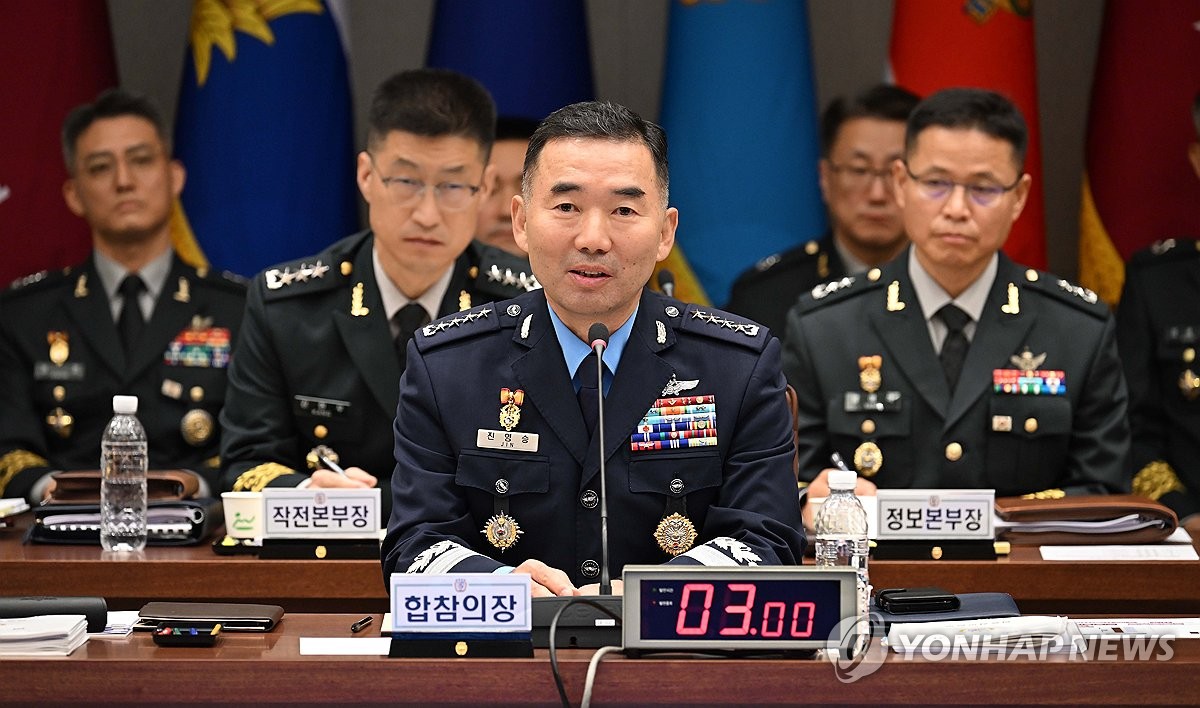
The blast occurred on Sept. 21 near the inter-Korean border. It was caused by resin antipersonnel mines placed south of the Military Demarcation Line, or MDL. The incident mattered because it seriously injured South Korean troops inside the heavily watched border area. The Joint Chiefs of Staff and the U.N. Command conducted a joint investigation. On Monday, they confirmed their preliminary finding that the mines had been deliberately planted by Pyongyang. This conclusion changed the incident from a suspected accident into what South Korea described as a North Korean provocation. The blast injured three South Korean soldiers, including two who were seriously hurt. South Korean troops later began removing any remaining mines at the site. The military also said it would review further response measures and strengthen surveillance and readiness to deter additional provocations.
Based on reporting by Yonhap Korea
What happened in the mine blast near the inter-Korean border, and what did the joint investigation conclude?
The blast occurred on Sept. 21 near the inter-Korean border. It was caused by resin antipersonnel mines placed south of the Military Demarcation Line, or MDL. The incident mattered because it seriously injured South Korean troops inside the heavily watched border area.
The Joint Chiefs of Staff and the U.N. Command conducted a joint investigation. On Monday, they confirmed their preliminary finding that the mines had been deliberately planted by Pyongyang. This conclusion changed the incident from a suspected accident into what South Korea described as a North Korean provocation.
The blast injured three South Korean soldiers, including two who were seriously hurt. South Korean troops later began removing any remaining mines at the site. The military also said it would review further response measures and strengthen surveillance and readiness to deter additional provocations.
What is the Demilitarized Zone (DMZ), and how is it related to the Military Demarcation Line (MDL)?
The Demilitarized Zone, or DMZ, is the buffer area separating North and South Korea. It was created to keep opposing forces apart after the Korean War. Despite its name, it remains a highly sensitive and heavily guarded military area.
The Military Demarcation Line, or MDL, is the boundary that runs through the DMZ. The article reports that the mines were deliberately planted by North Korea south of this line. South Korean troops later carried out mine-removal work inside the buffer zone, marking the first such mission there by South Korean forces.
This geography matters because activity near the MDL can directly affect both militaries. A mine placed across the line can injure troops, trigger accusations, and increase pressure for a response. South Korea therefore linked the blast to readiness, surveillance, and deterrence along the DMZ.
How many South Korean soldiers were injured, and how serious were their injuries?
The mine explosion injured three South Korean soldiers. Two of them were seriously injured, according to the joint investigation reported by the Joint Chiefs of Staff. The injuries gave the incident immediate human and military importance.
The seriousness of the casualties also shaped Gen. Jin Yong-sung’s response during a parliamentary audit. He said he never viewed the incident as anything other than a provocation when one of his men was seriously injured. He also defended the military’s mine-removal operation as a meaningful demonstration of resolve.
The injuries helped drive South Korea’s broader response. The military promised to answer the damage suffered by its troops through physical and nonphysical means. It also pledged stronger readiness, improved surveillance, and continued review of additional measures after the blast.
Why did South Korea’s military describe the mine blast as a North Korean “provocation” rather than as an accident?
South Korea called the blast a provocation because investigators concluded that North Korea deliberately planted resin antipersonnel mines south of the Military Demarcation Line. That finding indicated an intentional act rather than an accidental explosion or an unexplained hazard.
Gen. Jin Yong-sung said during a parliamentary audit that he had never thought of the incident as anything other than a provocation after one of his soldiers was seriously injured. He acknowledged, however, that the word had been omitted from an earlier military announcement. Opposition lawmakers questioned that omission.
The designation matters because it frames the blast as a security challenge requiring a response. South Korea launched a mine-removal operation, promised stern action through physical and nonphysical means, and said it would review further steps. It also planned stronger surveillance and readiness to deter further provocations.
What response measures has South Korea already taken, and what additional steps is its military reviewing?
South Korea’s first major response was a mine-removal operation at the blast site. The mission began Monday and was the first such South Korean operation inside the buffer zone between the two Koreas. Gen. Jin called it highly significant because it demonstrated the military’s resolve.
The military also vowed to strengthen readiness and respond sternly to harm suffered by its troops. It said that response could use both physical and nonphysical means. In the medium term, it plans to maintain the initiative in DMZ operations by minimizing surveillance blind spots.
Gen. Jin said he would continue reviewing necessary additional measures but did not provide details. Separately, the JCS plans to accelerate the transition from existing surveillance systems at frontline general outposts to artificial intelligence and other advanced technology-driven systems. These steps aim to improve detection and deter further incidents.
Why do combined South Korean-U.S. military drills and intelligence sharing matter for readiness along the Korean border?
Combined South Korean-U.S. drills matter because they prepare both militaries to act together during contingencies involving North Korea. The article identifies the Ulchi Freedom Shield exercise as one of two major annual theater-level exercises for that purpose. Training helps maintain coordinated readiness even when the border is tense.
The exercise was cut from 11 days to five, and field maneuvers were reduced by half. Seven live drills were postponed, but six were rescheduled to begin that week or the next. Intelligence sharing is another readiness tool. It supports missions involving North Korea’s nuclear and missile programs.
Washington had only partially limited Seoul’s access to some North Korea-related intelligence since April. Gen. Jin said the restrictions did not prevent missions, although he wanted the situation resolved quickly. Continued drills and restored information sharing would support surveillance, planning, and coordinated responses.
Why can a single incident in the DMZ create wider security risks, and how does military deterrence work in a heavily armed border area?
A single incident in the DMZ can create wider risks because the area separates two heavily armed militaries. An explosion that kills or seriously injures troops can produce public pressure, accusations, and demands for action. Misreading the other side’s intentions can make a local event harder to contain.
Deterrence generally depends on credible capability and resolve. A military signals that aggression will be detected and answered, while avoiding unnecessary escalation. In this case, South Korea highlighted its mine-removal operation as proof that a unit could act on its commander’s orders. It also promised stern responses through physical and nonphysical means.
The article does not detail every deterrence mechanism. It does show practical measures: combined drills, intelligence sharing, stronger readiness, fewer surveillance blind spots, and AI-enabled systems. These efforts could improve warning and coordination, while the military’s review of further measures leaves its next response open.
Key Facts:
📌 - Resin antipersonnel mines caused the Sept. 21 blast.
📌 - The JCS and U.N. Command confirmed deliberate placement by Pyongyang.
📌 - Three South Korean soldiers were injured.
📌 - The DMZ is the buffer zone between the two Koreas.
📌 - The MDL runs through the DMZ.
📌 - Mines were found south of the MDL.
📌 - Three South Korean soldiers were injured.