News · International Relations
U.S. and Russia Explore Nord Stream Restart, Sources Say
Nord Stream refers to two gas pipelines that delivered Russian natural gas to Germany. They were a direct energy link between Russia and Europe’s biggest energy consumer. Their importance came from the scale of the trade, not just the physical pipes. Before Russia invaded Ukraine, Germany bought more than half of its gas from Russia through Nord Stream. Moscow later throttled supplies to Europe, and underwater explosions blew up the pipelines in September 2022. The pipelines were then mothballed rather than operating normally. The pipelines now sit at the center of a possible U.S.-Russia business discussion. Restarting them would require overcoming U.S. and EU sanctions, German opposition, ownership disputes, and damaged relations between Russia and European governments. Germany says it has found alternative supplies and does not want reopening.
Based on reporting by Moscow Times
What is Nord Stream, and what did its pipelines connect?
Nord Stream refers to two gas pipelines that delivered Russian natural gas to Germany. They were a direct energy link between Russia and Europe’s biggest energy consumer. Their importance came from the scale of the trade, not just the physical pipes.
Before Russia invaded Ukraine, Germany bought more than half of its gas from Russia through Nord Stream. Moscow later throttled supplies to Europe, and underwater explosions blew up the pipelines in September 2022. The pipelines were then mothballed rather than operating normally.
The pipelines now sit at the center of a possible U.S.-Russia business discussion. Restarting them would require overcoming U.S. and EU sanctions, German opposition, ownership disputes, and damaged relations between Russia and European governments. Germany says it has found alternative supplies and does not want reopening.
Who is discussing a possible restart, and what role could a U.S. investor play in the deal?
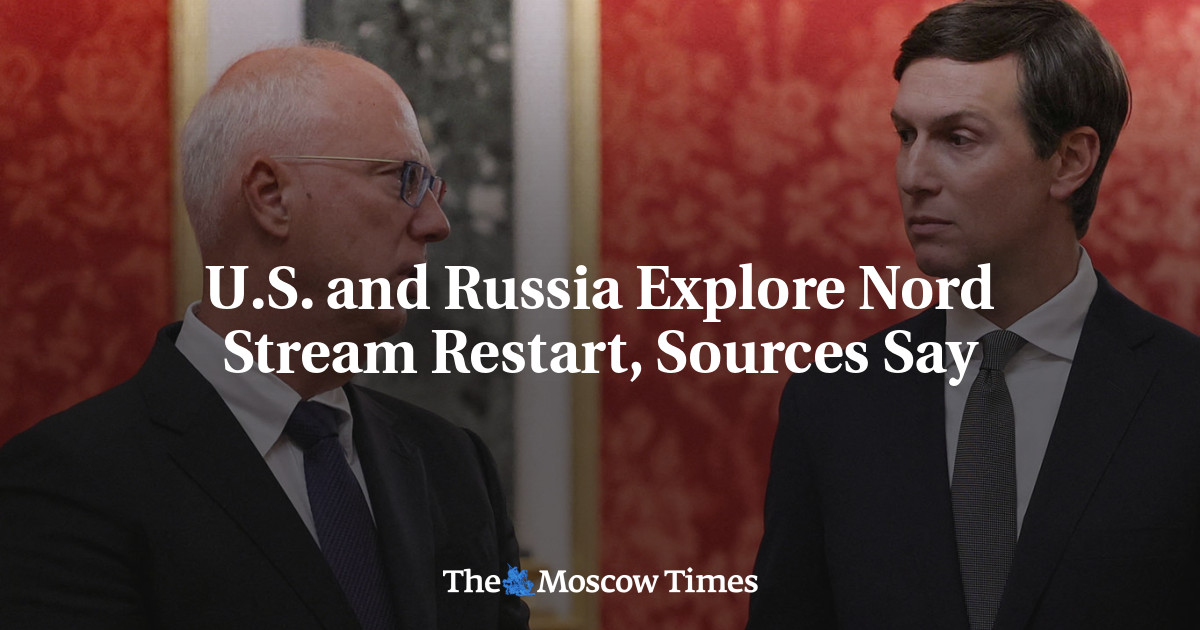
The discussions involve U.S. Special Envoy Jared Kushner and Kirill Dmitriev, a close adviser to Vladimir Putin. They have met in Moscow and New York, while Dmitriev has also met U.S. Energy and Treasury representatives. Nord Stream remains on the agenda, although the extent of those talks is unclear.
A U.S. investor could potentially buy part of the company controlling the pipelines or participate in a broader energy deal. The commercial appeal would be access to profits from Russian gas flows to Europe if the war ends. Kushner views business as central to restoring peace.
The deal would still need formal negotiation with the U.S. International Development Finance Corporation and Treasury, according to a White House official. The official said any agreement must benefit U.S. taxpayers and companies, while also denying recent Nord Stream discussions.
How large was Germany's dependence on Russian gas before the 2022 invasion?
Germany’s prewar gas dependence was unusually large: more than half of its gas came from Russia through the two Nord Stream pipelines. This made Russian supply a major part of Germany’s energy system and gave the pipelines strategic importance beyond their physical infrastructure.
The dependence was tied directly to Nord Stream. The pipelines carried Russian gas into Germany, Europe’s biggest energy consumer. After Moscow throttled supplies to Europe, the pipelines were mothballed, and underwater explosions damaged them in September 2022. Germany has since found alternative supplies.
That history shapes today’s resistance to reopening Nord Stream. Germany’s economy and energy ministry says Russian gas is sanctioned, alternatives exist, and reopening is not desired. European governments also distrust Russia, while some German politicians warn that renewed business could strengthen Moscow during its war against Ukraine.
Why would restarting Nord Stream require changes to sanctions and approval from governments?
Nord Stream’s restart is not simply an engineering decision. The pipelines are sanctioned by the United States and European Union, so renewed operations would be illegal under current rules. Any agreement would therefore require sanctions to be waived, softened, or otherwise changed by governments.
The United States could face a political obstacle. Donald Trump could waive or soften U.S. sanctions, but a Democratic takeover of Congress after the midterm elections would make that harder. A U.S. official said a deal was unlikely in the medium term because of these and other barriers.
Germany adds another approval hurdle. Its economy and energy ministry says Nord Stream and Russian gas are sanctioned in Europe, alternatives are available, and reopening is not desired. It also says any reopening requires government approval. Germany and other European countries strongly resist restoring the pipelines.
Who owns the company controlling Nord Stream, and why could that make a sale to a U.S. investor difficult?
Ownership is divided across Russian and European companies. Russian state energy giant Gazprom owns 51% of the company controlling Nord Stream. Two German entities together own 31%, while French and Dutch firms hold the remaining shares. That structure makes a clean sale to one U.S. investor difficult.
The main obstacle is shareholder control. The two German owners are seeking to keep their shares if Gazprom sells its stake. They want to preserve German influence over the company, even if a U.S. investor purchases part of the Russian holding. A buyer would therefore need to negotiate around existing owners.
Ownership is only one hurdle. The pipelines are sanctioned, Germany opposes reopening, and European governments distrust Russia. Even if Gazprom found a U.S. buyer, restarting gas flows would still require government approvals and changes to sanctions. The ownership question could therefore block or complicate any proposed investment.
What could happen to European security, politics, and relations with Russia if Russian gas began flowing to Germany again?
A return of Russian gas could reconnect Germany to a major energy supplier and create profits for investors. It could also give Russia renewed economic importance in Europe. That matters because European governments now view Moscow with deep mistrust and accuse it of using hybrid attacks and war-related pressure.
The political mechanism is dependence. If Germany again relied on Russian flows, Moscow could gain influence over an essential supply relationship, while European countries would debate whether economic benefits justified security risks. German lawmaker Michael Kellner called the idea a dirty deal that could cost Europe dearly and share profits between Americans and Russians.
The consequences would be divisive. Germany’s coalition government opposes reopening, while AfD supports it. Poland and the Baltic states reject energy ties and feel particularly vulnerable to Russia. European countries rebuilding their militaries would resist strengthening Moscow. A restart would therefore strain European unity and relations with Russia.
How do natural-gas pipelines create economic dependence and give energy suppliers political leverage over countries that buy their gas?
Natural-gas pipelines create dependence by tying a buyer to a particular supplier and route. Building alternatives takes time and money, so a country receiving much of its gas through one system can become vulnerable when that supply changes. The larger the supplier’s share, the greater the potential leverage.
The mechanism is straightforward: the supplier controls whether gas flows, how much is delivered, and sometimes the commercial terms. The buyer still needs heat, electricity, and industry to function. In the article, Germany bought more than half its gas from Russia through Nord Stream, while Moscow later throttled supply to Europe.
That experience explains the political stakes around a restart. Renewed flows could offer economic benefits, but they might restore Russia’s influence over European energy security. Germany says it has found alternatives, while Poland and the Baltic states reject renewed energy ties. This is a general energy principle, illustrated by the article’s facts.
Key Facts:
📌 Nord Stream pipelines delivered Russian gas to Germany.
📌 Germany bought more than half its gas from Russia before 2022.
📌 Underwater explosions damaged the pipelines in September 2022.
📌 Jared Kushner and Kirill Dmitriev discussed potential energy initiatives.
📌 A U.S. investor could profit from future energy flows to Europe.
📌 The White House says Treasury and DFC would negotiate any deal.
📌 Germany bought more than half its gas from Russia before the invasion.