News · Defence & Security
Ukrainian Drones Hit Yandex Data Center, Industrial Facilities Across Russia
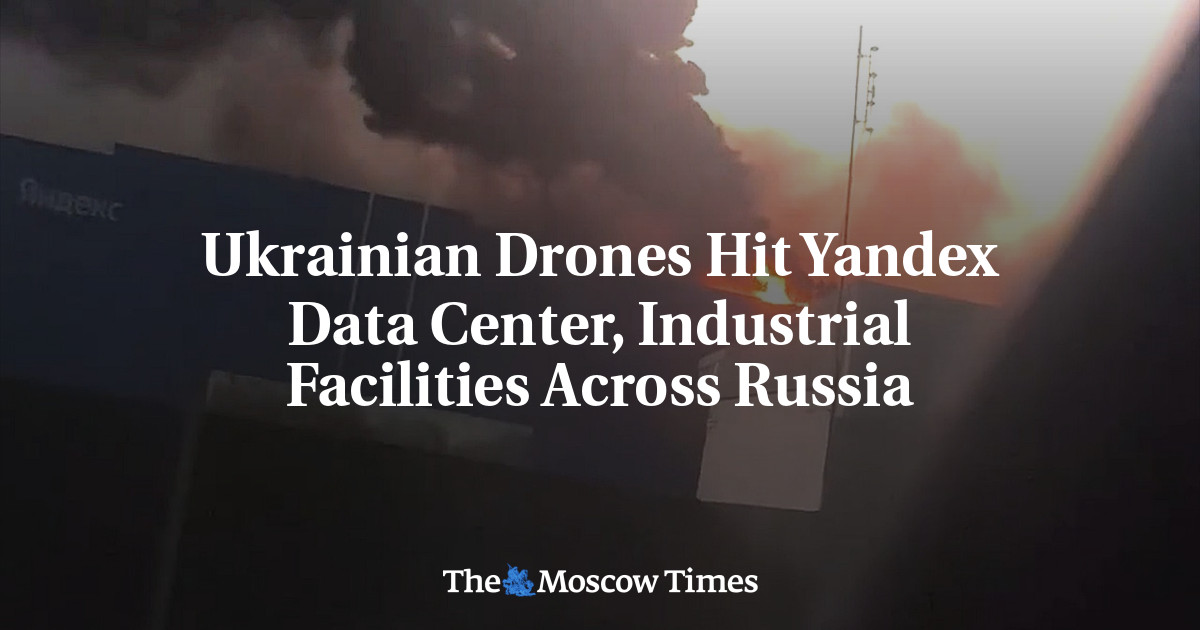
A Ukrainian drone attack caused a fire at Yandex’s data center in Sasovo, in Russia’s Ryazan region. Yandex said the facility’s operations were fully suspended while emergency teams contained the damage. No casualties were reported. The strike was described as the first confirmed attack on Russian data infrastructure since the 2022 invasion. Other facilities were affected by separate drone-related incidents. In Salavat, Bashkortostan, debris caused a fire at an industrial site. Ukrainian forces said they struck the Gazprom Neftekhim Salavat oil refinery and petrochemical complex, where authorities reported no casualties and continued operations. Witnesses also reported drones attacking Russia’s largest oil refinery in Omsk. The Sasovo outage disrupted several Yandex business services, while search and taxi services stayed online. The article does not confirm the full extent of damage at the industrial sites or the Omsk refinery. It does report that flights were temporarily suspended in the Omsk region during the air raid alert.
Based on reporting by Moscow Times
What happened to Yandex’s data center in Sasovo, and which other Russian facilities were affected?
A Ukrainian drone attack caused a fire at Yandex’s data center in Sasovo, in Russia’s Ryazan region. Yandex said the facility’s operations were fully suspended while emergency teams contained the damage. No casualties were reported. The strike was described as the first confirmed attack on Russian data infrastructure since the 2022 invasion.
Other facilities were affected by separate drone-related incidents. In Salavat, Bashkortostan, debris caused a fire at an industrial site. Ukrainian forces said they struck the Gazprom Neftekhim Salavat oil refinery and petrochemical complex, where authorities reported no casualties and continued operations. Witnesses also reported drones attacking Russia’s largest oil refinery in Omsk.
The Sasovo outage disrupted several Yandex business services, while search and taxi services stayed online. The article does not confirm the full extent of damage at the industrial sites or the Omsk refinery. It does report that flights were temporarily suspended in the Omsk region during the air raid alert.
What is a data center, and why can damage to one disrupt online services?
A data center is a specialized facility that houses computer servers, data storage, networking equipment, and supporting power and cooling systems. Companies use these facilities to process requests, store information, and deliver online services. They are central physical locations behind many services people experience as “the cloud.”
When a data center is damaged, its servers or network connections may stop working. The company can redirect traffic to another facility, but that site may have limited spare capacity. Services may slow down, become unavailable, or lose access to stored data if systems are not replicated elsewhere. Fire damage can also require a complete shutdown for safety.
That pattern appeared at Yandex. Its Sasovo facility was fully suspended after the fire. Downdetector recorded more than 1,300 reports affecting Yandex Cloud, Yandex Documents, and Yandex Tables. Search and taxi services remained online, showing that not every service depended on the damaged site in the same way.
How large was the reported attack, and how many drones and Russian regions were involved?
The reported attack was geographically broad. Russia’s Defense Ministry said air-defense systems intercepted 399 Ukrainian drones overnight across 18 Russian regions and annexed Crimea. That figure describes intercepted drones, not necessarily every drone launched or every impact. The article does not provide a confirmed total for the entire operation.
Several locations appear in the account. A drone attack caused the Yandex data-center fire in Sasovo, Ryazan region. Drone debris caused a fire at an industrial site in Salavat, Bashkortostan. Ukraine’s General Staff said the Gazprom Neftekhim Salavat refinery and petrochemical complex was struck. Witnesses later reported attacks near Omsk, where flights were suspended during an air-raid alert.
The scale matters because the incidents affected both digital infrastructure and industrial facilities across widely separated regions. It also prompted Russia to report a large air-defense response. The article gives no independent confirmation of the Defense Ministry’s interception total beyond attributing it to the ministry.
What consequences did the strike have for Yandex Cloud, Yandex Documents, Yandex Tables, the company’s shares, and the affected industrial sites?
The clearest consequences were service disruption and a market reaction. Downdetector recorded more than 1,300 user reports involving Yandex Cloud, Yandex Documents, and Yandex Tables. Yandex said operations at the Sasovo data center were fully suspended while emergency teams worked. Core consumer services, including search and taxi, remained online.
Yandex shares dropped more than 3.4% during Thursday morning trading on the Moscow Exchange. The article links the fall to the reported attack and outage in timing, but it does not establish a specific cause. At the Salavat industrial site, authorities reported no casualties and said the enterprise continued operations after drone debris caused a fire.
Ukraine’s military said the Gazprom Neftekhim Salavat refinery and petrochemical complex caught fire after being struck. Separately, witnesses reported an attack near Omsk’s largest oil refinery, and flights were suspended during the alert. The article does not confirm the extent of damage at either refinery.
Why are data centers, oil refineries, and petrochemical plants considered strategically important in a war?
Data centers, oil refineries, and petrochemical plants are strategically important because they support systems that extend far beyond one building. Data centers process information and host digital services. Refineries turn crude oil into usable fuels. Petrochemical plants produce industrial materials. Interrupting any of them can affect communications, business activity, transport, or energy supply.
The article gives concrete examples. Fire at Yandex’s Sasovo data center forced a full operational suspension and disrupted Yandex Cloud, Documents, and Tables. In Salavat, a reported strike or falling debris caused a fire at an industrial site linked by Ukraine’s military to the Gazprom Neftekhim refinery and petrochemical complex. Authorities said operations continued and no casualties occurred.
The article also says Russian forces recently hit at least eight major data centers across Kyiv, causing widespread internet blackouts. Russia claimed those centers processed military intelligence. This pattern shows infrastructure is both a civilian service base and a potential wartime target, although the article does not independently verify every targeting claim.
How can Yandex’s search and taxi services remain online when one of its data centers is shut down?
Large online companies commonly spread services across multiple data centers, networks, and technical systems. This arrangement can let one service continue when another facility fails. Traffic may be redirected, and separate applications may use different servers or locations. This is a general explanation; the article does not describe Yandex’s specific architecture.
The reported outage fits that pattern. Yandex fully suspended operations at Sasovo, yet search and taxi services remained online. At the same time, Downdetector recorded more than 1,300 reports involving Yandex Cloud, Yandex Documents, and Yandex Tables. Those services may have depended more heavily on the affected facility or its connections, while consumer services had other capacity available.
Remaining online does not mean the company escaped disruption. Business and cloud users experienced problems, and Yandex shares fell more than 3.4% during Thursday morning trading. The article provides no timetable for restoring Sasovo or a technical explanation for why particular services were affected differently.
How do drones, air-defense systems, and interconnected digital and energy infrastructure shape modern warfare?
Drones provide a way to threaten distant targets, while air-defense systems try to detect and intercept them. Modern infrastructure adds another layer: physical facilities run digital platforms, energy networks, transport, and industrial processes. Damage in one place can therefore create effects beyond the immediate fire or blast. These are established features of modern warfare, illustrated by the reported incidents.
In Sasovo, a drone attack ignited a fire at Yandex’s data center. Its shutdown was followed by reports affecting Yandex Cloud, Documents, and Tables. In Salavat, drone debris caused an industrial fire, while Ukraine said the refinery and petrochemical complex was struck. Russia said its defenses intercepted 399 drones across 18 regions and annexed Crimea.
The article also describes a wider pattern. Russian forces reportedly hit at least eight major data centers across Kyiv, causing internet blackouts. The incidents show that air defense, digital resilience, and industrial continuity all matter together. The article does not predict future attacks or confirm every reported target.
Key Facts:
📌 Yandex fully suspended operations at its Sasovo facility.
📌 Drone debris caused a fire at an industrial site in Salavat.
📌 Witnesses reported an attack near Omsk’s largest oil refinery.
📌 Data centers house servers, storage, networks, power, and cooling systems.
📌 Damage can interrupt services hosted or connected through the facility.
📌 Yandex’s Sasovo shutdown disrupted several cloud-based services.
📌 Russia reported 399 intercepted Ukrainian drones overnight.