News · International Relations
Israel forces out British diplomats in Jerusalem over West Bank sanctions
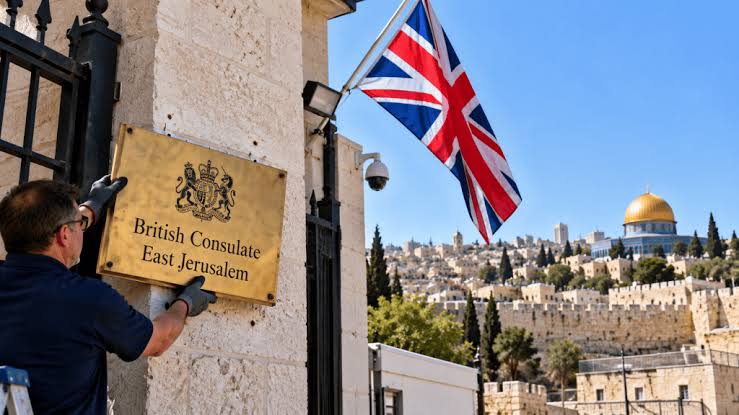
Israel announced measures against the British diplomatic mission after the United Kingdom sanctioned Israeli settlements in the occupied West Bank. Israeli Foreign Minister Gideon Sa’ar said the consulate was shutting its operations and that its plaque had been removed. Israel also required 20 diplomats, including the Consul General, to leave Israel. Britain did not accept that Israel could close the consulate. Foreign Secretary Ed Miliband said the United Kingdom had temporarily withdrawn some staff and their families because security guarantees were not sufficient. He said the mission would continue working with Palestinians. The building itself remains British-owned. Under an agreement, seven diplomats may stay with a very limited operational role. Britain says the site will not close and will be known as the UK Mission in Jerusalem. The dispute risks further damaging already strained UK-Israel relations, although Israel said no further steps would be taken against it.
Based on reporting by Egypt Independent
What actions did Israel and the United Kingdom take regarding the British diplomatic mission in Jerusalem?
Israel announced measures against the British diplomatic mission after the United Kingdom sanctioned Israeli settlements in the occupied West Bank. Israeli Foreign Minister Gideon Sa’ar said the consulate was shutting its operations and that its plaque had been removed. Israel also required 20 diplomats, including the Consul General, to leave Israel.
Britain did not accept that Israel could close the consulate. Foreign Secretary Ed Miliband said the United Kingdom had temporarily withdrawn some staff and their families because security guarantees were not sufficient. He said the mission would continue working with Palestinians.
The building itself remains British-owned. Under an agreement, seven diplomats may stay with a very limited operational role. Britain says the site will not close and will be known as the UK Mission in Jerusalem. The dispute risks further damaging already strained UK-Israel relations, although Israel said no further steps would be taken against it.
What is a consulate, and how is it different from an embassy?
A consulate is a diplomatic office that usually focuses on a particular city or region. It can maintain local contacts, assist citizens, and handle practical diplomatic work. An embassy is the main diplomatic mission to a country’s government. It usually leads the broader relationship between the two states.
The article gives a clear example. The British Consulate in Jerusalem manages UK relations with Palestinians in Jerusalem, the West Bank, and the Gaza Strip. It operates separately from the British Embassy in Tel Aviv, which is the United Kingdom’s primary diplomatic hub in Israel.
That distinction matters in this dispute. Israel announced that the Jerusalem consulate would stop operating, while Britain said the building would continue as the UK Mission in Jerusalem. The mission’s work is now sharply reduced. Seven diplomats may remain, but only with a very limited scope of operations, while 20 diplomats, including the Consul General, leave Israel.
How many British diplomats are leaving Israel, how many may remain, and what will the remaining staff be allowed to do?
The agreed staffing change is substantial. Israel’s Foreign Minister Gideon Sa’ar said the Consul General and 20 diplomats in total would end their duties and leave Israel. That removes most of the mission’s diplomatic staff and sharply reduces its ability to work from Jerusalem.
Seven diplomats may remain inside the British-owned building. They form a task force or skeleton staff, but Israel allows them to operate only within a very limited scope. The article does not list every activity they may perform. It does say that the mission will continue working with the Palestinian people.
Britain also temporarily withdrew some staff and their families because it said security guarantees were inadequate. The remaining presence therefore combines Israeli restrictions with British security precautions. The building will not formally close, according to Britain, but the mission’s reduced personnel and narrow authority mean its daily work will be much smaller than before.
Why did the United Kingdom impose sanctions on Israeli settlements in the occupied West Bank?
The immediate reason was Britain’s revised sanctions targeting Israeli settlements in the occupied West Bank. The article presents those sanctions as the action that prompted Israel to announce the consulate’s closure. It does not provide a detailed explanation of the British government’s policy goals or list the specific sanctions.
The legal and political setting is important. The article states that these settlements are considered illegal under international law. Sanctions are a government tool for applying pressure or restricting relations connected with conduct it opposes. Here, Britain’s measures targeted the settlements, while Israel described its response as retaliation.
The sanctions escalated into a diplomatic dispute. Israel gave Britain 30 days after the sanctions announcement before the planned closure. British officials made last-minute efforts to stop it, and Israeli media reported that Britain threatened to expel Israeli diplomats from London. That raised the prospect of further damage to bilateral ties.
What are Israeli settlements in the West Bank, and why are they considered illegal under international law?
Israeli settlements are Israeli civilian communities established in the West Bank. The article describes the West Bank as occupied territory and says the settlements are considered illegal under international law. This status makes settlements a major source of political and diplomatic conflict.
The legal mechanism is the rule governing occupation. The Fourth Geneva Convention is widely understood to prohibit an occupying power from transferring parts of its own civilian population into territory it occupies. International bodies and many governments apply that rule to Israeli settlements. Israel disputes this legal interpretation, but that disagreement is not detailed in the article.
The settlement issue directly shaped this diplomatic crisis. Britain imposed revised sanctions targeting settlements, and Israel responded against the British Consulate in Jerusalem. The dispute therefore connects local settlement policy with wider relations between London and Tel Aviv. It also affects Britain’s work with Palestinians across Jerusalem, the West Bank, and Gaza.
What practical consequences could the reduced British mission have for the United Kingdom's work with Palestinians and for UK-Israel relations?
The practical effect is a smaller British diplomatic presence in Jerusalem. Twenty diplomats, including the Consul General, are leaving, and seven may remain only with a very limited scope of operations. Britain says the mission will still work with the Palestinian people, but fewer staff and narrower duties could make that work more difficult.
The dispute also creates uncertainty around daily operations. Britain temporarily withdrew some staff and their families because it said discussions had not produced necessary security guarantees. Israel says the building can host only a skeleton staff. Britain rejects Israel’s claim that it has the right to close the consulate, while Israel says the building will remain under restricted arrangements.
For bilateral relations, the episode risks further damage. Israeli media reported a British threat to expel Israeli diplomats from London. However, Israel said its agreement with Britain meant no further steps would be taken against Israel, leaving the immediate escalation contained but the disagreement unresolved.
Why does the disputed status of East Jerusalem matter to the question of who can operate there diplomatically?
East Jerusalem matters because the two governments disagree about its legal and political status. Britain reiterates that East Jerusalem is occupied territory. Israel, meanwhile, announced restrictions on the British Consulate located there. That disagreement affects how each side views authority over diplomatic activity.
The building’s ownership adds another layer. Israeli Foreign Minister Gideon Sa’ar acknowledged that it is owned by the British Government. Israel nevertheless permitted only seven diplomats to remain, with a very limited scope of operations, and required 20 diplomats to leave Israel. Britain rejects the claim that Israel has the right to close the consulate.
This contested setting explains why the same arrangement is described differently. Israel says the consulate has shut its operations and its plaque was removed. Britain says the building will not close and will operate as the UK Mission in Jerusalem. The disagreement leaves the mission’s status politically and operationally unsettled.
Key Facts:
📌 Israel removed the British Consulate’s plaque.
📌 Twenty diplomats, including the Consul General, are leaving Israel.
📌 Britain says the building will continue as the UK Mission in Jerusalem.
📌 A consulate handles diplomatic work in a particular area.
📌 An embassy is the primary diplomatic hub for relations with a country.
📌 The Jerusalem consulate operates separately from Britain’s Tel Aviv embassy.
📌 Twenty diplomats, including the Consul General, are leaving Israel.