News · Defence & Security
Security in the Black Sea region: is Bulgaria the weak link in Europe's defense against threats from Russia?
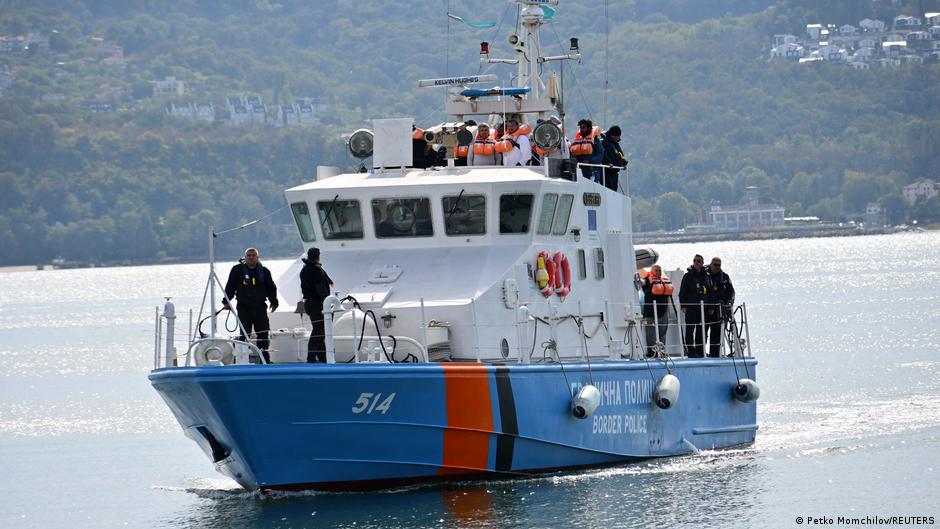
Three cargo ships were struck in two days, showing that danger is spreading beyond the main battlefield. The incidents happened in or near the western Black Sea, including Bulgaria’s exclusive economic zone and waters off Romania. They raised doubts about whether this area remains relatively safe for commercial shipping. On October 6, drones struck the Alfa Watan and the Able. The Alfa Watan sank, and Bulgaria later called off its search for the missing crew. The Able was damaged, but a passing Bulgarian ship rescued its crew. Two people went to a military hospital in Varna. The previous day, a drone struck the Royad Mammadov, which sank off Romania and killed two crew members. The article does not establish who launched the attacks. Ukraine denied responsibility and blamed Russia, while Bulgarian officials said Russia was a logical possibility but lacked concrete evidence. The incidents add to several recent attacks on ships carrying Ukrainian grain.
Based on reporting by DW News
What happened to the Alfa Watan, the Able, and the Royad Mammadov in the Black Sea?
Three cargo ships were struck in two days, showing that danger is spreading beyond the main battlefield. The incidents happened in or near the western Black Sea, including Bulgaria’s exclusive economic zone and waters off Romania. They raised doubts about whether this area remains relatively safe for commercial shipping.
On October 6, drones struck the Alfa Watan and the Able. The Alfa Watan sank, and Bulgaria later called off its search for the missing crew. The Able was damaged, but a passing Bulgarian ship rescued its crew. Two people went to a military hospital in Varna. The previous day, a drone struck the Royad Mammadov, which sank off Romania and killed two crew members.
The article does not establish who launched the attacks. Ukraine denied responsibility and blamed Russia, while Bulgarian officials said Russia was a logical possibility but lacked concrete evidence. The incidents add to several recent attacks on ships carrying Ukrainian grain.
How many cargo ships are identified in the article as having been struck or sunk in these recent incidents?
The article identifies three cargo ships involved in the recent incidents. Counting ships, rather than attacks or casualties, gives a total of three. The vessels were the Alfa Watan, the Able, and the Royad Mammadov. This is a small number, but each incident matters because commercial ships are being hit in a busy and strategically important sea.
On October 6, drones struck two ships in Bulgaria’s exclusive economic zone. The Alfa Watan sank, while the Able was damaged and its crew was rescued. The day before, the Royad Mammadov was struck by a drone and sank off Romania. Two of its crew members were killed. The Alfa Watan’s crew had not been recovered when the search ended.
The article also places these events within a wider pattern. It says multiple cargo ships carrying grain from Ukraine have been attacked in recent months. Thus, three ships are specifically identified in these incidents, but the reported maritime threat is broader.
What is an exclusive economic zone, and how is it different from a country's territorial waters?
An exclusive economic zone, or EEZ, is a sea area where a coastal country has special rights to explore, manage, and use natural resources. Under widely accepted international law, an EEZ can extend up to 200 nautical miles from the coast. It is not the same as owning all the water or controlling every activity there. This distinction matters when incidents occur offshore.
Territorial waters usually extend up to 12 nautical miles from a coast. Within them, a country generally exercises sovereignty, subject to rules such as innocent passage for foreign ships. In an EEZ, the coastal state has resource and jurisdictional rights, while other states retain important freedoms, including navigation. The article places the Alfa Watan and Able in Bulgaria’s EEZ.
That legal difference can complicate responses to attacks. An incident in an EEZ may still seriously threaten a country and international shipping, but it does not automatically equal an attack on sovereign territory. The article’s account ends before explaining this issue fully, so broader legal conclusions require caution.
Why are Ukrainian grain shipments and navigation to Ukrainian ports especially vulnerable in the Black Sea?
Ukrainian grain shipments matter because they are connected directly to navigation from Ukrainian ports, which the article describes as being systematically threatened by Russia. Repeated attacks undermine confidence in the western Black Sea. They also challenge the belief that waters near Bulgaria and Romania are relatively safe for commercial traffic.
The article gives a clear example. The Able’s surviving crew member believed the ship was hit by Russia because it was carrying Ukrainian grain. Ruslan Trad called that testimony an eyewitness hypothesis, not hard proof. He said the logic of motive points toward Russia because Russia is the state threatening navigation to Ukrainian ports, but he described responsibility as probable, not proven.
This combination of valuable cargo, contested routes, and uncertain attribution creates continuing risk. The article does not say that every grain ship will be attacked or identify a confirmed attacker. It does show that recent strikes are weakening confidence in shipping safety and expanding concern about the Black Sea front.
Why would these attacks not automatically trigger NATO's Article 5 collective-defense guarantee?
NATO’s Article 5 is a collective-defense guarantee for an armed attack on a member state. It does not activate automatically after every dangerous incident involving a NATO country, its waters, or its ships. Governments would first assess what happened, who was responsible, and whether the event meets the relevant legal and political threshold.
Here, the article stresses uncertainty. Ukraine denied attacking the ships and blamed Russia, but Bulgarian officials said there was no concrete evidence. Ruslan Trad described Russian responsibility as probable but unproven. The strikes occurred in Bulgaria’s exclusive economic zone, where a coastal state has important rights but does not exercise the same sovereignty as in territorial waters. These facts complicate any immediate collective-defense decision.
The article explicitly says that a direct military response or Article 5 should not be expected. That does not make the incidents unimportant. Repeated attacks could increase pressure on NATO and Bulgaria, but any response would depend on evidence, attribution, legal assessment, and political agreement.
What consequences could repeated attacks have for shipping routes, insurance costs, crews, fishermen, and businesses around the Black Sea?
Repeated attacks can change how people use the Black Sea. Ship operators may avoid exposed routes, delay voyages, or require stronger security measures. Insurers could raise premiums or refuse some coverage because the risk of damage, loss, or crew casualties has increased. Those changes can make Ukrainian exports and regional trade more expensive and less reliable.
The article already shows the human and commercial danger. The Alfa Watan sank and its crew was not recovered. The Able was damaged, and two crew members needed hospital treatment. The Royad Mammadov sank and two crew members died. Although the article focuses on cargo vessels, similar insecurity could affect fishermen and other civilian crews operating in the same waters.
The wider consequences would depend on how often attacks continue and whether responsibility is established. Shipping routes could shift away from dangerous areas. Ports, exporters, fuel suppliers, and coastal businesses could lose activity or pay more for protection. The article’s central warning is that the western Black Sea may no longer seem relatively safe.
How do international law and evidence standards determine whether a state can be held responsible for an attack at sea?
International responsibility requires more than a plausible motive or an eyewitness assumption. Investigators generally need reliable evidence connecting a state or its agents to the attack, such as verified records, weapons evidence, communications, or other corroboration. They must also assess whether the conduct breached applicable international law, including rules protecting navigation and civilian shipping.
The article illustrates that distinction. A surviving Able crew member believed Russia carried out the strike because the vessel carried Ukrainian grain. Ruslan Trad called this an eyewitness hypothesis, not hard proof. He said the motive points toward Russia because it threatens navigation to Ukrainian ports, but he recommended the wording “probable but unproven Russian responsibility.”
Bulgarian officials therefore condemned the attack as an unacceptable violation of international law without naming Russia. The article says Bulgaria lacks experience attributing maritime drones in its EEZ. Until stronger evidence appears, public responsibility claims remain cautious, and any legal or collective-defense response becomes more difficult to justify.
Key Facts:
📌 The Alfa Watan sank, and its crew was not recovered.
📌 A passing Bulgarian ship rescued the damaged Able’s crew.
📌 The Royad Mammadov sank off Romania, killing two crew members.
📌 Three cargo ships are named in the recent incidents.
📌 The Alfa Watan and Royad Mammadov sank.
📌 The Able was damaged but its crew was rescued.
📌 An EEZ grants special economic rights, not complete sovereignty.