News · Defence & Security
Russian strike hits two buses and pedestrians in Kramatorsk: 30 killed, 20 injured
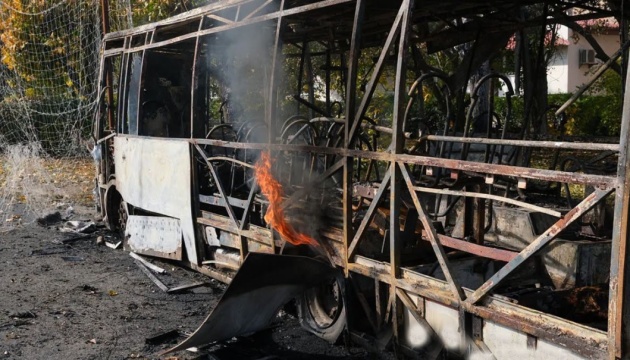
A Russian bomb struck central Kramatorsk while two scheduled passenger buses were traveling along a street. The attack killed 30 people and injured 20, making both ordinary travelers and pedestrians victims. The scale of the deaths shows how dangerous strikes can become in a populated city. The buses were carrying passengers when they came under attack. People walking nearby were also hit. Police reported that some bodies were badly burned and had to be collected in fragments. Officers helping at the scene faced additional danger from enemy drones hunting them. The immediate reality remained unstable. Further shelling forced law enforcement to interrupt its work. Identification of the dead was still ongoing, while investigators documented what police described as a Russian war crime. The final account of victims and evidence could therefore develop as the scene becomes accessible and the investigation continues.
Based on reporting by Ukrinform English
What happened in Kramatorsk, and who was affected by the strike?
A Russian bomb struck central Kramatorsk while two scheduled passenger buses were traveling along a street. The attack killed 30 people and injured 20, making both ordinary travelers and pedestrians victims. The scale of the deaths shows how dangerous strikes can become in a populated city.
The buses were carrying passengers when they came under attack. People walking nearby were also hit. Police reported that some bodies were badly burned and had to be collected in fragments. Officers helping at the scene faced additional danger from enemy drones hunting them.
The immediate reality remained unstable. Further shelling forced law enforcement to interrupt its work. Identification of the dead was still ongoing, while investigators documented what police described as a Russian war crime. The final account of victims and evidence could therefore develop as the scene becomes accessible and the investigation continues.
Where is Kramatorsk, and why is it significant in the Russia-Ukraine war?
Kramatorsk is a city in Donetsk Oblast in eastern Ukraine. It is an important regional city and has been deeply affected by Russia’s full-scale war against Ukraine. Because it lies in Donetsk, a central area of fighting and military pressure, violence there carries significance beyond one street or neighborhood.
The article reports a strike in central Kramatorsk as two scheduled buses traveled along the street. That detail matters because it places the attack among ordinary civilian movement, not an isolated military site described in the report. Passengers and pedestrians were exposed in a populated urban setting, producing a high civilian death toll.
Kramatorsk’s importance helps explain why the incident drew continued police documentation. The article does not provide a wider military assessment of the city’s role. It does show that the war reaches daily transport and public spaces, while further shelling and drones make emergency work and evidence collection more dangerous.
How many people were killed or injured, and why might the reported injury total change as the investigation continues?
The latest figures in the article are 30 people killed and 20 injured. An earlier report had listed 18 injured, so the injury count had already changed by the time of the later police statement. Such revisions are common after a mass-casualty attack, especially when the scene is dangerous and victims are difficult to identify.
Police said some bodies were badly burned and had to be collected in fragments. They also said identification of those killed was ongoing. Investigators were documenting the scene, but further shelling forced them to interrupt their work. These conditions can delay confirmation of who died, who survived, and how serious each injury is.
The current figures should therefore be understood as a developing official account. More complete access to the site, medical updates, and identification work may clarify the totals. The article gives no later figures beyond 30 deaths and 20 injuries, so those are the reported numbers here.
What are scheduled buses, and why can attacks on buses and pedestrians cause many civilian casualties?
Scheduled buses are passenger buses that operate on planned routes and times. They carry members of the public rather than a single private group. Because passengers depend on regular transport, buses often move through streets where pedestrians, drivers, and nearby residents are also present.
In Kramatorsk, two scheduled buses were traveling along a street when the bomb struck. Pedestrians were hit too. The attack therefore affected people inside vehicles and people outside them at the same moment. A confined urban road can concentrate civilians, leaving little time or space to escape an explosion.
This combination helps explain the large casualty figure reported in the article: 30 killed and 20 injured. The report does not state whether the buses or pedestrians were the intended target. It does show the immediate human effect of an explosive strike in a populated area, where civilian transport and normal street activity overlap.
How do follow-up shelling and drones targeting rescuers affect emergency response and the documentation of the attack?
Follow-up shelling and drones targeting responders can turn an emergency scene into another battlefield. Rescuers need time to find survivors, treat the injured, recover bodies, and secure dangerous debris. Continued attacks force them to pause or retreat, which can delay help and increase risks for everyone nearby.
The article says enemy drones were hunting officers who were helping people at the scene. It also says further shelling interrupted law enforcement’s work. Police were documenting the attack, but they could not work continuously. This means the same threats endangered both life-saving operations and the careful recording of evidence.
The immediate consequence is slower assistance and a less complete first examination of the site. Investigators may need to return when conditions permit. Until then, identification, casualty reporting, and documentation can remain unfinished. The article presents no final account of the evidence, so the investigation was still active and exposed to danger.
What does the term "war crime" mean under international humanitarian law, and why are investigators documenting the scene?
Under international humanitarian law, war crimes are serious violations committed during armed conflict. The rules protect civilians, civilian objects, wounded people, and others not taking part in fighting. An attack is not automatically a war crime because civilians are harmed; investigators must examine the target, intent, precautions, and expected civilian damage.
In this case, police described the strike as a Russian war crime after two buses and pedestrians were hit. They reported 30 deaths, 20 injuries, burned bodies, and continuing identification work. Officers were documenting the scene while facing drones and further shelling. Those details can form part of an evidence record.
Scene documentation matters because physical evidence, victim information, damage patterns, and witness accounts can disappear or change. A careful record may support later investigations or legal proceedings. The article does not provide a court finding or establish every legal element. It reports an ongoing law-enforcement investigation into the attack.
What rules are meant to protect civilians during attacks in populated areas, and how do those rules apply to military strikes?
International humanitarian law requires parties to distinguish civilians and civilian objects from military targets. Attacks may not be directed at civilians. They must also avoid indiscriminate methods and take feasible precautions to reduce civilian harm. These rules apply especially in populated areas, where people and transport are close together.
The article describes a bomb striking two scheduled buses and pedestrians in central Kramatorsk. It reports 30 deaths and 20 injuries. Those facts make the protection rules directly relevant, but they do not by themselves prove whether the strike was unlawful. A legal assessment would examine the target, the attacker’s information, the weapon used, and the precautions taken.
The continuing investigation is therefore important. Police were documenting the scene while drones and further shelling threatened their work. Evidence could help determine what was attacked, how the strike unfolded, and whether civilian harm violated these rules. The article reports police calling it a war crime, but gives no final legal ruling.
Key Facts:
📌 A Russian bomb struck two scheduled buses and pedestrians in central Kramatorsk.
📌 Thirty people were killed and 20 were injured.
📌 Police said some bodies were badly burned and collected in fragments.
📌 Kramatorsk is in Ukraine’s Donetsk region.
📌 The strike hit central Kramatorsk as buses traveled along a street.
📌 Donetsk is a major area of Russia’s war against Ukraine.
📌 The latest report listed 30 killed and 20 injured.