News · International Relations
U.K. Expands Sanctions to Cover 90% of Russian Oil Output, Shadow Fleet and Finance Networks
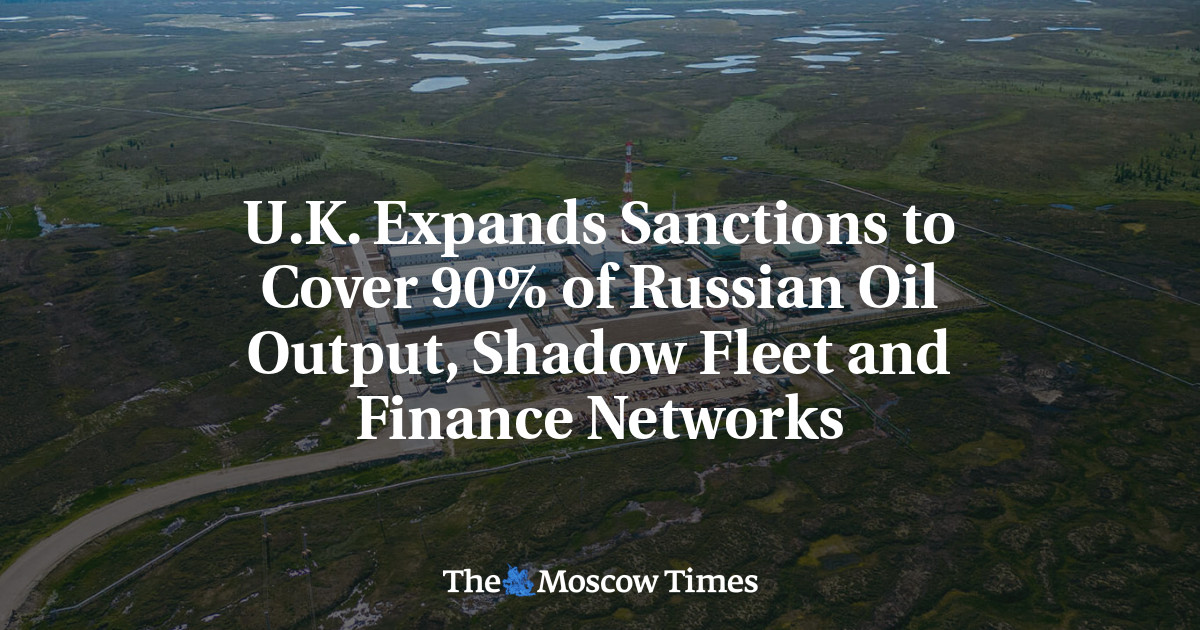
Britain announced sanctions against 38 Russian energy companies, shadow fleet oil tankers, and financial networks. The stated aim is to pressure anyone helping Russia fund or equip its war. The measures reach across energy, trade, shipping, and payments rather than focusing on one sector. The package adds 17 entities and individuals supplying high-priority goods to Russia. It also names two Russian energy producers and 12 tankers. One named individual is Dutch national Alexander Jan Hendrik Tattersall, allegedly associated with sanctioned Turkish trader Redwing Metal. Five financial entities were designated, including one registered in Canada and three in Kyrgyzstan. Britain says the energy restrictions now cover more than 90% of Russia’s oil-production capacity. The additional tankers bring the total targeted shadow fleet vessels to more than 600. The financial measures target alternative payment systems and crypto exchanges that allegedly help bypass Western sanctions, including platforms linked to the A7 network.
Based on reporting by Moscow Times
What sanctions did the U.K. announce, and which Russian companies, ships, people, and financial entities do they target?
Britain announced sanctions against 38 Russian energy companies, shadow fleet oil tankers, and financial networks. The stated aim is to pressure anyone helping Russia fund or equip its war. The measures reach across energy, trade, shipping, and payments rather than focusing on one sector.
The package adds 17 entities and individuals supplying high-priority goods to Russia. It also names two Russian energy producers and 12 tankers. One named individual is Dutch national Alexander Jan Hendrik Tattersall, allegedly associated with sanctioned Turkish trader Redwing Metal. Five financial entities were designated, including one registered in Canada and three in Kyrgyzstan.
Britain says the energy restrictions now cover more than 90% of Russia’s oil-production capacity. The additional tankers bring the total targeted shadow fleet vessels to more than 600. The financial measures target alternative payment systems and crypto exchanges that allegedly help bypass Western sanctions, including platforms linked to the A7 network.
What is Russia’s “shadow fleet,” and why are these oil tankers used to evade sanctions?
The term “shadow fleet” refers here to oil tankers connected with Russia’s efforts to keep energy exports moving despite Western restrictions. These vessels matter because sanctions can work only if restricted cargoes, ships, insurers, ports, and payments can be identified and controlled. A separate tanker network can make that enforcement harder.
The article gives a clear example of Britain’s response. It sanctioned 12 additional tankers, bringing the total number of targeted shadow fleet vessels to more than 600. The announcement groups these ships with Russian energy companies and financial networks that allegedly help sustain the war effort.
The article does not specify the ownership structures, flags, routes, or technical tactics used by each tanker. It does state that the vessels are part of a broader effort to bypass Western sanctions. Expanding the list increases pressure on Russia’s oil transport system and on businesses that deal with the targeted ships.
How large is the crackdown—what does it mean that the sanctions now cover more than 90% of Russia’s oil-production capacity and more than 600 tankers?
The figures show that Britain is targeting the infrastructure behind Russia’s oil income, not just isolated companies or ships. Covering more than 90% of Russia’s total oil-production capacity means the restrictions formally reach most of the production base identified in the announcement. Targeting more than 600 vessels reaches a large part of the shipping network described as the shadow fleet.
The mechanism is broad coverage. Britain added two Russian energy producers, saying the measures now cover over 90% of production capacity. It also added 12 tankers, lifting the total number of targeted shadow fleet vessels above 600. These actions combine producer-focused and transport-focused pressure.
The numbers do not show how much oil production or revenue will actually stop. They do show a major expansion of the sanctions list. The likely policy goal is to make it harder for Russia to move oil and receive income, while increasing compliance and enforcement pressure on companies connected to the targeted assets.
Which goods and technologies are being restricted, and how could machine tools and electronics support Russia’s missiles and drones?
The new trade restrictions focus on high-priority goods supplied to Russia. The article specifically identifies machine tools and electronics as important to Russia’s ballistic missile and drone capabilities. These controls matter because weapons production depends on access to specialized industrial equipment and electronic components, not only on finished weapons.
Britain added 17 entities and individuals accused of supplying such goods. Machine tools can support the precise shaping and manufacture of mechanical parts. Electronics can support control, guidance, sensing, communications, or other systems used in missiles and drones. The article identifies their importance but does not list particular models or components.
Restricting suppliers can make procurement slower, more expensive, and less reliable. It may also force buyers to seek alternative routes or substitute parts. Britain’s action therefore targets the supply chain feeding military production, alongside sanctions on energy producers, ships, and payment networks that allegedly help sustain Russia’s war effort.
How do sanctions on alternative payment systems, crypto exchanges, and financial networks make it harder for Russia to sell oil and buy restricted goods?
Financial sanctions target the channels that turn trade into usable money. Britain designated five entities involved in alternative payment systems and crypto exchanges that allegedly helped Russia bypass Western sanctions. The measures matter because sellers, buyers, and intermediaries need payment routes to complete transactions, even when conventional banks refuse them.
The designated entities include one registered in Canada and three in Kyrgyzstan. The Foreign Office also said two newly sanctioned payment platforms directly facilitated transactions for the A7 platform. By targeting these intermediaries, Britain aims to disrupt the movement and conversion of funds connected with restricted trade.
The article does not claim that every oil sale or goods purchase will stop. It indicates that transactions become more difficult when payment platforms are sanctioned, counterparties face legal or compliance risks, and alternative channels are exposed. The measures therefore complement restrictions on producers, ships, and suppliers by attacking the financial networks connecting them.
What is the A7 shadow banking network, and how can a financial network process billions of dollars while bypassing Western banks and sanctions?
The A7 shadow banking network is presented as a financial system used to process transactions outside ordinary Western-sanctioned channels. The article does not provide a full structure or membership list. It does state that the U.S. Treasury recently targeted the network and alleged that it handled more than $17 billion in global transactions.
The mechanism described involves sub-agents and alternative payment platforms. Instead of every transaction passing through directly exposed Western banks, funds can move through intermediaries and designated platforms. The Foreign Office said two newly sanctioned payment platforms directly facilitated A7 transactions. Those links are the basis for Britain’s financial measures.
The reported period was January 2025 through June 2026. A network processing billions does not necessarily mean every dollar funded Russia’s war, but it shows the scale alleged by U.S. authorities. Sanctioning the platforms and related entities aims to remove channels that can connect Russian trade, payments, and restricted procurement.
Why does controlling payments and access to energy markets matter in modern economic warfare, and how are oil revenues connected to a state’s ability to fund a war?
Modern economic warfare targets the systems that turn resources into state power. Energy markets can provide revenue, while payment networks allow that revenue to be received, transferred, and spent. Restricting either side can reduce the ease with which a state funds imports, industry, or military activity. The article frames these measures as pressure on Russia’s war effort.
Britain targeted two Russian energy producers and said its restrictions now cover more than 90% of Russia’s oil-production capacity. It also sanctioned more than 600 shadow fleet vessels and five financial entities. These targets address production, transport, and payment rather than treating oil as an isolated commodity.
The article does not quantify lost Russian revenue or military spending. It does show the intended connection: oil companies, ships, suppliers, and financial platforms form a chain. Disrupting more links can make sales and purchases harder, increase transaction risks, and limit the channels allegedly used to fund or equip the war.
Key Facts:
📌 Britain announced sanctions against 38 Russian energy companies and related networks.
📌 Twelve additional tankers brought targeted shadow fleet vessels above 600.
📌 Five financial entities, including platforms in Canada and Kyrgyzstan, were designated.
📌 The shadow fleet consists of oil tankers linked to sanctions evasion.
📌 Britain sanctioned 12 additional shadow fleet tankers.
📌 More than 600 shadow fleet vessels are now targeted.
📌 The restrictions now cover more than 90% of Russia’s oil-production capacity.