News · Politics & Governance
Second day, second Opposition protest against CEC Gyanesh Kumar, detentions again
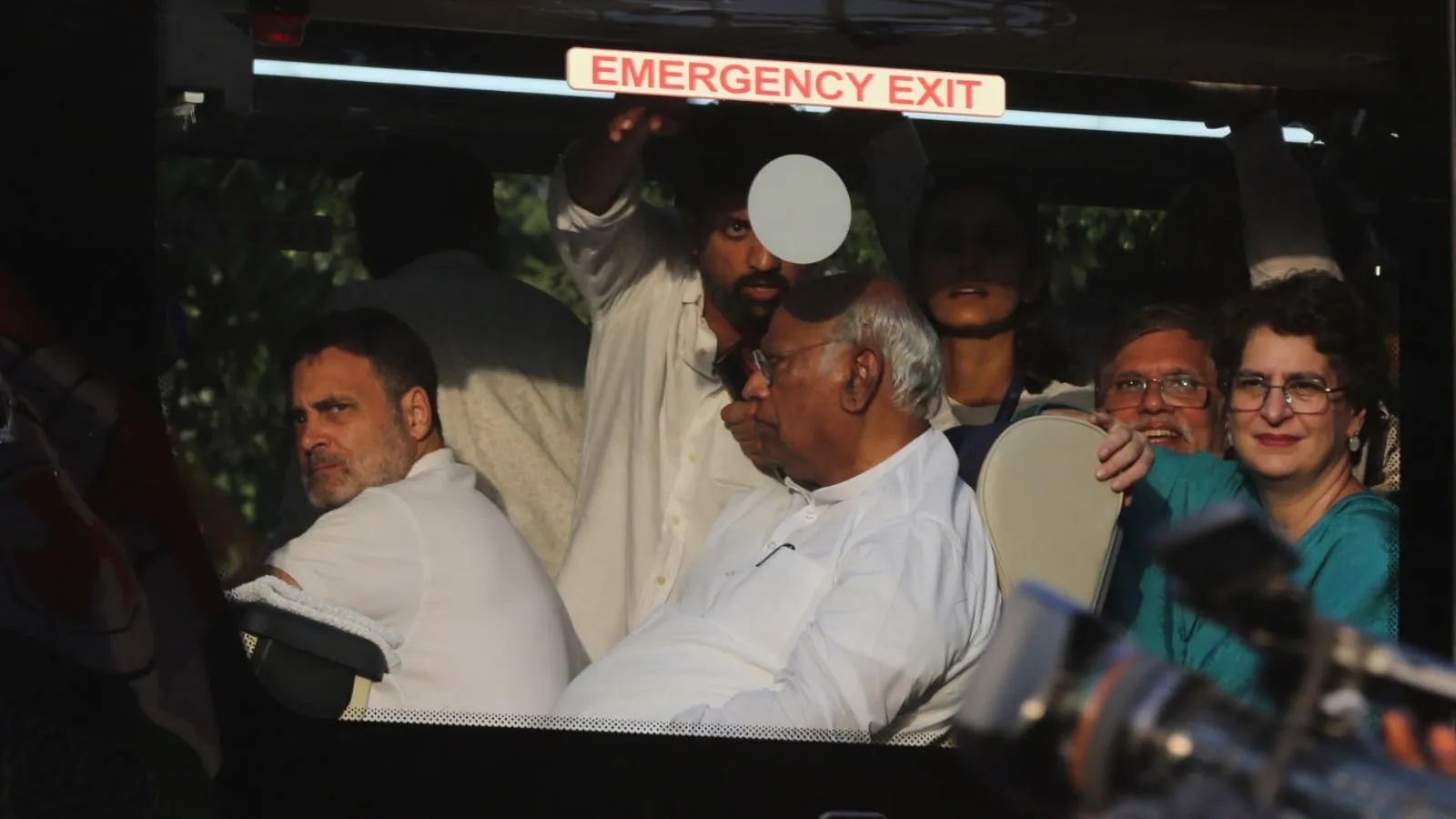
The Opposition’s second protest demanded Chief Election Commissioner Gyanesh Kumar’s resignation. Leaders said the demonstration was about protecting democracy and opposing what they called “Vote Chori,” SIR and delimitation. The protest mattered because it brought the election dispute from Parliament and party meetings onto Delhi’s streets. Opposition MPs left a lunch hosted by Mallikarjun Kharge and travelled towards Jantar Mantar in three buses. Congress workers walked alongside them. Police blocked the route near Windsor Place, stopping the march. Priyanka Gandhi Vadra lay on the road clutching a copy of the Constitution. Police then removed Congress workers and detained the Gandhi siblings and other senior leaders. Rahul Gandhi said the protests would continue until Gyanesh Kumar resigned. Kerala Chief Minister V D Satheesan had also joined the demonstration. Congress announced protests at state, district and block levels on Thursday, while the Samajwadi Party agreed to send representatives to Thursday’s protest after INDIA bloc leaders contacted it.
Based on reporting by Indian Express
What happened during the Opposition’s second protest against Chief Election Commissioner Gyanesh Kumar, and which leaders were detained?
The Opposition’s second protest demanded Chief Election Commissioner Gyanesh Kumar’s resignation. Leaders said the demonstration was about protecting democracy and opposing what they called “Vote Chori,” SIR and delimitation. The protest mattered because it brought the election dispute from Parliament and party meetings onto Delhi’s streets.
Opposition MPs left a lunch hosted by Mallikarjun Kharge and travelled towards Jantar Mantar in three buses. Congress workers walked alongside them. Police blocked the route near Windsor Place, stopping the march. Priyanka Gandhi Vadra lay on the road clutching a copy of the Constitution. Police then removed Congress workers and detained the Gandhi siblings and other senior leaders.
Rahul Gandhi said the protests would continue until Gyanesh Kumar resigned. Kerala Chief Minister V D Satheesan had also joined the demonstration. Congress announced protests at state, district and block levels on Thursday, while the Samajwadi Party agreed to send representatives to Thursday’s protest after INDIA bloc leaders contacted it.
What is a Chief Election Commissioner, and what role does the Election Commission of India play?
A Chief Election Commissioner, or CEC, is the head of the Election Commission of India. The Commission is constitutionally responsible for supervising, directing and controlling elections to Parliament, state legislatures, and the offices of President and Vice-President. This role matters because elections need an authority that can apply common rules across parties and states.
The Commission prepares and updates electoral rolls, announces election schedules, oversees polling and counting, and monitors compliance with election rules. It also handles election symbols and recognises political parties under the legal framework. The CEC works with other Election Commissioners, and the Commission acts as the country’s central election-management body.
In the article, Opposition leaders demanded Gyanesh Kumar’s resignation and linked their protest to “Vote Chori,” SIR and delimitation. The report does not detail their specific allegations. Their action shows why the CEC’s perceived neutrality matters: confidence in the election authority affects whether parties and voters accept electoral processes and results.
How many consecutive days had the Opposition protested, and how large was Wednesday’s mobilization?
Wednesday was the Opposition’s second consecutive day of protests against Chief Election Commissioner Gyanesh Kumar. The duration signalled that the dispute was continuing rather than being a single demonstration. Rahul Gandhi said the protests would not stop until Kumar resigned, making the campaign’s immediate goal clear.
The article does not provide a total number of participants. It does describe the mobilization: Opposition MPs travelled from a Congress-hosted lunch in three buses towards Jantar Mantar, while Congress workers walked beside them. Police blocked the route near Windsor Place, where the march ended. Senior leaders, including the Gandhi siblings, were later detained.
The protest involved Congress leaders and MPs from several INDIA bloc parties, including Derek O’Brien, John Brittas and P Sandosh Kumar. Kerala Chief Minister V D Satheesan also joined. The Samajwadi Party stayed away Wednesday but agreed to send representatives Thursday, suggesting the mobilization’s political breadth remained unsettled.
What issues are represented by the Opposition’s references to “Vote Chori,” SIR, and delimitation?
The phrases “Vote Chori,” SIR and delimitation represent the Opposition’s broader concerns about election integrity and political representation. “Vote Chori” literally means vote theft and is being used as a political charge about the electoral process. SIR generally means Special Intensive Revision, a detailed review of electoral rolls. Delimitation means redrawing constituency boundaries and reallocating representation.
The article does not set out the Opposition’s detailed evidence or proposals on these issues. It reports that Congress leader Jairam Ramesh said INDIA and other Opposition parties stood together against all three. An SP leader said Akhilesh Yadav had raised concerns about SIR in Uttar Pradesh more aggressively, while criticising Congress coordination.
These issues matter especially before Uttar Pradesh’s Assembly elections early next year. Electoral-roll revisions can affect who is listed to vote, while delimitation can affect constituency representation. The dispute therefore combines election administration with alliance politics. It has already exposed tensions over leadership, messaging and seat-sharing between the SP and Congress.
What immediate consequences followed the protest, and what further action did Congress announce?
The immediate consequence was the breakup of the march near Windsor Place. Police blocked the route, forcibly removed Congress workers and detained the Gandhi siblings and other senior leaders. The demonstration therefore ended with arrests rather than reaching Jantar Mantar as planned. The confrontation also kept the demand for Gyanesh Kumar’s resignation in public focus.
The protest had begun after Opposition MPs left Mallikarjun Kharge’s lunch at Sagar Ratna. They boarded three buses, and Congress workers walked alongside them. Priyanka Gandhi Vadra lay on the road holding the Constitution. Rahul Gandhi said the movement would continue until Kumar resigned and thanked INDIA bloc MPs for standing together.
Congress announced further protests at state, district and block levels on Thursday. Later, INDIA bloc leaders contacted the Samajwadi Party, which agreed to send representatives to Thursday’s protest. This suggested an attempt to repair coordination after the SP skipped Wednesday’s lunch and protest, amid wider tensions before the Uttar Pradesh elections.
What is the INDIA bloc, and why does coordination among its parties matter in the run-up to the Uttar Pradesh Assembly elections?
The INDIA bloc is the Opposition alliance referred to in the report. It includes parties such as Congress, the Trinamool Congress, CPI(M), CPI and the Samajwadi Party, although the SP did not join Wednesday’s protest. Its members are trying to present a united challenge on election-related issues and against the BJP-led political leadership.
Coordination matters because joint protests need agreed timing, messaging and leadership. The SP said Congress had poorly coordinated the lunch and protest, and complained that the Gandhi siblings had “stolen the show” on Tuesday. Congress said some parties missed the lunch because the invitation came late. These competing accounts show how alliance management can affect public unity.
The stakes are especially high in Uttar Pradesh, where the SP and Congress are allies. The article says a tussle over seat distribution has already begun ahead of Assembly elections early next year. INDIA bloc leaders later reached out to the SP, which agreed to send representatives Thursday, indicating a short-term effort to restore cooperation.
Why is an independent election authority essential to a democracy, and what formal safeguards are meant to protect it from political pressure?
An independent election authority is essential because elections determine who exercises public power. Voters and parties must trust that electoral rolls, polling, counting and enforcement are handled impartially. Without that confidence, losing parties may reject results and citizens may doubt whether their votes matter. The article reflects this concern through protests demanding the CEC’s resignation and claims about democracy.
India’s Election Commission operates under Article 324 of the Constitution. It supervises elections and includes the Chief Election Commissioner and other Election Commissioners. Formal safeguards include security of tenure and removal protection: the CEC can be removed only through a process similar to removing a Supreme Court judge, while other Election Commissioners can be removed on the CEC’s recommendation. These rules are designed to limit political pressure.
The article does not assess whether these safeguards are working or describe any removal procedure. It reports that Opposition leaders continued protesting and Congress planned wider demonstrations. The controversy therefore makes institutional credibility a current political issue, especially before Uttar Pradesh elections and amid disagreements within the Opposition alliance.
Key Facts:
📌 Police stopped the march near Windsor Place.
📌 Priyanka Gandhi Vadra held the Constitution during the protest.
📌 Rahul and Priyanka Gandhi were detained with other senior leaders.
📌 The Chief Election Commissioner heads the Election Commission of India.
📌 The Commission supervises elections across India.
📌 Opposition leaders demanded Gyanesh Kumar’s resignation.
📌 Wednesday marked the second consecutive protest day.