News · Economy & Business
State water utility AySA to return to private hands in US$340-million deal
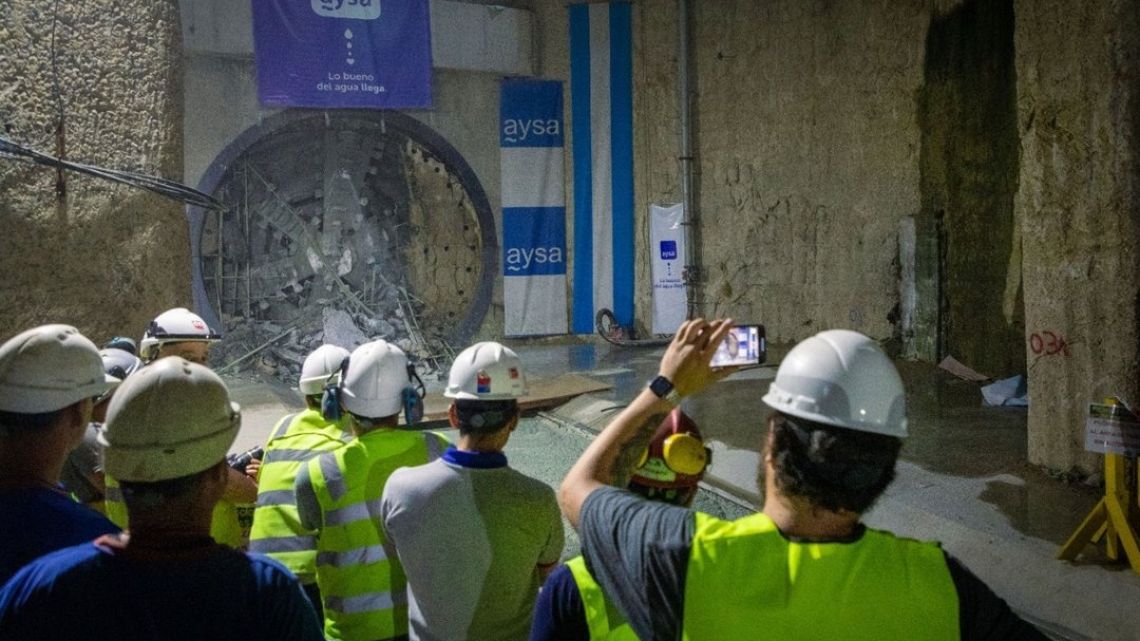
The consortium is acquiring control of AySA, Argentina’s state-owned water and sanitation utility. It will receive 90 percent of the company’s shares, while the employees’ trade union keeps the remaining 10 percent. The deal also gives the group the operating concession for 30 years. This matters because AySA serves about 14 million people across Buenos Aires City and Buenos Aires Province. The winning bid was US$340.2 million. The consortium must also take on US$70 million in AySA debt. The bid therefore covers both ownership and a major financial obligation. The agreed price implies a company valuation of US$378 million, below the Economy Ministry’s target of US$500 million. The consortium outbid a group led by Roggio SA, which offered US$285 million. The winning offer was almost 20 percent higher and included infrastructure commitments. The new owners must also meet investment and expansion obligations under the concession contract, including a five-year action plan beginning in 2027.
Based on reporting by Buenos Aires Times
What exactly did the consortium buy, and how much did it agree to pay for AySA?
The consortium is acquiring control of AySA, Argentina’s state-owned water and sanitation utility. It will receive 90 percent of the company’s shares, while the employees’ trade union keeps the remaining 10 percent. The deal also gives the group the operating concession for 30 years. This matters because AySA serves about 14 million people across Buenos Aires City and Buenos Aires Province.
The winning bid was US$340.2 million. The consortium must also take on US$70 million in AySA debt. The bid therefore covers both ownership and a major financial obligation. The agreed price implies a company valuation of US$378 million, below the Economy Ministry’s target of US$500 million.
The consortium outbid a group led by Roggio SA, which offered US$285 million. The winning offer was almost 20 percent higher and included infrastructure commitments. The new owners must also meet investment and expansion obligations under the concession contract, including a five-year action plan beginning in 2027.
What is a concession, and how is it different from an outright sale of a public utility?
A concession is a contract in which a government authorizes a private operator to run a public service under defined rules, targets, and time limits. The government or another public body may retain ultimate ownership of the infrastructure. This model matters because essential services can be operated privately while remaining subject to public obligations and oversight.
An outright sale is different. It transfers ownership of the utility itself, usually without a fixed operating term. In AySA’s case, the consortium is buying 90 percent of the company’s shares and receiving a 30-year concession. The employees’ trade union will retain 10 percent. The concession contract sets an action plan and expansion targets.
That structure gives the consortium control, but not unlimited freedom. It must invest US$1.94 billion during the first five years and US$15.04 billion over the full concession. The article does not detail the regulator’s powers, but the contract clearly links operation to investment obligations.
How large is AySA’s service network, and what share of the company will the consortium and the employees’ union own?
AySA operates on a very large scale. It provides water and sanitation services to approximately 14 million people in Buenos Aires City and 26 districts of Buenos Aires Province. That reach makes the ownership change important far beyond one company. Decisions about investment, maintenance, and operations could affect millions of households.
The ownership split is unusual but clear. The winning consortium will acquire 90 percent of AySA’s shares. The remaining 10 percent will stay with the trade union representing the company’s employees, led by Omar Lingeri. The consortium will therefore control the company while employees retain a minority stake.
The network also faces significant service gaps. The government says one-third of the concession area still lacks drinking water and sewerage access. It also reports non-revenue water losses of 42 percent. The new contract links the consortium’s control to investment and expansion targets intended to improve that network over time.
Which companies are behind the winning bid, and what roles will the Brazilian technical operator, local partners, and Dutch investment vehicle play?
The consortium brings together four companies with different strengths. Brazil’s Arcos Saneamento e Participações, part of Equipav Group, will serve as the technical operator. Local companies Rowing SA and Transclor SA are associated with Walter Román and Mauricio Filiberti respectively. Dutch-based PHX AQUA AR BV is the financial partner.
Arcos will handle the specialist water and sewerage role. It has operated these services since 2010 and currently serves more than 39 million people across 15 Brazilian states and over 890 municipalities. Rowing is an engineering and construction company. Transclor is owned by Filiberti, while PHX is an investment vehicle.
This division combines operational experience, local business connections, construction capacity, and foreign capital. The partnership passed the tender commission’s technical assessment. Its bid also included infrastructure commitments, which helped it win against the Roggio-led consortium’s US$285 million offer.
What changes and investments is the new concessionaire required to make, and how could they affect water and sewerage services?
The new concessionaire faces detailed investment and performance obligations. Its 2027-2031 action plan is valued at 2.89 trillion pesos, using December 2025 values and excluding VAT. The programme covers infrastructure, maintenance, improvements, and operations. It is also tied to specific expansion targets.
The government lists 1.13 trillion pesos for infrastructure works, 1.15 trillion for maintenance, 315.761 billion for improvements, and 296.166 billion for operations. Separately, the consortium promises US$1.94 billion during the first five years and US$15.04 billion across the full 30-year concession. These figures show how the contract turns investment into a formal obligation.
If delivered, the work could expand water and sewerage access, repair aging networks, and improve daily operations. It could also help address the reported 42 percent non-revenue water loss. The article does not guarantee outcomes, but the required spending and targets create a framework for measuring progress.
Why did AySA return to state ownership in 2006, and why has the Milei government chosen to privatize it again?
AySA was originally concessioned in 1993 to French company Suez and minority partners. In 2006, the government of then-president Néstor Kirchner terminated that contract, and the company returned to state ownership. The article does not give the specific reason for terminating the agreement. It establishes only the sequence of privatization, termination, and state control.
The Milei administration later targeted AySA for privatization after taking office in December 2023. Its statement calls the company a “model of administrative dysfunction.” The government says AySA received more than US$13.4 billion in Treasury transfers between 2006 and 2023, while major service and financial problems persisted.
Those problems include incomplete access, 42 percent non-revenue water losses, payment arrears rising from four percent to 16 percent, and operating costs increasing by 80 percent. The government therefore argues that a private concessionaire can deliver required investment and improvements. The winning consortium must now meet those contractual commitments.
Why are water and sewerage networks often operated as regulated monopolies, and what problems do debt, underinvestment, and non-revenue water create for them?
Water and sewerage systems are often regulated monopolies because one connected network can serve an area more efficiently than several competing pipe systems. Building duplicate treatment plants, mains, and sewers would be extremely costly. Regulation is therefore used to control prices, require service standards, and enforce investment. The article shows AySA moving from state ownership to a private concession under contractual obligations.
Debt and underinvestment create a difficult cycle. A heavily indebted utility has less money for repairs and expansion. Poor networks can cause interruptions, limited coverage, and higher operating costs. Non-revenue water means treated water is produced but not paid for, often because of leaks, theft, or measurement problems. AySA reports a 42 percent loss rate.
The article also reports rising arrears and operating costs. These pressures can weaken cash flow and increase dependence on public transfers. AySA received over US$13.4 billion from the Treasury between 2006 and 2023. The new concession aims to replace that pattern with required spending, maintenance, and expansion targets.
Key Facts:
📌 The consortium bid US$340.2 million for AySA.
📌 It will acquire 90 percent of AySA’s shares.
📌 The bidders will assume US$70 million in company debt.
📌 A concession grants operating rights for a defined period.
📌 AySA’s concession runs for 30 years.
📌 The union will retain 10 percent of AySA’s shares.
📌 AySA serves about 14 million people.