News · Sports
World Cup 2034: Does Saudi Arabia shelving Neom Stadium spell trouble?
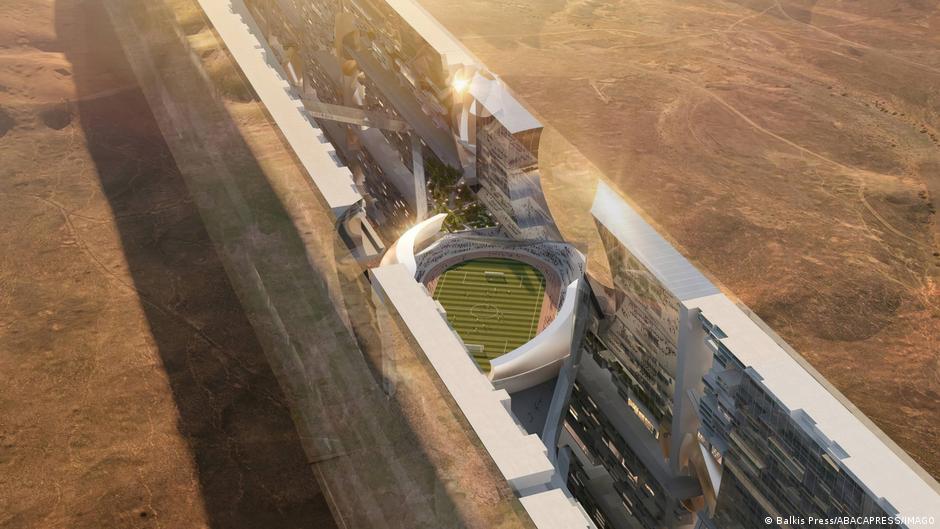
Neom Stadium was planned as one of Saudi Arabia’s most distinctive 2034 World Cup venues. It was tied to The Line, the proposed city within the wider Neom project. Its cancellation matters because it signals that Saudi Arabia is reducing the scale of some highly ambitious plans. The bid book described a stadium 350 meters above ground, with wide views and a roof created from the city itself. It was scheduled to host a quarterfinal and several other tournament games. Reuters reported that it would no longer be built for the World Cup. The stadium appears to be part of a broader Neom rethink. The project is being repurposed toward an industrial center on the Red Sea, according to Kristian Coates Ulrichsen. Saudi Arabia still wants a high-end World Cup, but the final venues and tournament footprint may differ from the original bid.
Based on reporting by DW News
What happened to Neom Stadium, and what was it originally supposed to host?
Neom Stadium was planned as one of Saudi Arabia’s most distinctive 2034 World Cup venues. It was tied to The Line, the proposed city within the wider Neom project. Its cancellation matters because it signals that Saudi Arabia is reducing the scale of some highly ambitious plans.
The bid book described a stadium 350 meters above ground, with wide views and a roof created from the city itself. It was scheduled to host a quarterfinal and several other tournament games. Reuters reported that it would no longer be built for the World Cup.
The stadium appears to be part of a broader Neom rethink. The project is being repurposed toward an industrial center on the Red Sea, according to Kristian Coates Ulrichsen. Saudi Arabia still wants a high-end World Cup, but the final venues and tournament footprint may differ from the original bid.
What are Neom and The Line?
Neom is the wider Saudi development project described in the article. The Line is its most ambitious element: a proposed city stretching 170 kilometers through the desert. Neom Stadium was planned inside this vision, rather than as an isolated sports building.
The stadium’s design showed how closely the projects were connected. It was supposed to stand 350 meters above ground, offer striking views, and use a roof created from The Line itself. The planned venue would also support Saudi Arabia’s 2034 World Cup bid.
The article reports that Neom is now being reconsidered and may be repurposed as an industrial center on the Red Sea. That change helps explain why the stadium appears likely to disappear from the tournament plan. It also shows how economic and regional pressures can reshape large national projects.
How large was the original plan for Neom and Saudi Arabia’s 2034 World Cup venues?
Saudi Arabia’s original vision was enormous in both urban and sporting scale. The Line was planned as a 170-kilometer-long city within Neom. For the 2034 World Cup, the bid plan listed 15 stadiums, with Saudi Arabia expected to build most of them from scratch.
Neom Stadium illustrated the ambition. The bid book placed it 350 meters above ground and gave it a roof formed from the city itself. It was intended to host a quarterfinal and several other games. The planned tournament could feature 64 teams, adding to the scale of the hosting challenge.
The article does not confirm a revised venue total. Saudi Arabia’s organizing authority, Sports Ministry, and FIFA had not answered questions about whether fewer than 15 stadiums might be used. The final location of matches therefore remains uncertain.
Why is Saudi Arabia reassessing Neom and other expensive sports projects?
Saudi Arabia is reassessing Neom and major sports projects because its fiscal situation has become more difficult. F. Gregory Gause III linked the review to the oil market and damage from the current war. The Public Investment Fund has also said it is reassessing priorities.
The changes are visible across sport. Saudi Arabia pulled funding from the multibillion-dollar LIV Golf project and from events involving snooker, tennis, and rugby. It also withdrew from plans to host the 2029 Asian Winter Games in Neom. These decisions show a move away from some expensive commitments.
The article says war has made economic rationalization more urgent. Neom is being repurposed toward an industrial center on the Red Sea, where regional conditions have increased the project’s perceived urgency. The World Cup remains important, but its scope and cost may be reduced.
What could shelving Neom Stadium change about the number and location of matches at the 2034 World Cup?
Shelving Neom Stadium could force Saudi Arabia to revise the planned structure of the 2034 World Cup. The bid listed 15 stadiums, but the article says officials have not confirmed whether that number will fall. Fewer venues could change where matches are played.
A practical consequence would be redistributing Neom’s quarterfinal and other scheduled games among remaining venues. Saudi Arabia could use existing stadiums or build different facilities elsewhere, although the article does not identify replacement locations. Most stadiums are still expected to be built from scratch.
The uncertainty is significant because the tournament may feature 64 teams. Saudi Arabia’s World Cup organizing authority, Sports Ministry, and FIFA had not responded to questions about a smaller stadium plan. The tournament will likely remain expensive and ambitious, but its final geography may look different.
What happened to Qatar’s original stadium plans for the 2022 World Cup, and why is that comparison relevant to Saudi Arabia?
Qatar’s 2022 World Cup provides a recent example of tournament plans shrinking. Its original construction program called for 12 stadiums, but only eight were used during the tournament. That shows a host can stage the event with fewer venues than initially proposed.
The comparison matters because Saudi Arabia’s 2034 plans are also facing changing conditions after its bid was accepted. Kristian Coates Ulrichsen pointed to the Arab Spring’s regional destabilization after Qatar’s bid, then compared it with today’s uncertainty around Saudi Arabia. The two situations are not identical, but both affected long-term hosting plans.
Saudi Arabia’s planned total of 15 stadiums could therefore change, though no official reduction has been announced. The article says Saudi Arabia still wants to match or surpass Qatar’s hosting performance. It may deliver a high-end tournament with a smaller or different venue footprint.
How do oil revenues, sovereign wealth funds, and sports investments help Saudi Arabia diversify its economy and build global influence?
Saudi Arabia’s model begins with oil revenues, which provide the financial base for government-led diversification. The article identifies Project 2030 as an effort to reduce dependence on oil and increase soft power. A sovereign wealth fund, such as the government-operated Public Investment Fund, can direct capital into new industries and international projects.
Sports investments show the mechanism. The PIF owns Premier League club Newcastle United, while Saudi Arabia backed LIV Golf, recruited Cristiano Ronaldo to its football league, and invested across several sports. These projects can create activity beyond oil and give Saudi Arabia greater visibility and influence abroad.
The strategy is not unlimited. Falling fiscal flexibility and regional war have led the PIF to reassess priorities, with some sports funding withdrawn. The article therefore presents diversification as continuing, but with spending more carefully judged. The World Cup remains a major priority because of its global importance and rivalry with Qatar.
Key Facts:
📌 Neom Stadium looks set to be scrapped for the 2034 World Cup.
📌 The planned venue was 350 meters above ground.
📌 It was scheduled to host a quarterfinal and several other matches.
📌 Neom is the wider development project behind The Line.
📌 The Line was planned as a 170-kilometer desert city.
📌 Neom may be repurposed as an industrial center on the Red Sea.
📌 The Line was planned to stretch 170 kilometers.