News · Defence & Security
Where the Saudi-Houthi War Stands Now
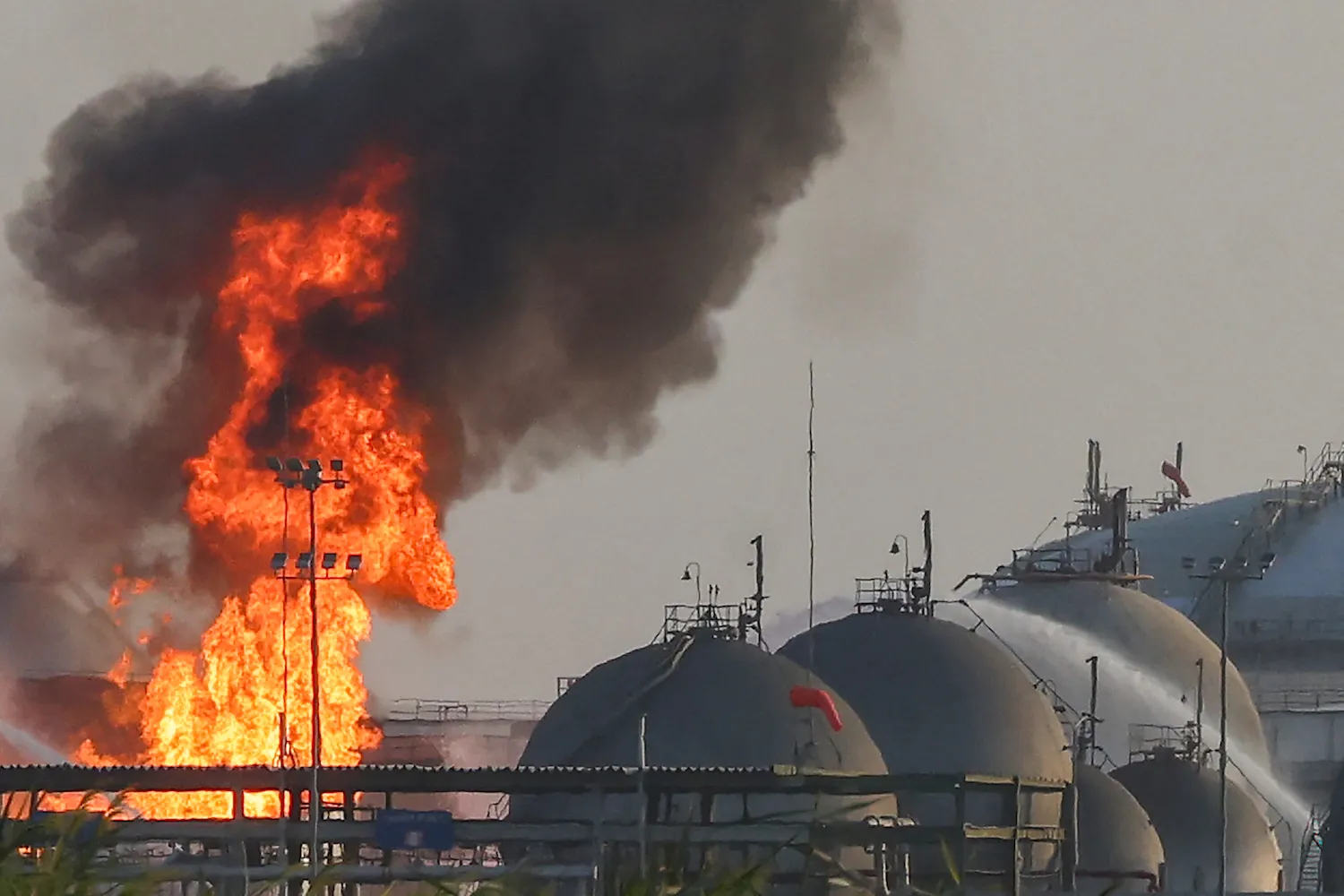
The Houthis have sharply increased attacks on Saudi Arabia since late July. Their campaign targets critical infrastructure and seeks to pressure Riyadh, including by threatening air travel and major economic facilities. The strikes mark an escalation from fighting inside Yemen toward attacks across the border. King Khalid International Airport in Riyadh was hit on two consecutive days. A drone attack killed at least one person, and a ballistic missile followed. Explosions also struck several southern Saudi cities. Debris from an intercepted missile reportedly hit a medical complex and a kindergarten. Oil refineries and Muslim holy sites have also been targeted. The attacks have already affected civilian connections. Lufthansa and Air India suspended flights to Riyadh after the airport attacks. Saudi Arabia’s coalition has responded with the “Dawn of Yemen” counteroffensive. Continued strikes could cause further damage, disrupt travel, and intensify the conflict’s regional consequences.
Based on reporting by Foreign Policy
What recent attacks have the Houthis carried out against Saudi Arabia, and what targets have they struck?
The Houthis have sharply increased attacks on Saudi Arabia since late July. Their campaign targets critical infrastructure and seeks to pressure Riyadh, including by threatening air travel and major economic facilities. The strikes mark an escalation from fighting inside Yemen toward attacks across the border.
King Khalid International Airport in Riyadh was hit on two consecutive days. A drone attack killed at least one person, and a ballistic missile followed. Explosions also struck several southern Saudi cities. Debris from an intercepted missile reportedly hit a medical complex and a kindergarten. Oil refineries and Muslim holy sites have also been targeted.
The attacks have already affected civilian connections. Lufthansa and Air India suspended flights to Riyadh after the airport attacks. Saudi Arabia’s coalition has responded with the “Dawn of Yemen” counteroffensive. Continued strikes could cause further damage, disrupt travel, and intensify the conflict’s regional consequences.
What are the Houthis, and why are they fighting Saudi Arabia?
The Houthis are a Yemeni rebel force that follows the Zaydi Shiite sect. The article describes them as an Iranian proxy group, meaning Iran backs them while they fight their own campaign in Yemen. Their opponents include Yemen’s internationally recognized forces, which are supported by a Saudi-led coalition.
The conflict is driven by a struggle over territory and political control. Houthi forces seized territory along Yemen’s Red Sea coast, including areas near the strategic Bab el-Mandeb strait. The coalition launched “Dawn of Yemen” to retake that territory. The Houthis have expanded the fight by striking Saudi targets across the border.
This makes the conflict more than a local Yemeni confrontation. Saudi Arabia sees the Houthi advance and cross-border attacks as threats requiring military action. Iran’s support gives the Houthis regional backing, while Saudi intervention gives the recognized Yemeni side greater military reach.
How large has the violence become in terms of casualties, damaged infrastructure, and the number of Houthi fighters the coalition says it has neutralized?
The violence has produced both human casualties and damage to civilian infrastructure. The article reports at least one death from a drone attack near Riyadh’s airport. Explosions in southern Saudi Arabia then killed at least three more people and wounded dozens. These figures describe reported Saudi casualties and may not capture the conflict’s full human cost.
The attacks have damaged or threatened several important sites. Material damage was reported at King Khalid International Airport. Debris from an intercepted missile reportedly struck a Saudi medical complex and a kindergarten. Houthi strikes have also targeted oil refineries, airports, and Muslim holy sites, although the article gives no total damage estimate.
The coalition says its response has been extensive. Since launching the “Dawn of Yemen” counteroffensive on Monday, it says Yemeni forces have “neutralized” 1,860 Houthi fighters. That coalition figure is not independently verified in the article. The expanding casualties and infrastructure damage point to a widening war.
Why is the Bab el-Mandeb strait strategically important to the Saudi-led coalition and to international trade?
Bab el-Mandeb matters because it is a narrow maritime passage linking the Red Sea with the Gulf of Aden. The article identifies it as strategic territory on Yemen’s Red Sea coast. For the Saudi-led coalition, controlling nearby land could limit Houthi power and protect access through a vital regional route.
The coalition’s “Dawn of Yemen” operation aims to retake territory seized by the Houthis, including areas around Bab el-Mandeb. This shows that the campaign is not focused only on stopping missiles aimed at Saudi cities. It also seeks to change who controls the ground around a key passage.
Internationally, disruption at Bab el-Mandeb can delay or endanger commercial shipping moving between the Red Sea and the Indian Ocean. The article does not give trade-loss figures, but the strategic location explains why outside powers may watch the fighting closely. Control of the strait therefore connects Yemen’s war to wider security and trade concerns.
What happens to Saudi Arabia’s economy, air travel, and plans to attract foreign investment when missiles and drones repeatedly target its airports and oil facilities?
Missile and drone attacks can damage the confidence that a business and tourism hub depends on. Saudi Crown Prince Mohammed bin Salman has been trying to transform Saudi Arabia into such a hub. The article says repeated attacks on Riyadh have upended those efforts, creating a direct economic and political problem for the kingdom.
The effects are visible in air travel. A drone and missile struck Riyadh’s King Khalid International Airport on consecutive days, with material damage reported. Lufthansa and Air India then suspended flights to the Saudi capital. Attacks on oil refineries also threaten critical infrastructure, although the article does not report lost production or a specific economic cost.
The disruption could make investors and visitors more cautious. Riyadh is scheduled to host international summits, including the Future Investment Initiative, a major route for attracting foreign capital. Continued attacks could complicate those events, reduce access to the capital, and weaken the image Saudi Arabia wants to project.
How could military involvement by Pakistan, Turkey, Syria, and Iran’s support for the Houthis turn a Yemen-Saudi conflict into a wider regional war?
A local conflict becomes regional when outside states commit military power and political support. The article says Pakistan and Turkey triggered a recently signed mutual defense pact to help Saudi Arabia. Syria was also considering support, including a possible offensive deployment. These steps would add more armed forces to an already expanding battlefield.
Iran’s role widens the opposing side. The Houthis are backed by Shiite Iran, while Saudi Arabia, Pakistan, Turkey, and Syria are predominantly led by Sunni Muslims. The conflict therefore combines territorial fighting with rivalry among regional powers. Outside backing can provide weapons, fighters, coordination, and confidence to continue the war.
The result could be a broader confrontation involving several states rather than only Houthi forces and Saudi-led Yemeni troops. The article presents Syrian involvement as under consideration, not confirmed. Even so, the new defense pact and Iran’s support increase pressure on Riyadh and raise the conflict’s regional stakes.
How do proxy warfare and Sunni-Shiite political divisions allow local conflicts to draw in larger regional powers?
Proxy warfare allows a regional power to influence a conflict without fighting every battle directly. The article identifies Iran as backing the Houthis, while Saudi Arabia leads a coalition supporting Yemen’s internationally recognized forces. Local fighters remain central, but outside support gives the conflict greater resources and a wider strategic meaning.
Religious and political divisions deepen that process. The Houthis follow the Zaydi Shiite sect, and Iran is Shiite. Saudi Arabia, Pakistan, Turkey, and Syria are predominantly led by Sunni Muslims. The article says experts believe their involvement exacerbates the conflict’s religious component, even though the fighting also concerns territory and political control.
These overlapping loyalties make compromise harder and invite further intervention. Pakistan and Turkey have already activated a mutual defense pact for Saudi Arabia, while Syria was considering military support. As more governments align with one side, attacks in Yemen and Saudi Arabia can become part of a wider regional contest.
Key Facts:
📌 Houthis attacked Riyadh’s King Khalid International Airport on two consecutive days.
📌 A Houthi drone attack killed at least one person.
📌 Houthi strikes have targeted oil refineries and Muslim holy sites.
📌 The Houthis follow Yemen’s Zaydi Shiite sect.
📌 Iran backs the Houthis as an Iranian proxy group.
📌 Saudi Arabia leads a coalition supporting Yemen’s recognized forces.
📌 At least four people were killed in reported attacks.