News · Defence & Security
Over 130 children remain in mandatory evacuation zone in de-occupied part of Kherson region
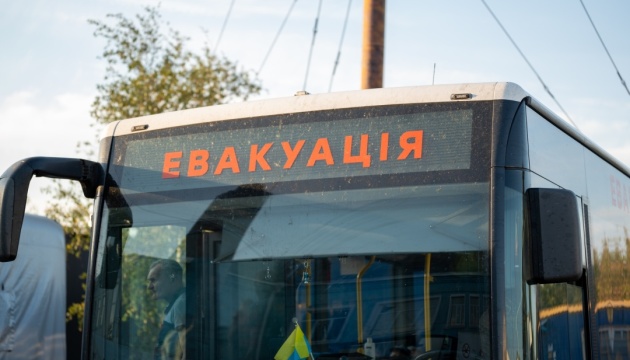
The article reports that 132 children remain in areas where residents must evacuate. These zones cover settlements in the Kherson, Beryslav, and Kakhovka districts. The figure matters because authorities consider the children’s safety an urgent priority amid active attacks and dangerous evacuation routes. The largest group is in the Kherson community, where 125 children remain and 540 have already been evacuated. Two children remain in the Mylivka community, while 14 have been evacuated. Two children remain in the city of Beryslav, and three remain in the village of Stanislav. Evacuation is continuing under the supervision of the Kherson Regional Military Administration. Courts ordered that children in Beryslav and Stanislav be removed from their families because their parents refused to leave, but security risks have delayed those operations. The article gives no remaining figure for Kakhovka communities.
Based on reporting by Ukrinform English
How many children remain in the mandatory evacuation zone, and which communities are they in?
The article reports that 132 children remain in areas where residents must evacuate. These zones cover settlements in the Kherson, Beryslav, and Kakhovka districts. The figure matters because authorities consider the children’s safety an urgent priority amid active attacks and dangerous evacuation routes.
The largest group is in the Kherson community, where 125 children remain and 540 have already been evacuated. Two children remain in the Mylivka community, while 14 have been evacuated. Two children remain in the city of Beryslav, and three remain in the village of Stanislav.
Evacuation is continuing under the supervision of the Kherson Regional Military Administration. Courts ordered that children in Beryslav and Stanislav be removed from their families because their parents refused to leave, but security risks have delayed those operations. The article gives no remaining figure for Kakhovka communities.
What is a mandatory evacuation zone, and what does the ban on entry for families with children mean?
A mandatory evacuation zone is an area where authorities require residents to leave because security conditions pose a serious danger. In this article, the order applies to settlements in parts of the Kherson, Beryslav, and Kakhovka districts. It matters because evacuation is not merely advice; authorities are directing people away from areas under fire.
The related ban means families with children cannot enter those settlements. This helps prevent children from being brought into places where Russian drone strikes, artillery shelling, and mines threaten movement and daily life. It also supports the priority of getting children out rather than allowing new arrivals.
The policy does not mean everyone has already left. The article reports that 132 children still remain inside the mandatory zone. Evacuation continues, but mined routes and ongoing attacks make each operation slow, cautious, and dependent on careful coordination.
Why are authorities requiring residents to leave these parts of the Kherson region?
Authorities are requiring residents to leave because the security situation is dangerously unstable. The article identifies Russian drone strikes and artillery shelling as continuing threats. It also mentions mined routes, which make travel hazardous even when people are trying to escape. These dangers make ordinary civilian life unsafe and evacuation urgent.
The order covers some settlements in the Kherson, Beryslav, and Kakhovka districts. Families with children are barred from entering those areas. The policy focuses especially on protecting children, while the broader evacuation seeks to move residents away from places under fire.
Evacuation is still incomplete. The article reports that 132 children remain in the mandatory zone, including 125 in the Kherson community. Officials say operations continue despite the danger, with the Kherson Regional Military Administration supervising the evacuation and treating children’s safety as the top priority.
What dangers make evacuation difficult, and what could happen to civilians who remain under fire?
Evacuation is difficult because people may face danger both where they live and along the routes out. The article lists mined roads, Russian drone strikes, and artillery shelling. These threats can disrupt travel, endanger evacuation teams, and force officials to move slowly and cautiously.
The article gives a direct example in Beryslav and Stanislav. Courts ruled that children should be removed from families whose parents refused to evacuate, but the children have not yet been moved. Officials say the security situation is too difficult for a safe operation. About 300 civilians, including two children, also remain in frontline Beryslav.
People who stay in areas under fire remain exposed to shelling and drone attacks. The article frames the consequence as a threat to life, which is why evacuation continues despite its risks. Every operation requires special caution and careful coordination.
How can a court remove children from their families for safety without terminating the parents’ rights?
Removing children without terminating parental rights is a protective measure rather than a permanent legal break. The children can be moved away from danger while the parents’ legal status as parents remains unchanged. The article presents this as a court-ordered response to an immediate safety concern.
In Beryslav and Stanislav, courts ruled that the remaining children should be removed from their families because their parents refused to evacuate. The article does not describe the detailed legal procedure or where the children would stay. It does state that parental rights would not be terminated.
The orders have not yet been carried out. Mined routes, Russian drone threats, and artillery shelling make travel dangerous, so officials have delayed the operations for safety. The Kherson Regional Military Administration continues to supervise child evacuations, treating protection of children as its top priority.
What does “de-occupied” mean in this context, and why can territory retaken by Ukraine still be dangerous for civilians?
In this context, “de-occupied” refers to the part of Kherson region that is no longer under occupation. That status does not mean the fighting or its hazards have ended. The article describes communities where Ukrainian authorities are organizing evacuations, while residents still face severe security threats.
The danger comes from several sources. Mined routes can injure people moving through or around settlements. Russian drone strikes and artillery shelling can hit civilians and make evacuation routes unsafe. Frontline Beryslav still has about 300 civilians, including two children, even as food is delivered there by drones.
This means retaken territory can require continued emergency protection. Authorities have introduced mandatory evacuation in some settlements and banned families with children from entering. Evacuation remains active, but operations must be carefully coordinated because military danger continues after the territory has been de-occupied.
How do land mines, artillery, and drone strikes change the way humanitarian evacuations must be planned and carried out?
These hazards change evacuation from a routine journey into a high-risk operation. Mined routes can make roads unusable or dangerous. Artillery shelling can strike settlements and roads. Drone strikes can threaten vehicles and people from above. Together, they mean officials must protect evacuees while also avoiding fresh attacks.
The article says each operation requires special caution and careful coordination. That mechanism is visible in Beryslav and Stanislav, where courts ordered children removed from families, but evacuation has not happened because the security situation is too difficult. Food deliveries to frontline Beryslav also use drones, showing how access is constrained.
Planning must therefore account for route safety, attack threats, and timing. The article does not provide a detailed procedure, but it makes clear that evacuation continues under constant supervision. Officials prioritize moving people from areas under fire and saving children’s lives.
Key Facts:
📌 132 children remain in the mandatory evacuation zone.
📌 The Kherson community has 125 children still inside the zone.
📌 Children also remain in Mylivka, Beryslav, and Stanislav.
📌 Residents in designated settlements are required to evacuate.
📌 Families with children are banned from entering affected settlements.
📌 The policy covers parts of three Kherson-region districts.
📌 Russian drone strikes threaten residents in the evacuation zone.