News · Defence & Security
Majority of Americans support S. Korea's nuclear-powered submarine project: poll
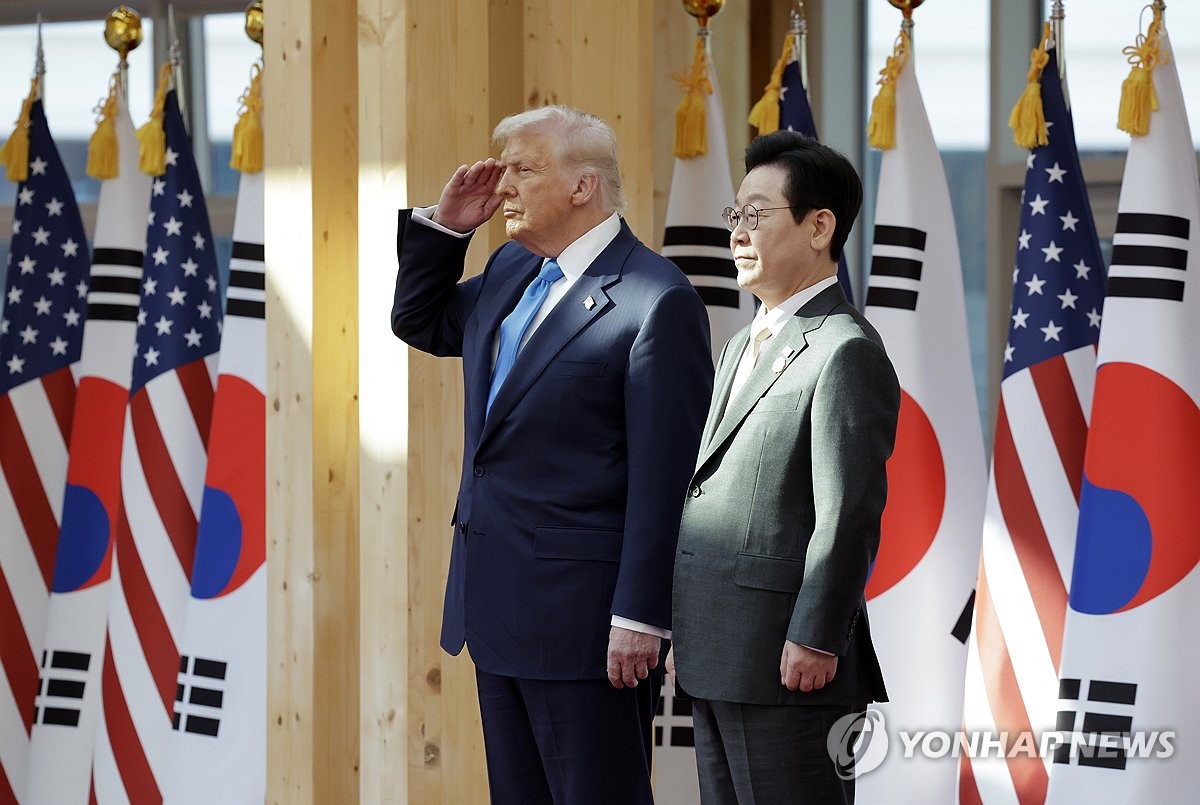
South Korea is pursuing conventionally armed, nuclear-propelled submarines. Their reactors would power propulsion, while their weapons would remain conventional rather than nuclear. This distinction matters because nuclear propulsion does not automatically mean a country possesses nuclear weapons. A nuclear-powered submarine uses a reactor to generate energy for movement and onboard systems. A nuclear-armed submarine carries nuclear warheads or missiles. The poll found that Americans separated these issues clearly: 58 percent supported South Korea developing nuclear-powered submarines, while 71 percent opposed South Korea developing nuclear weapons. The project followed security agreements reached during a summit between South Korean President Lee Jae Myung and U.S. President Donald Trump. The survey therefore shows support for a military capability without equivalent support for nuclear weapons. It also found that 87 percent considered it important for North Korea to give up its nuclear capabilities.
Based on reporting by Yonhap Korea
What exactly is South Korea proposing to build, and how is a nuclear-powered submarine different from a nuclear-armed submarine?
South Korea is pursuing conventionally armed, nuclear-propelled submarines. Their reactors would power propulsion, while their weapons would remain conventional rather than nuclear. This distinction matters because nuclear propulsion does not automatically mean a country possesses nuclear weapons.
A nuclear-powered submarine uses a reactor to generate energy for movement and onboard systems. A nuclear-armed submarine carries nuclear warheads or missiles. The poll found that Americans separated these issues clearly: 58 percent supported South Korea developing nuclear-powered submarines, while 71 percent opposed South Korea developing nuclear weapons.
The project followed security agreements reached during a summit between South Korean President Lee Jae Myung and U.S. President Donald Trump. The survey therefore shows support for a military capability without equivalent support for nuclear weapons. It also found that 87 percent considered it important for North Korea to give up its nuclear capabilities.
How much support did the poll find for South Korea developing nuclear-powered submarines, and how many Americans opposed the project?
The poll found that 58 percent of 1,207 American adults supported South Korea developing nuclear-powered submarines. That is nearly six in 10 respondents. The result indicates majority support, but it does not mean the project had unanimous approval.
Forty-two percent opposed the development. Support crossed party lines, although Republicans were most supportive at 64 percent, compared with 56 percent of Democrats and 62 percent of independents. These figures show that the project attracted broad backing rather than support from only one political group.
The survey was conducted jointly by the Korea Economic Institute of America and YouGov from Aug. 21 to Sept. 1. The poll also found a sharp contrast on nuclear weapons: 71 percent opposed South Korea developing them. Thus, Americans were more accepting of nuclear propulsion than nuclear weapons.
Why is South Korea pursuing nuclear-powered submarines after its summit agreements with the United States?
The article links South Korea’s submarine project to security agreements reached during an October summit between President Lee Jae Myung and U.S. President Donald Trump. It reports that Seoul is pushing to build conventionally armed, nuclear-propelled submarines after those agreements. This establishes the diplomatic context for the project.
The article does not specify the agreements’ exact terms or explain a detailed operational reason for the submarines. It also does not describe a construction schedule, cost, or final design. The clearest stated connection is therefore political and security-related: the project followed understandings reached by the two presidents.
The poll suggests the proposal has substantial American support. Fifty-eight percent backed development, while 42 percent opposed it. Support was bipartisan. At the same time, 71 percent opposed South Korea developing nuclear weapons, showing that public approval for the submarine project did not extend to nuclear arms.
What military advantages could nuclear propulsion give a submarine compared with a conventionally powered submarine?
Nuclear propulsion gives submarines a long-lasting energy source. Compared with diesel-electric boats, a nuclear-powered submarine can generally remain underwater for much longer and sustain speed over extended distances. It does not need to surface or regularly snorkel to recharge batteries or run air-breathing engines.
This changes how the submarine operates. A reactor continuously produces power for propulsion and onboard equipment. That allows the boat to cover large distances, respond more quickly, and spend less time exposing itself near the surface. Avoiding frequent surfacing can make operations harder for an opponent to track. These are general military advantages of nuclear propulsion, not details stated in the article.
The article only identifies South Korea’s planned vessels as conventionally armed and nuclear-propelled. It gives no specifications about speed, range, reactor type, or mission. The broader implication is that propulsion and weapons can be treated separately: a submarine may gain greater endurance without carrying nuclear weapons.
Why do many Americans support nuclear propulsion for South Korean submarines while opposing South Korea developing nuclear weapons?
Nuclear propulsion and nuclear weapons involve different capabilities. A reactor provides energy for a submarine’s movement and systems. Nuclear weapons are destructive warheads or delivery systems. Supporting the first does not necessarily mean supporting the second, especially when nuclear proliferation is a concern. This distinction helps explain the poll’s contrasting results.
The survey offers a clear example. Fifty-eight percent backed South Korea developing nuclear-powered submarines, while 71 percent opposed Seoul developing nuclear weapons. Support for propulsion was also broadly bipartisan, reaching 64 percent among Republicans, 56 percent among Democrats, and 62 percent among independents.
The article does not ask respondents to explain their reasoning, so their individual motives are not known. It does show that Americans strongly opposed North Korea retaining nuclear weapons: 87 percent said giving up those capabilities was important. The results suggest greater acceptance of defensive naval capacity than of South Korean nuclear arms.
How does South Korea's submarine project fit into the broader U.S.-South Korea alliance and the defense of South Korea against North Korea?
South Korea’s submarine project sits within a wider U.S.-South Korea security relationship. The poll found that 64 percent believed the alliance serves American national security interests. That view was shared by 71 percent of Democrats and 73 percent of Republicans, showing strong support across major parties.
The survey also found that 56 percent favored maintaining or increasing the current U.S. troop presence in South Korea. Seventy-one percent supported using U.S. troops to defend South Korea if North Korea invaded. These figures show that many Americans connect South Korea’s security with U.S. interests and commitments.
The submarine project followed security agreements reached by Lee Jae Myung and Donald Trump. The article does not state exactly how the submarines would be integrated into alliance planning. It does show a favorable setting for defense cooperation, alongside strong opposition to North Korea retaining nuclear weapons.
What is nuclear propulsion, and why can a nuclear reactor keep a submarine underwater for much longer than conventional batteries or diesel engines?
Nuclear propulsion is a power system built around a nuclear reactor. The reactor produces heat, which is converted into steam and then into mechanical or electrical power. That energy moves the submarine and runs systems such as navigation, sensors, and life support. The article identifies South Korea’s proposal as nuclear-propelled but does not explain the technology.
Conventional submarines rely mainly on batteries underwater and diesel engines when they can access air. Batteries store a limited amount of energy and must be recharged. Diesel engines need air to operate. A reactor can keep producing energy for very long periods without those same limitations, allowing much longer underwater endurance. This is established technical background, not a detail provided by the poll.
For South Korea, the stated plan is for conventionally armed, nuclear-propelled submarines. The article gives no reactor specifications or endurance estimates. It does show that Americans largely support the propulsion project while opposing South Korean nuclear weapons.
Key Facts:
📌 South Korea is pursuing conventionally armed, nuclear-propelled submarines.
📌 Nuclear propulsion supplies power; nuclear arms are weapons.
📌 Seventy-one percent opposed South Korea developing nuclear weapons.
📌 Fifty-eight percent supported South Korea developing nuclear-powered submarines.
📌 Forty-two percent opposed the submarine project.
📌 Republican support was 64 percent, compared with 56 percent among Democrats.
📌 The project followed security agreements reached at a summit.