News · Social Issues
Politicians trade blame after death of evictee in Spain
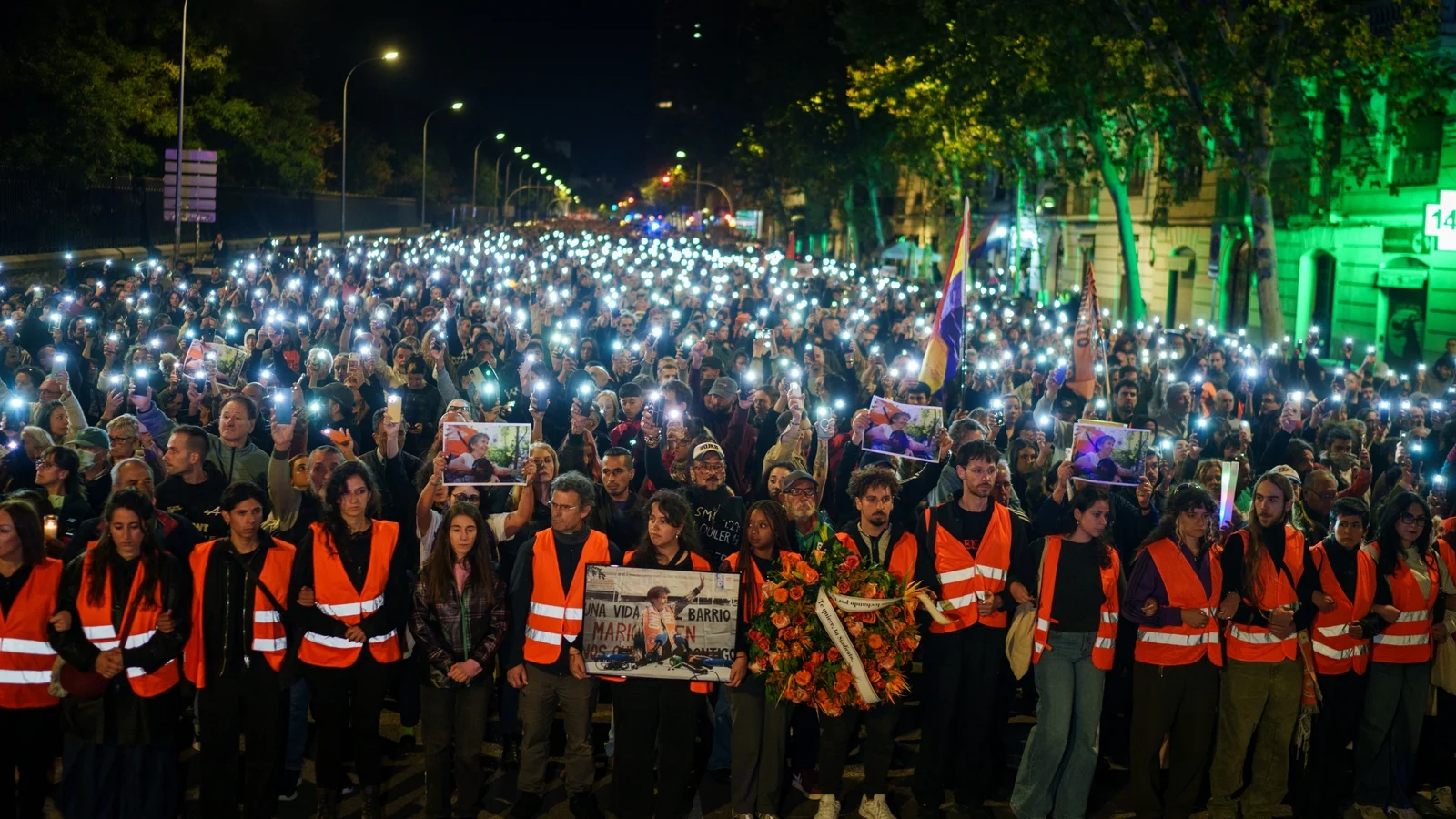
Maricarmen Abascal, an 87-year-old woman, was removed from her Madrid apartment on 23 September. She was then hospitalised with severe anxiety and exhaustion and died the following day after the article’s report, although no cause of death was given. Her death connected a personal housing crisis with Spain’s wider shortage of affordable homes. The eviction became a powerful example for protesters. Demonstrators said landlords’ greed had effectively “murdered” her, while mourners left flowers, candles, notes and drawings outside her former building. Protests spread through Spain’s main cities, and people called her a symbol of resistance and unity. Her case also intensified political conflict. Left-leaning parties blamed conservatives for rejecting rent controls, while right-wing politicians blamed the central government. A march from Madrid’s Puerta del Sol to her former apartment was planned, keeping her story at the centre of the housing debate.
Based on reporting by RTE Ireland
What happened to Maricarmen Abascal, and why did her eviction trigger protests across Spain?
Maricarmen Abascal, an 87-year-old woman, was removed from her Madrid apartment on 23 September. She was then hospitalised with severe anxiety and exhaustion and died the following day after the article’s report, although no cause of death was given. Her death connected a personal housing crisis with Spain’s wider shortage of affordable homes.
The eviction became a powerful example for protesters. Demonstrators said landlords’ greed had effectively “murdered” her, while mourners left flowers, candles, notes and drawings outside her former building. Protests spread through Spain’s main cities, and people called her a symbol of resistance and unity.
Her case also intensified political conflict. Left-leaning parties blamed conservatives for rejecting rent controls, while right-wing politicians blamed the central government. A march from Madrid’s Puerta del Sol to her former apartment was planned, keeping her story at the centre of the housing debate.
What is an eviction, and why might it be especially serious for an elderly or vulnerable tenant?
An eviction is the process of requiring someone to leave a home they rent or occupy. It can follow unpaid rent, a tenancy ending or another legal dispute. Losing housing matters because a home provides safety, routine and a base for healthcare, family contact and daily life. The article highlights these stakes through an 87-year-old woman removed from her Madrid apartment.
Maricarmen Abascal was evicted on 23 September and then hospitalised for severe anxiety and exhaustion. No cause of death was given after she died. Her experience made protesters focus on the human consequences behind housing statistics. They left flowers and messages outside her former building and called her a symbol of resistance.
Older or vulnerable tenants may have fewer resources, weaker health or less ability to find another home quickly. The article reports proposals for stronger protections against evictions affecting vulnerable households. Such measures could give people more time, support or alternative housing during a crisis.
How widespread is support in Spain for government intervention in housing: what percentages support intervention and treating housing as a right?
Spain’s public opinion strongly favours government action on housing. A June survey by the state pollster CIS found that 76.3% of Spaniards supported intervention in the market to guarantee access to housing. This means more than three quarters backed some public role in addressing affordability and availability.
The same survey found that about 79% believed the right to housing should take precedence over treating homes as market commodities. Together, the figures show that many people see housing as a basic need, not only as an asset bought and sold for profit. That view helps explain the scale of the protests.
These figures do not identify one single policy or party that voters support. They do show pressure for stronger action from government. The Ombudsman called for greater commitment at every level, including public housing, rent assistance, restrictions on tourist rentals and stronger eviction protections.
How did the housing protests affect Spain’s national politics and lead to an early election?
Housing protests changed Spain’s national political agenda by turning evictions, rent increases and shortages into urgent election issues. The demonstrations followed Maricarmen Abascal’s eviction and death, and spread through the country’s main cities. They gave opponents a visible public movement to address and increased pressure on national leaders.
Socialist Prime Minister Pedro Sanchez responded by calling a snap general election for 29 November. The article says he hoped an early vote would increase his parliamentary support. His decision linked the housing dispute directly to the country’s national political future, rather than leaving it only to regional or local authorities.
The election also sharpened partisan attacks. Feijoo accused Sanchez of exploiting the issue for political gain, while left-leaning parties criticised conservatives over rejected rent measures. Right-wing politicians argued that the leftist central government had failed after eight years in power. Housing therefore became both a policy crisis and a campaign battleground.
Which levels and parties of government are being blamed for the housing crisis, and what responsibilities does each have?
The article shows blame moving across several parts of government and society. Left-leaning parties criticised conservatives who rejected measures to curb soaring rents. Right-wing leaders blamed the leftist central government for failing to tackle the crisis after eight years. Protesters also blamed landlords, while the Ombudsman called for stronger commitment from all levels of government.
Pedro Sanchez’s central government was accused by Isabel Diaz Ayuso of presiding over Abascal’s eviction. The Madrid regional and local assemblies, where the PP holds absolute majorities, became sites of conflict over housing and tributes. The Ombudsman’s proposals imply that national, regional and local authorities all have roles in public housing, rental rules, support and protections.
No single responsibility resolves the crisis. Central government can shape national policy, while regional and local authorities influence housing provision and enforcement within their areas. Landlords control private tenancies, but operate within those rules. The article presents cooperation across levels as necessary, not merely political blame.
What policies could governments use to make housing more affordable, such as public housing, rent assistance, restrictions on tourist rentals, or stronger eviction protections?
The article identifies several ways governments could make housing more affordable and secure. Expanding public housing would add homes outside the private market. Increasing rent assistance could help households meet rising costs. Restricting tourist rentals could return some homes to residents. Stronger protections could prevent vulnerable tenants from being evicted without support or alternatives.
These policies work through different mechanisms. Public housing increases supply and can offer rents that are less exposed to market pressure. Assistance reduces the gap between household income and rent. Tourist-rental limits may increase the homes available for long-term residents. Eviction protections give vulnerable households more time, help or stability when they face removal.
The Ombudsman, Angel Gabilondo, repeated these proposals while calling for greater commitment from all levels of government. The article does not provide cost estimates or say which measure would be adopted. It does show that solutions would need both long-term supply and immediate tenant support.
Why does treating homes as market commodities make access to housing difficult when rents rise and available homes are scarce?
Treating homes as market commodities means their price and availability are shaped mainly by buying, selling, renting and investment. That can make access difficult when many people need homes but too few are available. Scarcity gives owners more bargaining power, while households compete for a limited supply and may face rapidly rising rents.
The article describes housing shortages and surging rents after Abascal’s eviction. It also reports that 79% of Spaniards believed the right to housing should take precedence over treating homes as market commodities. A placard at Madrid’s Puerta del Sol captured the protesters’ concern: “When everything is private, we will be deprived of everything.”
This approach can leave people unable to stay near work, family or services, especially when their incomes do not rise with rents. The article therefore points toward public housing, rent assistance and restrictions on tourist rentals. These policies can reduce market pressure and protect access to a basic need.
Key Facts:
📌 Maricarmen Abascal was 87 when she was evicted from her Madrid apartment.
📌 She was hospitalised for severe anxiety and exhaustion after the eviction.
📌 Her death sparked housing protests across Spain.
📌 An eviction removes a tenant from their home.
📌 Abascal was hospitalised after being removed from her apartment.
📌 The Ombudsman proposed stronger protections for vulnerable households.
📌 CIS found 76.3% supported intervention to guarantee access to housing.