News · Politics & Governance
US prosecutors add new torture charge against Maduro
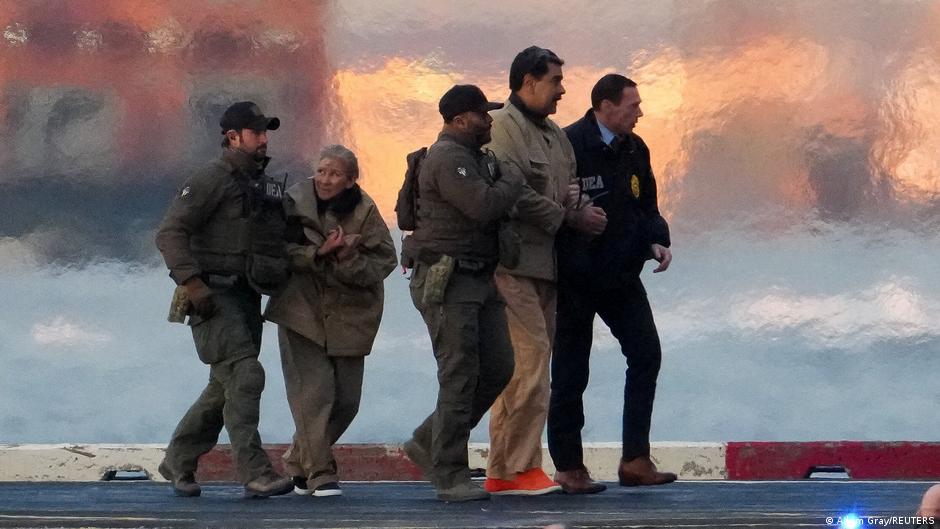
US prosecutors added torture-related accusations against ousted Venezuelan President Nicolás Maduro and his wife, Cilia Flores. The revised indictment says they conspired to torture political opponents and US citizens. It presents the alleged conduct as part of a broader effort to preserve political power. Both defendants deny the earlier charges, and Maduro also denies the new allegations. The indictment claims Maduro authorized torture against specific people and oversaw a system using torture, arbitrary detention and violence against political opponents. It lists alleged electric shocks, beatings and asphyxiation. These are accusations, not findings that a court has proved. The new counts increase the legal pressure on the couple while they await trial. They remain detained at a federal center in Brooklyn, with trial scheduled for June next year. The article does not state the exact penalties attached to the new charges.
Based on reporting by DW News
What new torture-related charges have US prosecutors added against Nicolás Maduro and Cilia Flores?
US prosecutors added torture-related accusations against ousted Venezuelan President Nicolás Maduro and his wife, Cilia Flores. The revised indictment says they conspired to torture political opponents and US citizens. It presents the alleged conduct as part of a broader effort to preserve political power. Both defendants deny the earlier charges, and Maduro also denies the new allegations.
The indictment claims Maduro authorized torture against specific people and oversaw a system using torture, arbitrary detention and violence against political opponents. It lists alleged electric shocks, beatings and asphyxiation. These are accusations, not findings that a court has proved.
The new counts increase the legal pressure on the couple while they await trial. They remain detained at a federal center in Brooklyn, with trial scheduled for June next year. The article does not state the exact penalties attached to the new charges.
What is an indictment, and what does it mean when prosecutors accuse someone of a crime in one?
An indictment is a formal charging document that identifies the crimes prosecutors say a defendant committed. It explains the alleged conduct and gives the court and defense a basis for the case. In this story, a revised indictment adds torture-related accusations to the charges already facing Maduro and Flores.
When prosecutors accuse someone in an indictment, they are asserting that the available evidence supports bringing the case forward. The document does not prove guilt. Maduro and Flores can challenge the charges, present their defenses and require prosecutors to prove the allegations in court.
The distinction matters because the couple is awaiting trial, not serving sentences for these allegations. Maduro’s lawyer said he denies the new charges. The indictment increases the seriousness of the case, but only a court process can determine whether the alleged torture occurred and whether either defendant is legally responsible.
What acts does the revised indictment allege, and how are those allegations different from the earlier drug-trafficking and firearms charges?
The revised indictment alleges that Maduro authorized torture against specific individuals and oversaw a system of repression. Prosecutors describe alleged electric shocks, beatings and asphyxiation. They also allege arbitrary detention and violence against political opponents. The claims portray torture as an organized method of maintaining power, rather than as an isolated incident.
The earlier case involved drug-trafficking and firearms charges. Those accusations concern alleged criminal activity involving drugs and weapons. The new allegations instead concern treatment of detainees, political opponents and US citizens. They therefore add an alleged human-rights dimension to the prosecution.
The difference matters because the revised indictment broadens the conduct prosecutors are asking the court to examine. Human rights groups had long accused Venezuelan officials of torture, but this is described as the first time Maduro could be held accountable for those allegations. The claims remain unproven until trial.
What could happen to Maduro and Flores if they are convicted of the new charges?
If Maduro and Flores were convicted of the new charges, a US court could impose criminal penalties under the laws supporting those charges. Such penalties could include imprisonment, but the article does not identify the specific sentencing range or any mandatory punishment. The precise outcome would depend on the charges proved and the court’s sentencing rules.
A conviction would also establish, through a court judgment, that the prosecution proved the relevant conduct beyond the required legal standard. That would be different from the current situation, where the revised indictment only presents prosecutors’ allegations. The couple has denied the charges, and their trial is scheduled for June next year.
For now, both defendants are held at a federal detention center in Brooklyn. Flores is seeking house arrest because of reported health problems, while prosecutors oppose release. The article does not state what additional detention, financial or other consequences a conviction would bring.
How long was Maduro in power, and why does his 13-year rule matter when assessing the alleged system of repression?
The article says Maduro was in power for 13 years. That length of rule matters because prosecutors describe more than a single alleged act. They accuse him of overseeing a system that used torture, arbitrary detention and violence to repress political opposition. A long period in power could provide the time and authority for such a system, if the allegations are proved.
The indictment specifically claims that Maduro authorized torture against particular individuals and oversaw the wider machinery of repression. The alleged methods included electric shocks, beatings and asphyxiation. Human rights groups had long accused Venezuelan officials of torturing detainees, but the new case directly places Maduro under legal scrutiny for those claims.
His 13-year rule is context, not proof. Prosecutors still must establish his personal responsibility and the other legal elements at trial. The case could therefore test whether allegations linked to a prolonged government system can be tied to a former national leader.
Why is Flores asking for house arrest, and how do judges weigh a defendant's health against flight risk and danger to the public?
Cilia Flores is asking a Manhattan federal judge to release her from jail and place her under house arrest. Her lawyers say she has lost 25 pounds in custody, experiences dizziness and shortness of breath, and may have suffered a minor heart attack in July. They propose a New York residence with round-the-clock security.
A judge generally examines whether detention is medically necessary, whether proposed conditions can protect the defendant and whether the person is likely to flee or endanger others. House arrest, monitoring and security may reduce some risks, but they do not automatically overcome concerns about flight or public safety.
Prosecutors oppose Flores’s request. They argue she presents an “extreme risk of flight and danger to the public,” while saying she has received hospital treatment when necessary in custody. The judge must weigh these competing claims using the case’s evidence and applicable law. The article does not report the ruling.
How can a US court prosecute foreign leaders for alleged conduct connected to another country, and what limits do sovereignty and international law impose?
A US court may consider a foreign defendant when the alleged conduct has a recognized connection to the United States, such as US victims, US custody or other links established by law. Here, prosecutors accuse Maduro and Flores of conspiring to torture US citizens, and the couple is being held in Brooklyn. Those facts help explain why a US prosecution is being pursued, although the article does not detail the jurisdictional statute.
Sovereignty means countries generally control law enforcement within their own territory. A court’s authority also depends on valid jurisdiction, lawful transfer of defendants and fair procedures. International law can restrict cross-border arrests and the use of force. The article says critics accused Trump of operating outside international law after the couple’s capture in Caracas.
The prosecution itself does not settle those disputes. The court may have to consider jurisdiction, the legality of the transfer and the evidence before trial. The article does not report any ruling on these issues, so their final legal effect remains unresolved.
Key Facts:
📌 Prosecutors accuse Maduro and Flores of conspiring to torture opponents and US citizens.
📌 The torture allegations appear in a revised indictment.
📌 The new charges supplement earlier drug-trafficking charges.
📌 An indictment formally sets out alleged crimes.
📌 An indictment is not a finding of guilt.
📌 Maduro’s lawyer said he denies the new charges.
📌 The indictment alleges electric shocks, beatings and asphyxiation.