News · Social Issues
News Wrap: Lawyer says Christa Pike 'angry and confused' following botched execution
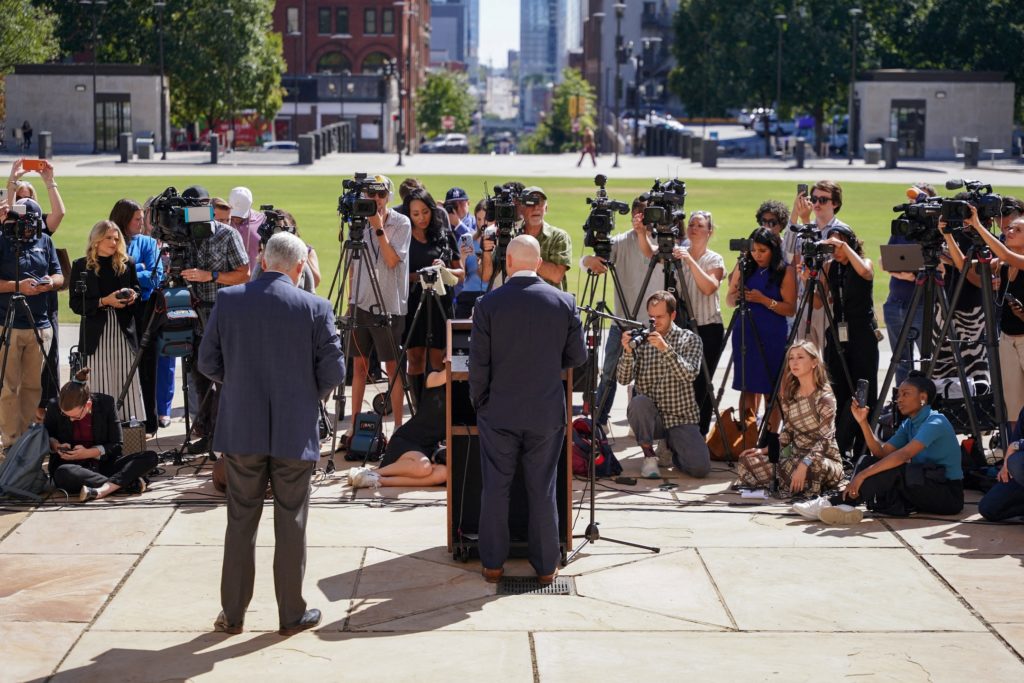
Christa Pike’s execution failed, but the article does not describe the exact technical reason. She survived two doses of lethal injection and later regained consciousness. Her lawyers said she was aware of what had happened “up to a point,” and that she felt angry and confused. The event matters because an execution intended to end her life instead left her in critical medical condition. Pike’s lawyers described several serious problems. She had a blood clot in one arm and pneumonia. She could not swallow. Her lawyers also did not know which functions she might regain in her arms. A judge ordered the state to preserve evidence from the execution chamber and all related communication records. Her recovery remained uncertain, and her lawyers warned that a long road lay ahead. Pike had been sentenced to death more than 30 years earlier for torturing and killing her classmate, Colleen Slemmer. The preserved evidence could help clarify what happened during the failed procedure.
Based on reporting by PBS NewsHour
What happened during Christa Pike's botched execution, and what was her condition afterward?
Christa Pike’s execution failed, but the article does not describe the exact technical reason. She survived two doses of lethal injection and later regained consciousness. Her lawyers said she was aware of what had happened “up to a point,” and that she felt angry and confused. The event matters because an execution intended to end her life instead left her in critical medical condition.
Pike’s lawyers described several serious problems. She had a blood clot in one arm and pneumonia. She could not swallow. Her lawyers also did not know which functions she might regain in her arms. A judge ordered the state to preserve evidence from the execution chamber and all related communication records.
Her recovery remained uncertain, and her lawyers warned that a long road lay ahead. Pike had been sentenced to death more than 30 years earlier for torturing and killing her classmate, Colleen Slemmer. The preserved evidence could help clarify what happened during the failed procedure.
What is a lethal injection, and how is it supposed to cause death?
A lethal injection is a medical-style execution method in which officials inject drugs intended to cause death. It is designed to make the person unconscious, stop voluntary movement, suppress breathing, and ultimately stop the heart or other vital functions. The precise drug combinations and procedures can vary by jurisdiction and period.
A typical protocol uses separate stages. An anesthetic or sedative is intended to prevent awareness. A paralytic may stop muscle movement, including breathing muscles. A final drug is intended to cause fatal heart or circulatory failure. If a drug is delayed, improperly delivered, or fails to work as intended, the process may not follow the planned sequence.
The article does not explain Pike’s injection protocol or identify the drugs used. It does report that she survived two doses, regained consciousness, and suffered pneumonia, a blood clot, and trouble swallowing. Those facts show why the state was ordered to preserve chamber evidence and communications for review.
How many doses were given to Pike, and how long had she been on death row before the failed execution?
Christa Pike received two doses during the attempted lethal injection. She survived both, later regained consciousness, and remained medically unstable. The number is striking because the procedure was designed to end her life, yet it did not do so. Her case illustrates how an execution attempt can become a prolonged medical crisis.
Pike had been sentenced to death more than 30 years before the failed execution. The article says the sentence followed her conviction for torturing and killing her classmate, Colleen Slemmer. It does not provide the exact year of her sentencing or explain the complete history of her appeals.
Afterward, Pike’s lawyers said she was aware of what happened “up to a point.” They reported pneumonia, a blood clot in one arm, inability to swallow, and uncertainty about the movement she might regain in her arms. A judge ordered the state to preserve execution-chamber evidence and related communications while the failed procedure is examined.
What medical problems did Pike develop, and what consequences could they have for her recovery?
The failed execution left Christa Pike with multiple serious medical problems. Her lawyer, Randy Spivey, said she had pneumonia and a blood clot in one arm. Pike also could not swallow. Doctors and lawyers did not know which functions she might regain in her arms, so her prognosis remained unclear.
Each problem can complicate recovery. Pneumonia can impair breathing and weaken the body. A blood clot can interfere with circulation and may require urgent treatment. Difficulty swallowing can prevent normal eating and drinking, while possible arm impairment could affect movement and independence. These are general medical implications; the article does not provide Pike’s detailed diagnosis or treatment plan.
Her lawyers said there was a long road ahead. She had regained consciousness and was aware of events “up to a point,” but the extent of her recovery was unknown. Preserved evidence and communication records may help establish what happened during the execution, while her medical team continues to assess her condition.
Why did the judge order the state to preserve evidence and communication records from the execution?
A judge ordered Tennessee officials to preserve evidence from the execution chamber and every communication record related to the failed procedure. Preserving material prevents potentially important records from being lost, altered, or destroyed. It creates a factual record for lawyers, courts, and investigators examining the event.
The order could cover records showing who took part, what instructions were given, how the procedure progressed, and when problems became apparent. The article does not specify which documents exist or identify the precise reason the judge issued the order. It does establish that Pike survived two lethal-injection doses and later regained consciousness.
The preserved material may help explain the failed execution and inform future legal proceedings. It could be compared with Pike’s medical condition, including pneumonia, a blood clot, inability to swallow, and uncertain arm function. For now, the article provides no final finding about responsibility or the exact cause of the failure.
How have lethal-injection procedures changed, and why can an execution fail even when officials follow a planned protocol?
Lethal-injection procedures have changed over time, especially in their drug combinations and administration protocols. States have altered methods when particular drugs became unavailable, manufacturers restricted sales, or courts challenged procedures. The article does not describe Pike’s specific protocol, so these broader points come from established knowledge about executions.
A planned execution can still fail if an IV is misplaced, a line blocks, a dose is delayed, equipment malfunctions, or the person’s body responds unexpectedly. Drug quality, dosage, monitoring, and staff decisions can also matter. A protocol is a plan, not a guarantee that every step will work. In Pike’s case, officials administered two doses, yet she survived.
The immediate reality is uncertainty. Pike regained consciousness but had pneumonia, a blood clot, swallowing problems, and possible arm impairment. The judge’s preservation order may support a later review. Until that review produces findings, the article does not establish whether drugs, equipment, access, personnel, or another factor caused the failure.
How does the death penalty system work in the United States, from sentencing and appeals to carrying out an execution?
The death-penalty system generally begins with a criminal conviction and a court’s decision to impose death rather than another sentence. The condemned person can pursue appeals and other legal challenges. Courts review issues such as the conviction, sentence, evidence, and execution procedure. If the sentence remains in force, the responsible state schedules and carries out the execution under an approved protocol.
The article gives Pike’s case as an example. She was sentenced to death for torturing and killing her classmate, Colleen Slemmer, more than 30 years before the attempted execution. Officials administered lethal injection, but Pike survived two doses. She later regained consciousness and remained seriously ill.
The system does not end automatically when an execution fails. A judge ordered the state to preserve evidence from the chamber and all related communications. Pike’s lawyers reported pneumonia, a blood clot, inability to swallow, and uncertain arm function. Further review could clarify what happened, but the article does not describe her full appeals history or the next court decision.
Key Facts:
📌 Pike survived two doses of lethal injection.
📌 She regained consciousness and was described as angry and confused.
📌 Her prognosis remained unclear after the failed execution.
📌 Lethal injection uses drugs intended to cause death.
📌 Protocols generally aim to produce unconsciousness and stop vital functions.
📌 The article does not identify Pike’s drugs or exact protocol.
📌 Pike received two lethal-injection doses.