News · Economy & Business
NLC Issues FG Two-Week Ultimatum On Petrol Price, Minimum Wage
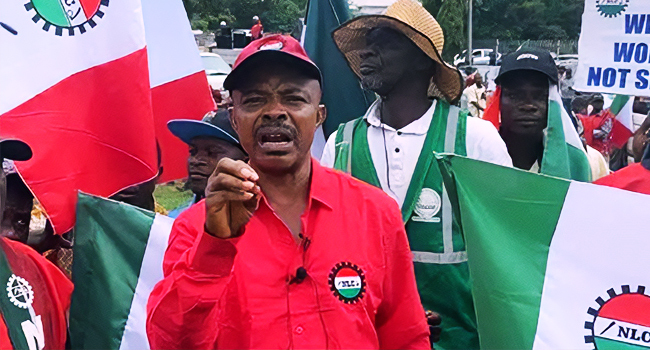
The Nigeria Labour Congress, or NLC, is a national labour organisation that speaks for Nigerian workers. In this article, it brings together affiliates and progressive allies to challenge policies it considers harmful. Its demands focus on petrol prices, wages, taxes, and outstanding public-sector agreements. An ultimatum is a formal warning with a time limit. The NLC gave the Federal Government two weeks to reduce petrol prices, begin minimum-wage renegotiation, and address other listed demands. It said the period would begin on Friday, October 9, 2026. The deadline makes the warning more specific than a general protest statement. The NLC told its affiliates to remain on high alert and prepare for “decisive efforts.” If the government does not act within the period, the Congress said its relevant organs could direct further or “remedial” action.
Based on reporting by Channels TV
What is the Nigeria Labour Congress (NLC), and what does it mean to give the government a two-week ultimatum?
The Nigeria Labour Congress, or NLC, is a national labour organisation that speaks for Nigerian workers. In this article, it brings together affiliates and progressive allies to challenge policies it considers harmful. Its demands focus on petrol prices, wages, taxes, and outstanding public-sector agreements.
An ultimatum is a formal warning with a time limit. The NLC gave the Federal Government two weeks to reduce petrol prices, begin minimum-wage renegotiation, and address other listed demands. It said the period would begin on Friday, October 9, 2026.
The deadline makes the warning more specific than a general protest statement. The NLC told its affiliates to remain on high alert and prepare for “decisive efforts.” If the government does not act within the period, the Congress said its relevant organs could direct further or “remedial” action.
How much time does the Federal Government have to respond, and when does the deadline end?
The NLC gave the Federal Government a two-week period to respond to its demands. The communiqué states that the period begins on Friday, October 9, 2026. This gives the government a clear window rather than an open-ended request.
Two weeks equals 14 days. Fourteen days after Friday, October 9, 2026, is Friday, October 23, 2026. Therefore, October 23 is the calculated end of the ultimatum, although the communiqué itself mainly states the starting date and two-week length.
The deadline covers several issues. These include reducing petrol prices to their 2024 level, starting minimum-wage renegotiation, implementing the February 5, 2026 JOHESU settlement, and meeting JPSNC demands. After the period, the NLC warns that its organs may direct further action.
What are the four main actions the NLC is demanding from the Federal Government?
The NLC’s four main demands in the ultimatum are clear. First, the government should reduce petrol prices nationwide to the level in 2024, when the current minimum wage was signed. Second, it should begin negotiating a new national minimum wage.
Third, the government should implement the Terms of Settlement reached with JOHESU and the Assembly of Healthcare Professionals on February 5, 2026, together with other outstanding demands. Fourth, it should implement the demands of the Joint Public Sector Negotiating Council, or JPSNC.
The Congress also called for tax relief for workers and immediate wage awards. These measures are presented as additional support against rising living costs. The NLC says failure to meet the listed demands within two weeks could lead to further action directed by its relevant organs.
Why can a rise in petrol prices cause transportation, food, healthcare, and other essential costs to increase?
A petrol-price increase raises the cost of transport. People may pay more to travel, while businesses may pay more to move workers, supplies, and products. Those added costs can then appear in the prices of goods and services.
For example, food transported from farms, factories, or markets may become more expensive when vehicles need costlier petrol. Healthcare can also become harder to afford when patients and workers face higher travel costs, or when facilities pay more to move supplies. The article specifically links petrol costs to transportation, food, and other essential goods.
This is why the NLC describes petrol’s impact as “cascading.” A higher fuel cost can spread across connected activities rather than staying at the filling station. The Congress says this worsens hardship for workers and the wider population, and therefore wants prices reduced nationwide to their 2024 level.
Why does the NLC want the national minimum wage renegotiated even though the current wage was agreed in 2024?
The NLC wants renegotiation because it says the current minimum wage no longer buys what it once could. Since the wage was signed in 2024, the Congress says the naira has depreciated and inflation has continued to rise. That reduces the purchasing power of workers’ earnings.
For example, the same salary may now cover less food, shelter, healthcare, transportation, and education than it did when the wage was agreed. The issue is not only the number written into the agreement. It is what that number can actually buy as prices increase.
The NLC therefore demands a living wage that reflects the true cost of living and worker dignity. It wants renegotiation to begin before the end of October. The Congress considers further delay unacceptable because it says workers can no longer afford basic necessities on current wages.
How can a labour union such as the NLC pressure the government to change economic policies?
A labour union pressures government by organising workers around shared demands. It can issue communiqués, mobilise affiliates, communicate public dissatisfaction, and threaten coordinated action. Such pressure draws attention to how policies affect wages, transport, and daily survival.
In this case, the NLC’s national executive and central working committee agreed on a two-week ultimatum. It directed affiliates and progressive allies to stay on high alert. The warning creates a common position across the labour movement and gives the government a clear list of actions to take.
The NLC did not specify the exact next action. It said failure to meet the demands would compel it to take remedial steps as directed by its relevant organs. This means the Congress is keeping further action open while giving government time to respond. Its stated historical responsibility is resisting exploitation and oppression.
What are inflation, currency depreciation, and a living wage, and how do they determine whether a worker's pay can cover basic needs?
Inflation is a sustained rise in the prices of goods and services. Currency depreciation means the naira loses value, reducing what a worker’s pay can buy. A living wage is income that reflects the cost of living and supports basic needs with dignity.
Suppose a worker’s salary stays unchanged while food, transport, rent, healthcare, and education become more expensive. The worker’s nominal pay is the same, but its real value has fallen. If the naira also depreciates, imported or naira-priced goods may become harder to afford. The gap between wages and essential costs then widens.
The NLC says this is Nigeria’s current reality. It reports soaring inflation, a traumatised naira, worthless wages, and unbearable living costs. It therefore wants a renegotiated minimum wage that reflects actual expenses, plus tax relief and wage awards to cushion workers.
Key Facts:
📌 The NLC issued the ultimatum through a communiqué signed by Joe Ajaero.
📌 The two-week period begins on Friday, October 9, 2026.
📌 Failure to act could lead to further labour action.
📌 The ultimatum starts on Friday, October 9, 2026.
📌 The government has 14 days to respond.
📌 The calculated deadline is Friday, October 23, 2026.
📌 The NLC wants petrol prices reduced to their 2024 level.