News · Defence & Security
Trump rules out renewed Iran strikes before US midterms
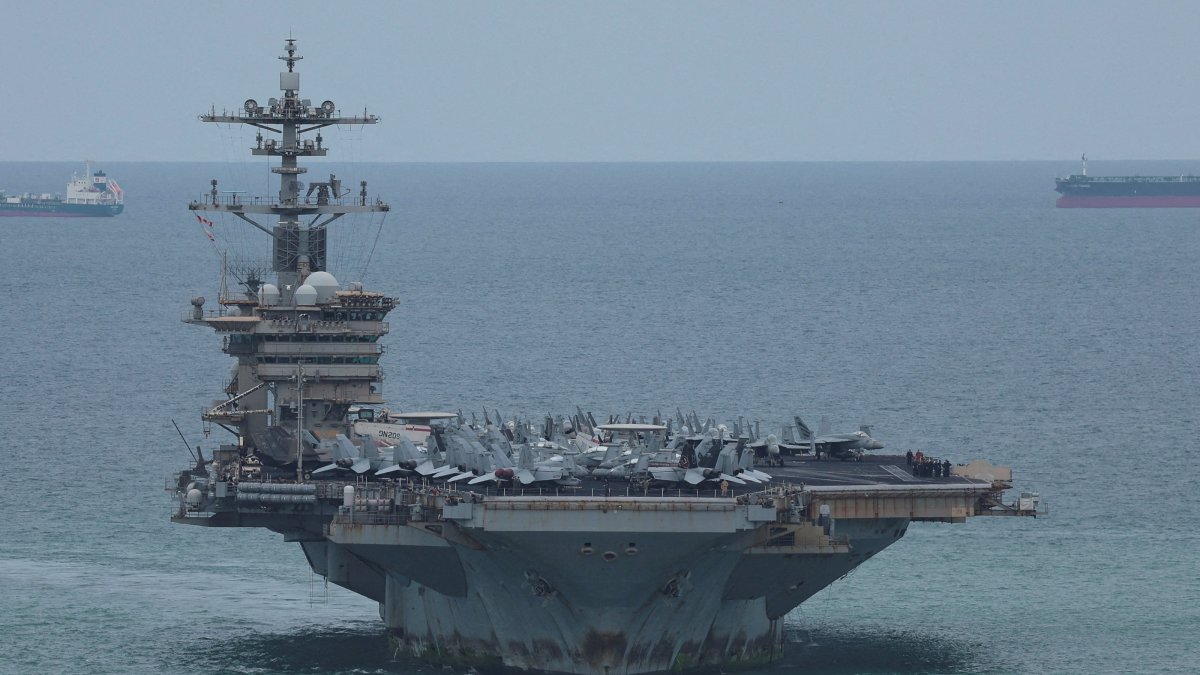
President Donald Trump said the United States would not launch fresh attacks against Iran before the midterm elections. He gave November 3 as the election date and ruled out attacks at any time before then. This temporarily sets a public limit on U.S. military action. The statement matters because Trump had suggested the war’s endgame might arrive shortly before or after the election. He had also indicated that full-scale military operations could remain an option. His new post therefore narrows the immediate timeline without promising that military action is permanently off the table. The policy could change after November 3. Meanwhile, Trump said his team was holding productive discussions with Iran. U.S. forces are still sending more resources to the region, including a possible third aircraft carrier and thousands of troops by late October. The announcement creates a short diplomatic window before the election.
Based on reporting by Daily Sabah Turkey
What exactly did President Trump rule out, and until what date?
President Donald Trump said the United States would not launch fresh attacks against Iran before the midterm elections. He gave November 3 as the election date and ruled out attacks at any time before then. This temporarily sets a public limit on U.S. military action.
The statement matters because Trump had suggested the war’s endgame might arrive shortly before or after the election. He had also indicated that full-scale military operations could remain an option. His new post therefore narrows the immediate timeline without promising that military action is permanently off the table.
The policy could change after November 3. Meanwhile, Trump said his team was holding productive discussions with Iran. U.S. forces are still sending more resources to the region, including a possible third aircraft carrier and thousands of troops by late October. The announcement creates a short diplomatic window before the election.
What are U.S. midterm elections, and why do they matter for a president's political power?
Midterm elections are national elections held halfway through a U.S. president’s four-year term. Voters choose members of Congress, including the House of Representatives and part of the Senate. They do not elect the president. The elections matter because Congress helps shape laws, spending, oversight, and support for major government actions.
A president’s political power can rise or fall depending on the election results. If the president’s party gains seats, cooperation may become easier. If it loses seats, opposition lawmakers can make legislation, funding, and oversight more difficult. The article presents the November 3 vote as an important political deadline for Trump.
That timing may influence how the confrontation with Iran develops. Trump ruled out attacks before voters go to the polls, while suggesting an endgame could come before or after the election. The result could affect his political room to manage negotiations or consider military action afterward.
How large is the U.S. military presence being assembled near Iran?
The article describes a significant but not fully quantified U.S. military presence. A third aircraft carrier, the USS Theodore Roosevelt, could arrive as early as the end of October. Thousands of troops would be aboard that carrier and its accompanying ships. The article does not state the total number of U.S. personnel in or near the region.
Two other carriers are also part of the picture. The USS George Washington relieved the USS Abraham Lincoln in August, while the USS George H.W. Bush has been deployed for about six months. The Lincoln was due to return to San Diego after a record-long deployment supporting the Iran war.
This means the military presence is being reinforced even while Trump rules out attacks before November 3. The carrier movements can sustain readiness and signal capability. However, the article does not say that the buildup will lead to an attack, and it provides no complete troop total.
What could Trump's promise not to strike before the election change about negotiations with Iran?
Trump’s promise could change negotiations by creating a short period in which Iran faces no announced U.S. attack before November 3. That may reduce immediate pressure and give both sides time to exchange proposals. Trump said his team was having productive discussions with the Islamic Republic of Iran.
The negotiations had appeared stalled after Trump rejected Iran’s proposal to reopen the Strait of Hormuz within seven days if the United States met certain conditions. Iran later said it had received a U.S. counterproposal. Foreign Minister Abbas Araghchi said Tehran expected to give a formal reply within days.
The promise does not settle the dispute or remove military pressure. The United States is sending more resources to the region, and a third carrier could arrive by late October. Iran may use the pause to respond, while both sides still face uncertainty about what happens after the election.
What roles do Trump, Iran's foreign minister, and the U.S. military each play in this confrontation?
Trump is the U.S. political decision-maker in the article. He ruled out attacks before November 3, described discussions with Iran as productive, and kept open the possibility of future full-scale operations. His public statements shape both the diplomatic timetable and expectations about military action.
Iran’s Foreign Minister Abbas Araghchi represents Tehran’s diplomatic side. He said Iran had received a U.S. counterproposal and expected to provide a formal reply within days. Iran had also proposed reopening the Strait of Hormuz within seven days if the United States met stated conditions.
The U.S. military supplies the operational presence. It has dispatched more resources, including carriers and thousands of troops aboard the possible third carrier and accompanying ships. The military also supports the ongoing war, as shown by the Lincoln’s record-long deployment. Its movements signal readiness while negotiations continue.
Why has the Strait of Hormuz become a central issue in the negotiations between the United States and Iran?
The Strait of Hormuz is central in this account because its reopening became a specific bargaining condition between Iran and the United States. Iran proposed reopening the strait within seven days if the United States met certain conditions. That proposal gave the negotiations a concrete issue and timetable.
Trump rejected Iran’s proposal late last month. After that rejection, discussions appeared to reach a standstill. Iran then said it had received a U.S. counterproposal, showing that the issue had not ended the diplomatic process. Foreign Minister Abbas Araghchi expected Tehran to send a formal reply within days.
The strait therefore functions as a test of whether the two sides can trade actions and commitments. The article does not identify the exact U.S. conditions or explain the strait’s wider economic importance. It does show that reopening it is linked directly to the negotiation’s progress and next steps.
What is military deterrence, and how can moving aircraft carriers and troops influence an adversary without launching an attack?
Military deterrence is the effort to prevent an adversary from taking an action by showing that a powerful response is possible. It does not require an attack. The threat of force, if credible, can influence an opponent’s calculations while leaders continue negotiating.
Moving aircraft carriers and troops can demonstrate that the United States has forces ready for possible operations. In this case, the article describes more resources heading to the region, including the possible arrival of the USS Theodore Roosevelt and thousands of troops aboard it and accompanying ships. Those movements show capability without proving an attack is planned.
The signal is complicated by Trump’s promise not to attack before November 3. The military buildup may preserve readiness or increase pressure, while the public commitment limits immediate use of force. Iran must assess both messages as it prepares its formal reply and considers what follows the election.
Key Facts:
📌 Trump ruled out U.S. attacks on Iran before November 3.
📌 The restriction applies at any time before the midterm elections.
📌 Trump did not permanently rule out future military operations.
📌 Midterms occur during a president’s term, not to choose the president.
📌 They determine seats in Congress.
📌 Congressional results can expand or restrict presidential political power.
📌 A third carrier could arrive by late October.