News · Economy & Business
Adequate response: on the RBI and inflation
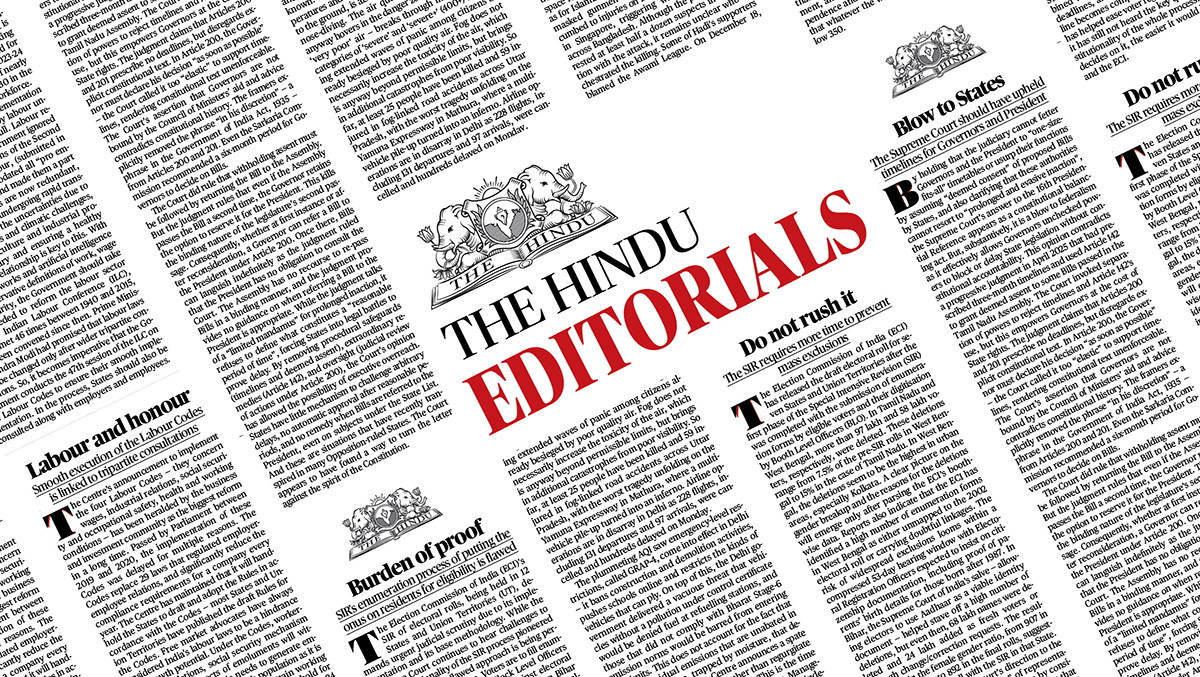
The RBI’s Monetary Policy Committee raised interest rates by 25 basis points to respond to rising inflation. It also changed its policy stance from “neutral” to “calibrated tightening.” This means the central bank is preparing to use monetary policy more actively, rather than simply waiting for price pressures to ease. The rate increase is a modest move. The larger signal comes from the new stance. It suggests that another rate increase in December is now expected to be judged mainly by its size. The RBI wants households, businesses, and markets to believe it will take inflation seriously. The central bank also raised its 2026-27 growth forecast to 7.1%, from 6.7% in August. This indicates it believes the economy can absorb tighter policy. However, higher rates may still create a growth-inflation trade-off, especially as agencies already expect slower growth in the year’s second half.
Based on reporting by The Hindu
What did the RBI’s Monetary Policy Committee decide to do about interest rates and its policy stance?
The RBI’s Monetary Policy Committee raised interest rates by 25 basis points to respond to rising inflation. It also changed its policy stance from “neutral” to “calibrated tightening.” This means the central bank is preparing to use monetary policy more actively, rather than simply waiting for price pressures to ease.
The rate increase is a modest move. The larger signal comes from the new stance. It suggests that another rate increase in December is now expected to be judged mainly by its size. The RBI wants households, businesses, and markets to believe it will take inflation seriously.
The central bank also raised its 2026-27 growth forecast to 7.1%, from 6.7% in August. This indicates it believes the economy can absorb tighter policy. However, higher rates may still create a growth-inflation trade-off, especially as agencies already expect slower growth in the year’s second half.
What is a basis point, and what does a 25-basis-point interest-rate increase mean in percentage terms?
A basis point is a small unit used to describe changes in interest rates and other percentages. One basis point equals 0.01 percentage points. This precise unit helps avoid confusion when central banks announce small policy changes.
A 25-basis-point increase equals 0.25 percentage points. For example, if a policy rate were 6.00%, a 25-basis-point rise would take it to 6.25%. It does not mean the rate rises by 25%.
In the article, the RBI used this 0.25-percentage-point increase as a careful nudge against inflation. The move can influence borrowing costs, spending, and financial markets. However, because the article identifies expensive oil and a deficient monsoon as major inflation drivers, the immediate effect on prices may be limited.
How high does the RBI expect retail inflation to be in each quarter, and how do those figures compare with its earlier forecast?
The RBI projects retail inflation at 4.9% in the second quarter. It expects inflation to rise to 6% in the third quarter, then ease slightly to 5.7% in the fourth quarter. The pattern shows price pressure worsening before moderating.
The Q2 projection is higher than the RBI’s August forecast of 4.7%. That is an upward revision of 0.2 percentage points. The article does not provide earlier August forecasts for Q3 or Q4, so no direct comparison is available for those quarters.
Several pressures explain the RBI’s concern. Global oil prices have crossed $100 a barrel again, while a deficient monsoon is pushing up food prices. Petrol and diesel prices could rise if oil companies pass on more costs. These forces could keep inflation elevated even after the rate increase.
What could happen to household borrowing, spending, investment, and economic growth after interest rates rise?
When interest rates rise, banks and other lenders generally face higher funding costs. They may pass those costs to borrowers through more expensive home, vehicle, personal, and business loans. Existing borrowers with floating-rate loans may also see larger payments.
Higher repayments can leave households with less money for consumption. Businesses may postpone projects when borrowing becomes costlier or expected returns weaken. Lower spending and investment can reduce demand across the economy. The effect is usually gradual, not immediate, because loans and decisions adjust over time.
The article highlights this growth-inflation trade-off. The RBI raised its 2026-27 growth forecast to 7.1%, suggesting it believes the economy can absorb tighter policy. Yet economic agencies already expect a slowdown in the second half of the year. Higher rates could therefore help contain inflation while adding pressure to growth.
Why can an interest-rate hike have only a limited immediate effect when inflation is being driven mainly by expensive oil and a poor monsoon?
Interest-rate policy mainly influences borrowing, spending, investment, and expectations. It does not directly increase oil supplies, reduce global crude prices, or bring rain. When inflation comes from these supply-side shocks, the first-round effect of a rate hike on prices is therefore limited.
The article gives two clear examples. Global oil prices have crossed $100 a barrel, raising fuel-cost risks. At the same time, a deficient monsoon is pushing up food prices. Higher rates cannot immediately repair either problem. They may only reduce demand gradually, limiting how strongly these costs spread through the economy.
The signal can still matter. By raising rates and adopting “calibrated tightening,” the MPC is trying to dampen inflation expectations. If people expect prices to keep rising, they may change wages, purchases, or prices in ways that reinforce inflation. Managing those expectations gives the rate hike a broader effect.
What other tools can the Indian government use to slow food-price increases, such as imports, buffer stocks, export controls, and anti-hoarding measures?
Food inflation can sometimes be addressed more directly through supply management. The government can release food from strategic buffer stocks, arrange imports when domestic supplies are tight, and restrict exports when overseas sales worsen local availability. These actions can increase supplies or reduce pressure in domestic markets.
The article also names anti-hoarding measures and open market operations. Anti-hoarding action can discourage the withholding of goods to create artificial scarcity. Open market operations can put government-held supplies into circulation. Import controls and export controls can be adjusted depending on whether the problem is weak supply or excessive outward shipments.
These tools matter because the article links rising food prices to a deficient monsoon. It says the government now has the responsibility to use its available measures more effectively. Strategic buffers, trade controls, anti-hoarding action, and market sales could complement the RBI’s interest-rate response.
Why can expectations of high future inflation become self-fulfilling, and how must a central bank balance controlling inflation against protecting economic growth?
Inflation expectations shape decisions before actual prices fully rise. If households expect goods to become much more expensive, they may buy earlier. Workers may seek larger pay increases, and businesses may raise prices in anticipation of higher costs. Those responses can increase demand or costs and help create the inflation people feared.
That is why the MPC’s message matters alongside its 25-basis-point increase. Its shift to “calibrated tightening” tells markets and the public that the central bank will use its tools to keep inflation in check. A credible signal can reduce the risk that temporary shocks become embedded in economic decisions.
The RBI must also protect growth. Higher rates can cool borrowing, spending, and investment. The article says the growth-inflation trade-off will test the central bank’s deftness. Its 7.1% growth forecast suggests confidence, but predicted second-half slowdown means tightening must remain measured.
Key Facts:
📌 The MPC raised interest rates by 25 basis points.
📌 Its stance changed from “neutral” to “calibrated tightening.”
📌 The RBI lifted its growth forecast to 7.1%.
📌 One basis point equals 0.01 percentage points.
📌 Twenty-five basis points equals a 0.25-percentage-point increase.
📌 A 25-basis-point rise is not a 25% increase.
📌 Q2 retail inflation is projected at 4.9%.