News · Defence & Security
The PRC and Russia Deepen Biosecurity Integration
A 28-year-old employee, Daria Shipilova, reportedly became ill after a September 25 laboratory incident involving Yersinia pestis and later died in Shelekhov. The alleged exposure was never officially confirmed. Russian authorities therefore faced both a possible laboratory-acquired infection and major uncertainty about its cause. The response was large. Shelekhov district hospital entered quarantine on October 1. On October 2, a regional sanitary commission met with Anna Popova, Rospotrebnadzor’s chief. Officials identified 197 possible contacts, and 189 were reportedly placed in medical facilities for observation and treatment. Public statements shifted. Buryatia’s head initially connected the death to plague, while nearby Baikalsk briefly advised residents not to travel to Shelekhov. On October 4, Rospotrebnadzor called it pneumonia of unknown etiology and said testing found no work-related microorganism. The conflicting accounts made the incident especially difficult to interpret.
Based on reporting by Jamestown
What happened at Russia’s Irkutsk Anti-Plague Research Institute, and how did Russian authorities respond?
A 28-year-old employee, Daria Shipilova, reportedly became ill after a September 25 laboratory incident involving Yersinia pestis and later died in Shelekhov. The alleged exposure was never officially confirmed. Russian authorities therefore faced both a possible laboratory-acquired infection and major uncertainty about its cause.
The response was large. Shelekhov district hospital entered quarantine on October 1. On October 2, a regional sanitary commission met with Anna Popova, Rospotrebnadzor’s chief. Officials identified 197 possible contacts, and 189 were reportedly placed in medical facilities for observation and treatment.
Public statements shifted. Buryatia’s head initially connected the death to plague, while nearby Baikalsk briefly advised residents not to travel to Shelekhov. On October 4, Rospotrebnadzor called it pneumonia of unknown etiology and said testing found no work-related microorganism. The conflicting accounts made the incident especially difficult to interpret.
What is biosecurity, and how is it different from ordinary public health or biological defense?
Biosecurity covers the rules, facilities, training, monitoring, and coordination used to keep dangerous pathogens from escaping laboratories or being misused. It matters because a laboratory incident can become a public-health emergency, especially when people travel across borders. The article presents biosecurity as both prevention and rapid response.
Ordinary public health mainly protects populations through surveillance, diagnosis, treatment, quarantine, and outbreak control. Biological defense is narrower in purpose: it protects a country or military from biological attacks and other deliberate threats. Biosecurity sits between these areas and can involve civilian laboratories, disease-control agencies, customs, and military organizations.
The PRC-Russia system reflects that overlap. Their cooperation includes laboratory testing, epidemiological research, border quarantine, early warning, emergency exercises, and cross-border epidemic control. It also includes PLA and Russian military medicine, CBRN exercises, and pathogen research. That mixed structure makes responsibilities and intentions harder to classify as purely civilian or military.
How large was the response and cooperation effort, including the nearly 200 identified contacts and more than 300 participants in the August exercise?
The figures reveal two different kinds of mobilization. Inside Russia, officials identified 197 possible contacts after the employee’s death, with 189 reportedly placed in medical facilities. This was a substantial containment operation for an event whose laboratory cause remained unconfirmed.
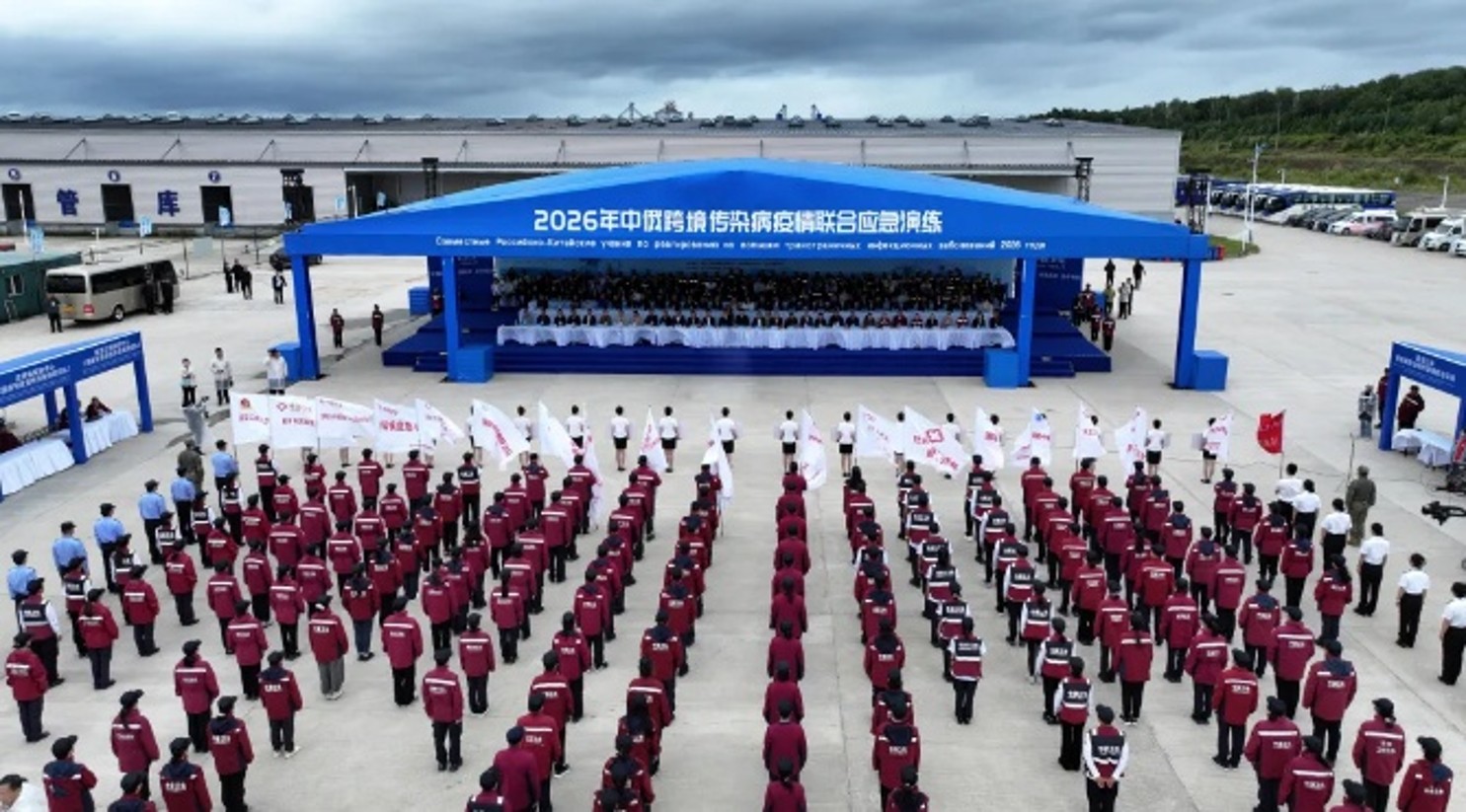
The bilateral effort was broader still. In August, more than 300 PRC personnel joined Russian specialists in an exercise covering imported plague, pathogen identification, epidemic notification, joint risk assessment, and cross-border response. Participants included Irkutsk institute director Sergey Balakhonov and the PLA Northern Theater Command Disease Control Center. Health officials met again on September 29.
Together, these numbers show institutional preparation rather than an improvised reaction. The exercise rehearsed the same basic problems raised by the Irkutsk incident: recognizing a pathogen, informing authorities, assessing risk, and managing borders. Yet Beijing issued no public warning or travel advisory by October 4. Operational cooperation therefore appeared stronger than public communication.
Which Russian and Chinese agencies and military organizations are involved in monitoring pathogens, investigating outbreaks, and coordinating cross-border responses?
Russia’s main public-health actor is Rospotrebnadzor, whose chief, Anna Popova, joined the Irkutsk response. The Irkutsk Anti-Plague Research Institute is central to pathogen work. Russian specialists also cooperate through military medicine and CBRN structures. The article names institute director Sergey Balakhonov as an exercise participant.
On the PRC side, disease-control and customs agencies coordinate with Russian counterparts on border quarantine, surveillance, notification, and emergency response. The PLA Northern Theater Command Disease Control Center joined the August exercise. The PLA-directed State Key Laboratory of Pathogen and Biosecurity is linked to later plague-genetics cooperation. These bodies connect laboratory research with operational response.
The network extends beyond Moscow and Beijing. It includes Belarusian CSTO biological-defense activity, PRC-Belarus infectious-disease research, and SCO mechanisms reaching Central Asia. These arrangements support surveillance, joint research, and epidemic warning. The result is a layered system that can monitor pathogens and coordinate across borders, but whose civilian-military boundaries remain ambiguous.
What could happen to travel, border controls, and public trust when authorities issue conflicting explanations about a possible laboratory-acquired infection?
A possible laboratory-acquired infection creates immediate pressure on travel systems. Authorities may increase screening, quarantine contacts, restrict movement, or issue advisories. If the threat is later ruled out, those measures can disrupt flights and communities. If officials delay action, a genuine infection could cross borders before controls begin.
The Irkutsk case shows this tension. Baikalsk briefly told residents not to travel to Shelekhov, then deleted the warning. Meanwhile, flights continued, including as many as six daily connections from Irkutsk to PRC cities. Beijing issued no public health warning or Russia-related travel advisory by October 4, despite the city’s direct connections to China.
Conflicting explanations also damage credibility. Officials first linked the death to plague, then described pneumonia of unknown etiology and denied a related institute incident. Such shifts can encourage rumors, reduce cooperation with contact tracing, and make future alerts less believable. Clear, prompt, evidence-based communication is therefore as important as quarantine capacity.
How did the Soviet-era history of the Irkutsk institute and later plague-genetics cooperation shape the current civilian-military character of PRC-Russia biosecurity ties?
The Irkutsk institute is not simply a local clinic. The article links it to Soviet-era biological-warfare-adjacent research. That history places current plague work inside a broader security context. It helps explain why cooperation around pathogens can involve public-health agencies, military medicine, and national leaders at the same time.
After the Soviet period, plague-genetics cooperation connected Irkutsk with the PLA-directed State Key Laboratory of Pathogen and Biosecurity. Later PRC-Russia agreements expanded collaboration into laboratory testing, epidemiology, border quarantine, biological-security early warning, exercises, and cross-border control. The relationship therefore developed through both research and operational planning.
Today, the boundaries are mixed rather than purely civilian. The article also describes PLA and Russian military medicine, CBRN exercises, Belarusian CSTO biological-defense activity, and SCO surveillance. This structure can improve preparedness and coordination. It can also make outside observers question whether programs serve public health, defense, or both, especially when public explanations remain limited.
How do pathogens such as Yersinia pestis move between animals, vectors, laboratories, and people, and why do international surveillance systems matter?
Yersinia pestis is associated with plague, which can circulate among animal populations and their vectors before reaching people. Laboratory workers can face a separate risk when handling cultures or specimens. The article does not establish that Shipilova had plague or a laboratory-acquired infection, but it places her case within that biological chain.
The PRC’s northern-border measures illustrate the monitoring system. During the late-summer and early-autumn plague season, authorities intensify surveillance of rodent populations and vectors and screen incoming passengers. The August PRC-Russia exercise rehearsed imported plague, pathogen identification, epidemic notification, joint risk assessment, and cross-border response. These steps connect field surveillance to laboratory and border action.
International systems matter because Irkutsk has direct air links with several PRC cities. A local event can therefore require rapid information-sharing, testing, contact tracing, and travel decisions elsewhere. The article shows the tools already exist, but Beijing’s silence and Russia’s shifting accounts reveal how weak communication can undermine otherwise extensive surveillance and preparedness.
Key Facts:
📌 A 28-year-old institute employee died after a reported September 25 laboratory incident.
📌 Authorities identified 197 possible contacts.
📌 Rospotrebnadzor said no work-related pathogenic microorganism was found.
📌 Biosecurity links safe pathogen handling with early warning and emergency response.
📌 Public health focuses on population disease control.
📌 The cooperation combines civilian agencies with military organizations.
📌 Russian authorities identified 197 possible contacts.