News · Politics & Governance
MAP: Vacant barangay, SK posts after 2023 polls
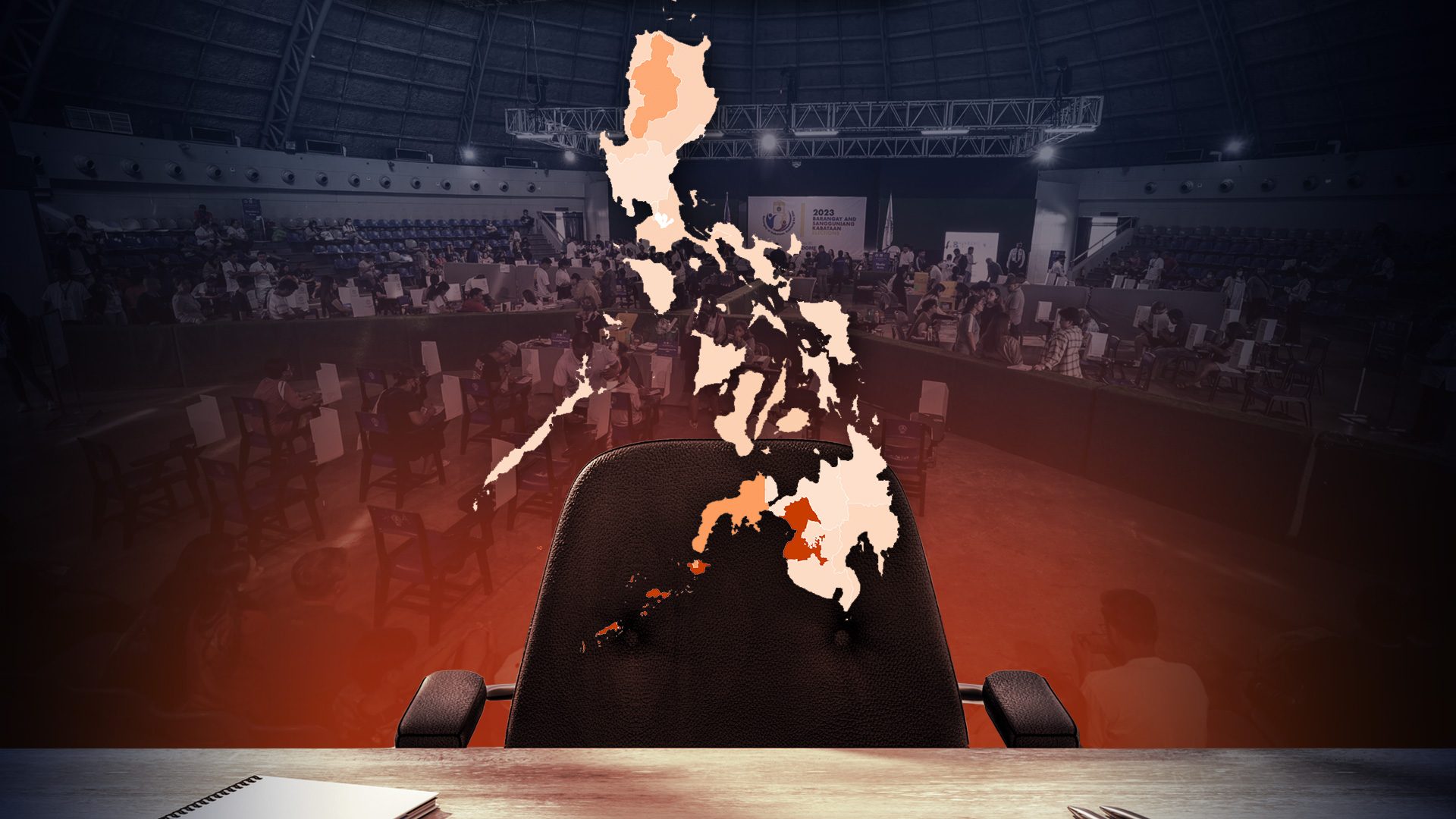
The vacancies are not caused by one event. Officials elected in 2023 have left office through resignation, death, removal, or absence without leave. Their positions then became vacant. The postponed barangay and Sangguniang Kabataan elections will not provide a new elected batch until 2028. The scale is substantial. The Department of the Interior and Local Government recorded 73,731 vacant seats as of September 29. These include positions in barangay councils and youth SK councils. Nearly 9% of the 840,200 positions nationwide are therefore empty. Normally, some vacancies can be addressed through succession, appointments, special elections, or KK Assembly elections, depending on the position. However, special elections have faced funding-related delays, while appointments reduce voters’ ability to choose leaders. Without action, the postponed polls give the number of vacancies more time to grow.
Based on reporting by Rappler Philippines
Why are 73,731 barangay and Sangguniang Kabataan seats currently vacant?
The vacancies are not caused by one event. Officials elected in 2023 have left office through resignation, death, removal, or absence without leave. Their positions then became vacant. The postponed barangay and Sangguniang Kabataan elections will not provide a new elected batch until 2028.
The scale is substantial. The Department of the Interior and Local Government recorded 73,731 vacant seats as of September 29. These include positions in barangay councils and youth SK councils. Nearly 9% of the 840,200 positions nationwide are therefore empty.
Normally, some vacancies can be addressed through succession, appointments, special elections, or KK Assembly elections, depending on the position. However, special elections have faced funding-related delays, while appointments reduce voters’ ability to choose leaders. Without action, the postponed polls give the number of vacancies more time to grow.
What are barangay councils and Sangguniang Kabataan councils responsible for?
Barangay councils are the elected local governing bodies for barangays, the country’s smallest local government units. Sangguniang Kabataan councils are youth councils within barangays. In general civic practice, barangay councils address local governance concerns, while SK councils represent young residents and support youth-focused participation. These responsibilities explain why empty seats matter.
The article does not provide a detailed list of either council’s duties. It does show that both bodies are made up of elected positions, and that SK seats account for 77.21% of all reported vacancies. Positions below the SK chairperson are especially affected within youth councils.
When these seats remain empty, communities may lack elected representatives in local councils. Officials may instead be appointed, or some SK vacancies may be filled through special elections or a Katipunan ng Kabataan Assembly. The article emphasizes that appointments limit voters’ choice.
How large is the vacancy problem compared with the total number of barangay and SK positions nationwide?
The vacancy problem is national and sizeable. DILG data recorded 73,731 empty barangay and SK seats as of September 29. The figure represents nearly 9% of the 840,200 positions nationwide. In practical terms, roughly one in every eleven seats has no official elected in the 2023 polls currently occupying it.
The imbalance is even clearer among youth councils. SK vacancies make up 77.21% of all empty seats. Within SK councils, positions below the chairperson generally report the highest vacancy percentages. This means the problem is concentrated heavily in the council membership that supports youth representation.
Because the BSKE has been postponed again to 2028, the vacancies will remain a concern for two more years unless replacements are made. The article also warns that the numbers may grow as more officials decide not to wait through the extended term.
Which regions are most affected, and why does BARMM have the highest vacancy rate?
The Bangsamoro Autonomous Region in Muslim Mindanao has the highest vacancy rate, with 46.54% of its barangay and SK seats empty. Zamboanga Peninsula follows at 21.08%, and the Cordillera Administrative Region at 18.23%. These regional figures show that vacancies are not spread evenly across the country.
The article gives several reasons BARMM faces a difficult electoral environment. It describes a long history of electoral violence, especially at barangay level. Before BARMM was created in 2019, elections were reportedly “negotiated” to prevent violence linked to rival clans. The region also has low literacy rates, which an election network identified as a challenge for voter education and knowledge of the electoral process.
These conditions provide context for BARMM’s unusually high vacancy rate, but the article does not identify one direct cause for every empty seat. Its broader point is that local representation is especially vulnerable where electoral participation and security face longstanding difficulties.
What happens to communities when elected barangay and SK positions remain empty for years?
Empty local seats create a representation problem. Residents may lack elected barangay or SK officials during the remainder of the term. The article says millions of Filipinos, especially in regions with high vacancy rates, may either have no elected local officials or no say in who leads them.
The available responses do not fully solve that democratic gap. Barangay vacancies are filled through succession or mayoral appointment. SK vacancies may be handled through special elections, mayor-appointed officers-in-charge, or elections during a Katipunan ng Kabataan Assembly. Yet special elections have often been delayed or suspended because of funding problems, and assemblies frequently fail to convene as required.
The postponement to 2028 extends the period of uncertainty by two years. Vacancies may also increase if SK officials abandon their posts rather than delay their personal plans. The article does not quantify specific service failures, but it clearly identifies weakened local representation as the central consequence.
How can vacant barangay and SK seats be filled through succession, appointment, special elections, or a Katipunan ng Kabataan Assembly?
Barangay vacancies are filled through succession or mayoral appointment. The rules for empty SK seats are more varied. Special elections are the preferred method. A 2024 DILG circular also allows mayors to appoint officers-in-charge, or permits the Katipunan ng Kabataan Assembly to elect replacements.
Each route works differently. Succession lets an existing official assume the vacant role. Appointment places the replacement in office through the mayor. A special election lets voters choose directly. A KK Assembly brings registered youth voters in a barangay together to elect an SK replacement. The assembly must meet at least once every six months under the SK Reform Act, or earlier under specified conditions.
In practice, none is consistently easy. Earlier special elections were deferred or suspended, often because of funding problems. KK Assemblies have also been criticized for failing to convene. Appointments remain available, but they reduce voters’ direct choice of leaders.
Why is choosing local officials through elections important for democratic representation and accountability?
Choosing local officials through elections gives residents a direct role in deciding who represents their community. It also creates a clear relationship between officials and voters. Leaders receive authority from the people they serve, while voters can judge their performance in a later election. The article presents this choice as central to local democratic representation.
The contrast is clearest when a mayor appoints a replacement. An appointment can fill an empty position, but residents do not select that official. The article therefore says appointments are frowned upon because they take away voters’ opportunity to choose their own leaders. This concern applies to both barangay communities and youth representation.
The issue becomes more serious when vacancies last years. With elections delayed until 2028, millions may remain without elected representatives or may have no say in who leads them. Special elections are preferred because they restore voter choice, but funding and implementation problems have slowed them.
Key Facts:
📌 Officials left through resignation, death, removal, or absence without leave.
📌 DILG recorded 73,731 vacant seats as of September 29.
📌 The postponed elections will not be held until 2028.
📌 Barangay councils are elected local governing bodies.
📌 Sangguniang Kabataan councils represent youth at barangay level.
📌 The article does not detail each council’s specific responsibilities.
📌 There are 73,731 vacant seats nationwide.